
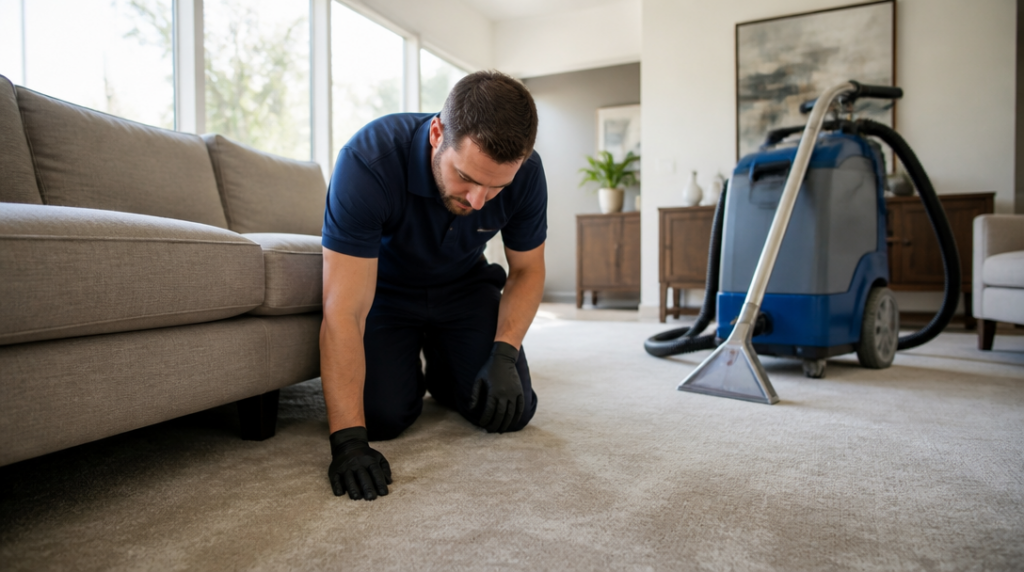
The carpet may look clean when the technician arrives, and still be carrying years of dust, tracked-in grit, and stains beneath the surface.
Picture a technician kneeling beside your sofa, running a hand across the pile and studying the darker path between the front door and the kitchen. Before any water touches the carpet, they are already looking for clues: flattened fibers, fragile areas, old spills, furniture marks, and places that may need special care.
That first inspection sets the pace for everything that follows. A good professional cleaning is not simply a machine being pushed across the floor. It is a measured process, and most of the work happens in stages.
Before the Cleaning Begins
You will usually be asked to remove small objects, toys, clothing, and anything delicate from the carpeted areas. Larger furniture may be moved if the service includes it, but policies vary, so it is sensible to ask before booking rather than discovering that the heavy bookcase is staying exactly where it is.
The technician may ask about stains, previous treatments, pets, water damage, or areas that receive unusually heavy traffic. This is your chance to point out the coffee spill behind the armchair or the patch that never quite recovered from a muddy weekend. A stain that is hidden under furniture is easy to miss.
The price should be clear before work starts. Transparent companies generally charge according to the area being cleaned rather than the number of rooms. That distinction matters because a small bedroom and a large open-plan living room may both count as one room while requiring very different amounts of labor, water, and cleaning solution.
The carpet’s material and condition also influence the approach. A technician may adjust the products, agitation, or moisture level rather than treating every floor in the house as if it were identical.
The First Pass Is Dry
The standard process begins with thorough dry vacuuming. This step removes loose dirt, hair, crumbs, and grit before the deeper cleaning starts. It may look routine, but skipping it would leave the machine trying to extract a mixture of loose debris and wet soil at the same time.
You may hear the vacuum moving slowly over the carpet, particularly along edges and in high-traffic lanes. Those areas often hold more dry soil than the rest of the room. The technician may make several passes instead of racing from one side of the floor to the other.
This is also the moment when the room begins to look different without becoming wet. The carpet can appear slightly lifted and brighter simply because the loose debris has been removed.
Stains Receive Extra Attention
After vacuuming, the technician applies a pre-treatment solution. Its job is to loosen soil that has bonded more stubbornly to the fibers and to prepare the carpet for extraction. High-traffic areas may receive more attention than untouched sections beneath furniture.
Stain treatment is usually targeted rather than dramatic. A professional may work on a mark with a cloth, brush, or other tool, depending on the fiber and the type of spill. Some stains respond well. Others have changed the color of the fiber, damaged it, or sunk into the backing, which means no cleaning method can promise a perfect return to its original appearance.
That is why a careful technician avoids making absolute promises about every spot. Carpet cleaning can remove many stains, but it cannot reverse every kind of damage. A red drink, an old oil mark, and a faded patch may all look similar from across the room while requiring very different treatment.
The pre-treatment may be left on the carpet briefly so it can work. In some cases, the surface is gently agitated to distribute the solution and loosen embedded soil. The room can smell more strongly of cleaning products at this stage, especially if the carpet has absorbed years of odors.
What “Steam Cleaning” Usually Means
Many people expect a cloud of visible steam, but professional “steam cleaning” usually does not mean that the carpet is being cleaned with actual steam. The term commonly refers to hot water delivered under pressure and then removed through wet extraction.
The cleaning equipment sprays water and cleaning solution into the carpet, then immediately pulls back a large portion of the moisture along with dissolved dirt. You will hear the machine change tone as it moves across the floor. The sound is closer to a powerful vacuum than to a kettle releasing steam.
The technician works in controlled sections, overlapping passes to avoid leaving obvious stripes or unevenly treated areas. They may make additional extraction passes over damp sections. Those extra passes are not wasted motion; removing as much moisture as possible is central to a faster, more even drying process.
This stage can make the carpet look temporarily darker. Wet fibers reflect light differently, and flattened pile may not spring back until the carpet has dried. A room that appears slightly uneven immediately after cleaning can look much more consistent later in the day.
What Happens to the Dirt and Water
The extracted water and soil are drawn into the machine’s recovery tank or connected system. Depending on the equipment and the service setup, the technician may need to empty or change the tank during the job. The water can be surprisingly dark, especially in a busy household with pets or children.
The aim is not to flood the carpet. A professional operator controls the amount of solution and follows it with strong extraction. Still, wet cleaning leaves the fibers damp, and that dampness is part of the process rather than a sign that something has gone wrong.
The technician may inspect the carpet again after extraction, looking for missed spots, areas that need another pass, or furniture marks that have become visible now that the surface is clean. Some carpet pile needs light grooming so it lies in a more uniform direction.
The Drying Period Starts Immediately
After wet cleaning, the carpet should generally dry in roughly 12 hours, although actual drying time depends on ventilation, humidity, carpet construction, and how much moisture was used. A cool, closed room can slow the process considerably.
Fans help move damp air away from the carpet. Heating and air-conditioning systems can improve circulation, while a dehumidifier may help in a humid home. Opening windows can be useful in suitable weather, but the main goal is steady airflow rather than simply making the room feel warmer.
This is the part many homeowners underestimate. The carpet may feel almost dry on top while remaining damp deeper in the pile. Walking across it in clean socks is usually preferable to allowing outdoor shoes back into the room, but heavy traffic should still be limited until the carpet is fully dry.
I always think of this stage as the quiet after a kitchen has been mopped: the visible work is over, yet the floor is not ready for normal life quite as quickly as it appears. A little patience prevents fresh marks from being pressed into freshly cleaned fibers.
Furniture Should Wait
Furniture should not be returned until the carpet is completely dry. Heavy pieces can compress damp fibers, restrict airflow, and leave marks. Wood or metal legs may also transfer color or moisture to the carpet if they are placed back too soon.
If furniture must be moved back earlier, protective pads should be placed beneath the legs. Those pads create a barrier and reduce the chance of staining or damaging the damp carpet. They are a temporary measure, not permission to close up the room immediately.
The technician may leave pieces slightly away from their original positions to improve air circulation. That can look untidy for a few hours, but the gap gives moisture somewhere to escape.
How Often Professional Cleaning Is Needed
A professional deep cleaning is commonly recommended every 12 to 18 months. Homes with pets, children, allergies, frequent visitors, or heavy foot traffic may need attention sooner, while lightly used rooms may stay presentable for longer.
Vacuuming remains essential between professional visits because dry soil acts like fine sandpaper when it is repeatedly ground into the pile. Regular vacuuming does not replace deep extraction, but it reduces the amount of material the carpet has to hold between cleanings.
The first few hours after a professional visit can feel slightly disruptive: furniture is shifted, machines are loud, and the carpet is damp underfoot. Then the fans stop, the room dries, and the familiar traffic lanes begin to look less familiar. The carpet has not merely been made wet; it has been worked through from loose soil to treatment, extraction, and careful drying.