
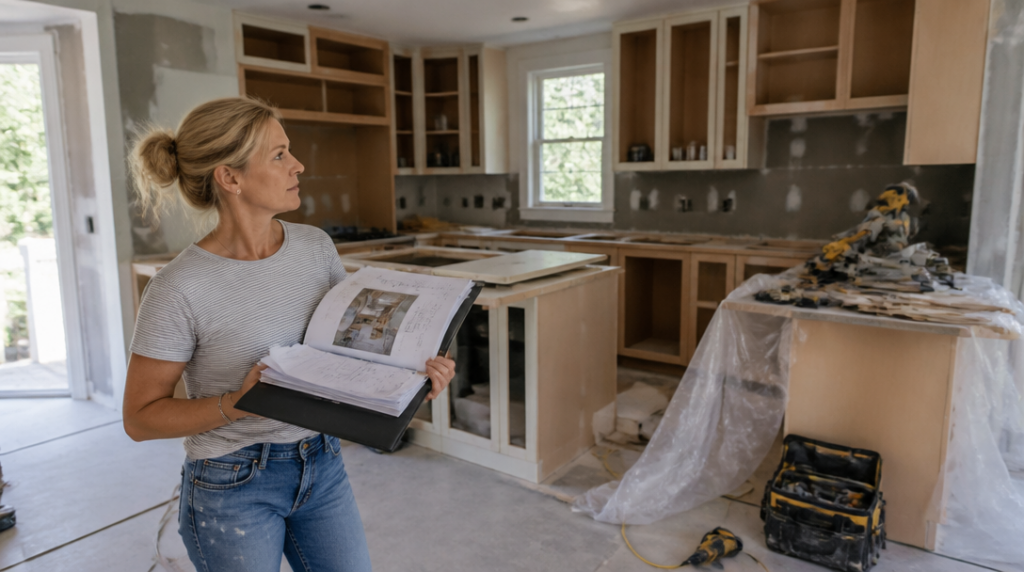
The bathroom is stripped to the studs, the kitchen floor ends in a jagged line, or the new extension has a roof but no windows. The builder’s van has disappeared, the promised return date has passed, and every unanswered message makes the unfinished work feel more expensive.
Do not rush into hiring the first replacement contractor who can start tomorrow. Your next steps can affect your ability to recover money, prove what happened, and separate genuinely incomplete work from defects that may need a different remedy.
Start by freezing the situation in time. Photograph every room, surface, fixture, pile of materials, exposed wire, unfinished connection, and area that appears damaged. Take wide shots to show the overall condition, then close-ups that capture details. Keep the original files if possible, and make a simple note of when each image was taken.
Gather the contract, plans, change orders, invoices, receipts, payment records, warranties, permits, and every message exchanged with the builder. Save emails and text messages rather than relying on screenshots alone. Write down the dates when work began, when it stopped, what the builder promised to finish, and which payments were made. A timeline assembled now is far more useful than a hazy reconstruction several months later.
Read the contract slowly. Look for the promised scope of work, completion date, payment schedule, provisions for delays, procedures for disputes, and any language about cancellation or termination. A builder may have left without explanation, but the paperwork can reveal whether a disputed change order, late payment, unavailable material, inspection issue, or another event is being used to justify the pause.
That does not excuse silence. A professional who cannot meet the schedule should explain the problem, say what remains unfinished, and provide a realistic plan. Still, knowing the contractual position before sending an angry message gives you a much stronger footing.
Make the Record Impossible to Ignore
Send a formal written demand rather than continuing an endless exchange of increasingly frustrated texts. Use certified mail with a return receipt, keep a copy of the letter, and preserve records of every attempt to contact the builder. You can send the same demand by email as well, but the mailed letter creates a clear paper trail.
State the facts without insults or speculation. Identify the property, the date of the contract, the work that remains incomplete, the amount paid, and the dates when you asked the builder to return. List the specific action you want: a written response, a firm date for completing the agreed work, correction of identified defects, delivery of materials, or a discussion about ending the contract and accounting for payments.
Give a reasonable deadline for a response. Avoid promising consequences you are not prepared to pursue, but make clear that you will consider other remedies if the builder does not respond. Keep the letter focused. A page or two describing verifiable events is more persuasive than a long account of every irritation since the project began.
Do not make the final payment while the work remains unfinished or while you are dissatisfied with the result. Payment records matter, and handing over the remaining balance can remove one of the few practical pressures you still have. Review the contract before withholding any amount, especially if it sets out a specific procedure for disputed work or requires payment for completed stages.
If you are considering hiring another contractor, obtain three written estimates before deciding how to proceed. Ask each contractor to describe exactly what is unfinished, what must be removed or corrected, what materials are needed, and whether the quoted work includes permits, inspections, cleanup, and making the property safe. An estimate that simply says “finish project” may be difficult to use later.
Do not let a new contractor destroy evidence unnecessarily. If a wall must be opened because of a safety risk, photograph and document the condition first. Ask the replacement contractor to put observations in writing, particularly if the existing work appears defective or incomplete. Keep invoices for temporary protection, emergency repairs, storage, cleanup, and the work required to complete the project. Those records can help establish the financial impact of the original builder’s failure.
Safety takes priority over preserving a perfect dispute file. Exposed electrical wiring, unstable structures, water intrusion, gas problems, and open areas accessible to children or pets need prompt attention. Make the property safe, but record what you found before covering, removing, or repairing it. A quick photo taken in poor light is still better than an undocumented change.
A small detail that often gets overlooked: keep a separate folder for expenses caused by the delay. Temporary accommodation, rented equipment, replacement materials, protective coverings, and extra labor can blur together with ordinary renovation costs. Separating them makes the story much easier to follow.
The builder may return after receiving the letter. If that happens, do not rely on a handshake and a hopeful promise. Put the revised schedule, remaining tasks, payment terms, responsibility for damaged work, and any agreed price adjustment in writing. If the builder asks for more money to finish the original scope, compare the request with the contract and the documented progress before agreeing.
Escalate Without Losing Control
Some disputes are solved by a clear demand and a realistic path back to the job. Others need outside pressure. If the builder does not respond, contact your state attorney general’s office, your local consumer protection office, and the Federal Trade Commission. Consumer fraud complaints can be submitted through ReportFraud.ftc.gov or by calling 1-877-382-4357.
These complaints do not guarantee that your project will be completed or that your money will be returned. They do create an official record and may help identify a pattern of complaints involving the same business. Submit organized material: the contract, payment evidence, photographs, the timeline, the formal demand, and records showing whether the builder replied.
You may also need advice about a demand for repayment, a claim in small claims court, arbitration, or a construction-related lien issue. The right route depends on the contract, the amount at stake, the location of the property, and the nature of the unfinished work. A local lawyer or qualified construction adviser can help you understand those options, particularly if the project involves structural work, major water damage, or a substantial sum.
Check whether the builder is licensed or registered where local rules require it, and find out whether a bond or complaint process exists. Do not assume that an impressive website, a branded van, or a stack of glossy brochures proves anything about the company’s reliability. Those details are easy to produce; a consistent record of completed work is harder to fake.
There is one narrow cancellation rule that may matter before the dispute grows. If you signed the contract in your home or somewhere other than the builder’s regular place of business, federal law may give you three business days to cancel under the Cooling-Off Rule. State law may provide broader protection. The rule has exceptions, and the exact timing and paperwork matter, so act quickly and check the requirements that apply to your contract.
Be careful with public accusations while the facts are still being sorted out. A factual review describing dates, payments, and unfinished work is different from claiming criminal conduct or fraud without evidence. Keep communications firm and factual; your goal is to preserve leverage, not create a second dispute.
If the builder finally answers, listen for specifics. “I’ll be there next week” is not a plan. A useful response identifies the crew, start date, materials, sequence of work, inspection requirements, and completion date. Ask for those details in writing and compare them with the condition documented in your photographs.
The project may still be recoverable, but control comes from paperwork rather than patience alone. Once every promise, payment, defect, and deadline has a place in the record, the unfinished job becomes a defined problem with evidence behind it instead of a daily argument conducted through a silent phone.