
A landlord in England must protect your tenancy deposit within 30 days of receiving it — and tell you exactly where it is. If that deadline has passed, the problem is not simply that your money is sitting in the wrong account. It may affect your legal position when the tenancy ends.
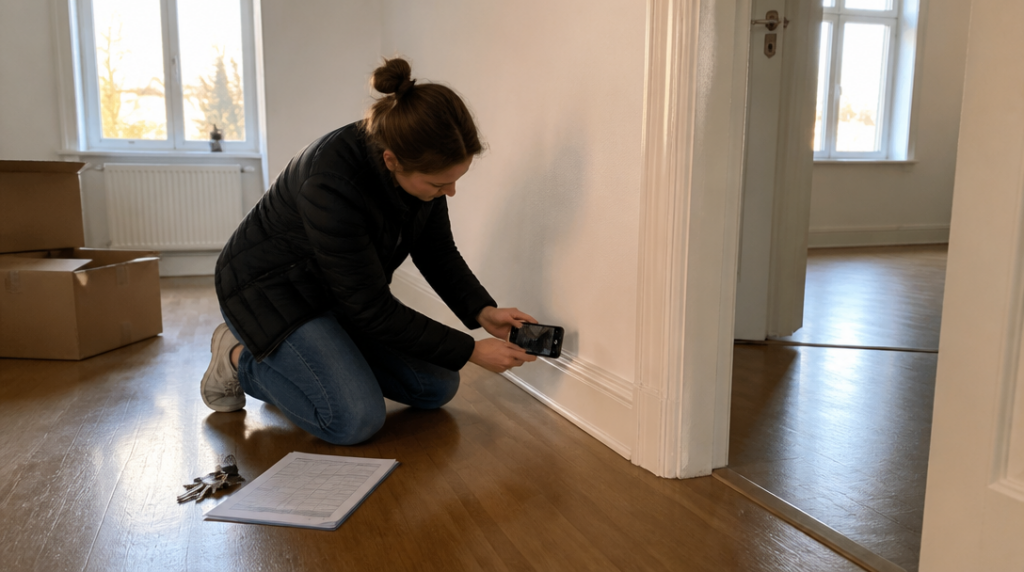
Getting the deposit back in full usually comes down to evidence. The final inspection is only one moment: a few minutes in a hallway smelling of fresh paint, a phone held up to photograph a scuff, a set of keys dropped through an agent’s letterbox. The stronger record begins much earlier, with the condition of the property, the tenancy agreement and a clear trail of rent and bill payments.
The 30-day paper trail that should already exist
In England, a landlord or letting agent must protect the deposit in one of three approved schemes: DPS, MyDeposits or the Tenancy Deposit Scheme. This must happen within 30 days of receiving the money.
Within the same 30-day period, the tenant should receive information covering the amount paid, the scheme holding it, the circumstances in which deductions might be made and the procedure for returning the deposit. Keep this information with the tenancy agreement, inventory and payment records. A screenshot in an email folder is better than relying on memory six months later.
The deposit itself is capped in most private tenancies. For annual rent below £50,000, the maximum is five weeks’ rent. For annual rent between £50,000 and £100,000, the maximum is six weeks’ rent. A landlord cannot simply describe an excessive payment as a “security fee” and avoid the cap.
Check the figures against the rent in your agreement. If the deposit demanded was higher than the permitted amount, or if the promised scheme details never arrived, raise the issue in writing. Do not bury the question in a long emotional email. State the date the deposit was paid, the amount, the information you received and what is missing.
That first message may feel overly formal when you are still unpacking boxes and trying to find the spare lightbulbs. It can become valuable evidence later.
Photograph the flat before the last box leaves
The best defence against an unfair deduction is not a confident argument. It is a dated photograph showing the mark, stain or loose handle before you moved in.
At the start of the tenancy, photograph every room in daylight if possible. Stand in the doorway for wide shots, then move close to details: the chipped edge of a worktop, the dark line around a bath seal, the scratch across a wooden floor. Open cupboards and photograph the inside. Check the oven, fridge, windows, taps and bathroom fittings. If the inventory says “good condition” while the carpet is visibly worn, record that mismatch immediately.
Send the photographs to yourself or store them somewhere that preserves the date. Add short notes rather than relying on a gallery of anonymous images. “Small burn mark beside radiator in front bedroom, present on move-in” is far more useful than “IMG_2084”.
Read the inventory carefully and return amendments within the deadline stated by the agent. If no inventory exists, create your own condition report and send it by email. Silence is often treated as acceptance, even where the tenant simply assumed the agent had seen the same damage.
At the end of the tenancy, repeat the exercise. Clean the property to the condition required by the agreement, not to an imagined hotel standard. Remove rubbish, empty the fridge, clear food from cupboards and return furniture to its original position. Replace missing items only where the agreement or inventory makes clear that they belong there; do not leave expensive replacements without discussing them.
A quick video can help capture the overall condition, but still photographs are often easier to match to an inventory. Film slowly enough to show where each room is, and include the inside of appliances if they are likely to become a point of dispute. The goal is a record another person can understand without standing in the flat beside you.
Rent, bills and keys: the quiet reasons deposits get held
A full refund requires more than clean walls. The tenancy agreement must have been followed, rent and relevant bills must be paid, and the tenant must not have caused damage beyond ordinary wear and tear.
Keep proof of the final rent payment. If the tenancy includes utilities, council tax arrangements or other charges, save the closing bills and meter photographs. Write down the meter readings on the day you leave and photograph the meters if they are accessible. This is especially useful in a shared house, where an argument about one unpaid bill can hold up money connected to everyone’s tenancy.
Landlords can generally seek compensation for damage, but a deposit is not a machine for turning an old item into a new one. A worn carpet will not become brand-new because a tenant lived there. Age, quality and the condition recorded at move-in matter when a deduction is assessed. A landlord should not charge the full replacement cost for an item that was already old or partly worn, and should not charge for ordinary deterioration caused by normal use.
Before leaving, ask the agent to confirm where and how the keys should be returned. Photograph the keys on the day, including any fobs, parking permits or mailbox keys. If you post them, use a tracked service and keep the receipt. That small envelope can matter if the landlord later claims the property was inaccessible or that the tenancy continued because keys were not returned.
Give a forwarding address and bank details in writing. A deposit cannot be sent to you smoothly if the agent has no reliable payment information, and an avoidable delay can look like a dispute when it is really an administrative gap.
The checkout report is not the final word
The agent’s checkout report may arrive with clinical descriptions: “cleaning required,” “damage to wall,” “missing item.” Treat it as a claim, not a judgment carved in stone.
Ask for a detailed breakdown of every proposed deduction. You should be able to see what work is alleged to be necessary, why it is your responsibility and how the amount was calculated. Request invoices, estimates, receipts or photographs where the explanation is unclear. Compare each point with the check-in inventory and your own records.
Respond within the deadline given by the deposit scheme or agent, and separate items you accept from items you dispute. A clear reply might say that you accept a stated cleaning cost but dispute a replacement charge because the item was marked as worn at the start of the tenancy. Precision makes it harder for a vague deduction to drift through unchallenged.
Do not agree to a deduction simply because the email arrives with a countdown timer or an intimidating subject line. Equally, do not reject every claim on principle. If you broke a door, left a serious leak unreported or lost a key, the sensible question is the reasonable cost of putting that right, not whether the entire deposit can be withheld.
Most deposits are returned within five to ten days once the parties agree how the money should be divided. If the landlord proposes deductions, do not approve the release of the undisputed balance while assuming the rest will be dealt with later unless the scheme’s process makes that clear. Read the consent screen or form carefully before accepting anything.
Take the dispute to the scheme before it becomes a court case
If you and the landlord cannot agree, the deposit scheme may offer free alternative dispute resolution. The scheme will ask both sides for evidence and decide the case from the material submitted. That may include the tenancy agreement, inventory, photographs, emails, payment records, checkout report and quotations for repairs.
This is where a calm folder beats a furious paragraph. Name the files clearly and arrange them in date order. Explain the disagreement item by item. A decision under the ADR process is final if both sides agree to use ADR, so submit the evidence you want considered rather than assuming there will be an opportunity to tell the story again in person.
The landlord normally has to show why a deduction is justified. Your task is to show the condition at the beginning and end of the tenancy, your compliance with the agreement and any weaknesses in the proposed calculation. If the claim says a wall was damaged, a photograph of the same wall at move-in may carry more weight than several pages of argument.
A missing protection record creates a different problem. If the deposit was not properly protected, a court can order its return and may award compensation of up to three times the deposit. A claim is made using form N208; the stated court fee is £387. That route is more serious than a routine scheme dispute, so check the facts and procedure carefully before filing. Keep evidence that the deposit was paid, the tenancy existed and the required scheme information was not provided or was provided late.
The agent’s office may be closed when you finish the last inspection, leaving you with a ring of keys, a meter reading and the faint smell of cleaning spray on your coat. Send the checkout email anyway. Attach the photographs, confirm the forwarding details and ask for the deposit release process in writing. A full refund is often secured through that unglamorous paper trail, one dated image and one precise sentence at a time.