
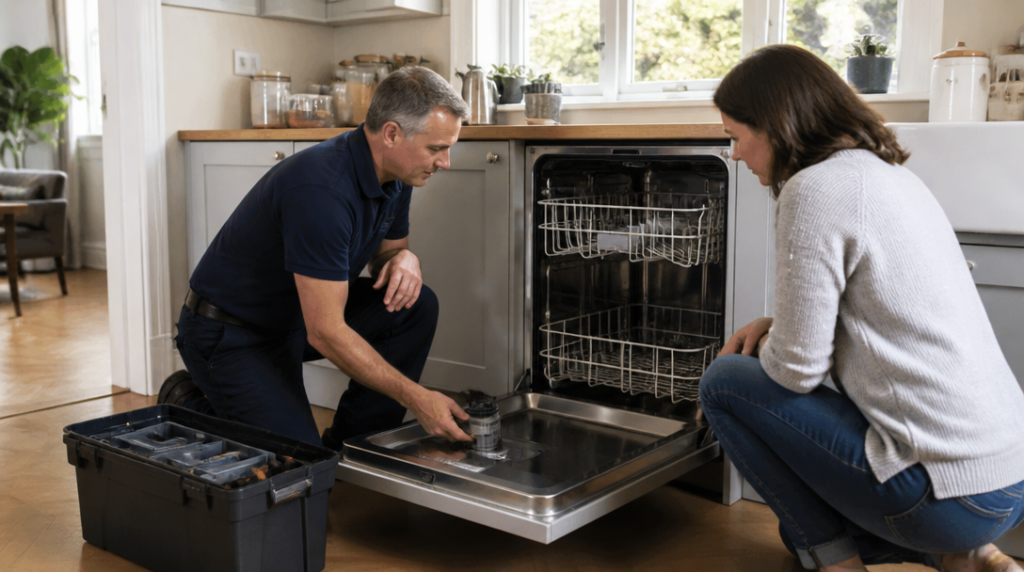
The washing machine stopped halfway through a cycle, leaving a family with a drum full of soapy water. They searched online, called the first repairer who answered, and were given a vague arrival window and no estimate. By the end of the visit, the machine still did not work, but the household had paid for a replacement part they were not sure they needed.
That kind of experience is avoidable. Finding a reliable domestic appliance repairer is less about spotting the slickest advertisement and more about asking a few plain questions before the appointment is booked.
Start with the repairer, not the fault
A search for “washing machine repair near me” may produce dozens of results. Proximity is useful, but it tells you very little about workmanship. Begin by checking whether the business has a clear trading name, a real address, a working telephone number and an explanation of the appliances it repairs. A company that handles ovens, dishwashers and refrigerators may not have the right expertise for every model, so ask specifically about your appliance and its fault.
Look for independent reviews, but read them rather than relying on a star rating. Repeated comments about missed appointments, unexplained charges or pressure to approve expensive work are more revealing than a handful of enthusiastic one-line reviews. A few complaints do not automatically prove that a business is dishonest; patterns matter. Pay attention to how the company responds when a customer describes a problem.
You can also search for a firm registered with TrustMark, the UK government-supported scheme. Registered businesses are checked and agree to customer service standards. TrustMark’s information was updated on 27 January 2026, so it is sensible to look at the current registration details rather than relying on an old badge copied onto a company page.
A badge alone is not a substitute for a conversation. Use it as one part of the check.
Ask what the visit will cost
Before agreeing to an appointment, ask for a breakdown of the possible charges. The first visit might involve a call-out fee, diagnostic time, labour, replacement parts and VAT. Some firms include diagnosis in the call-out charge; others charge separately. Neither approach is automatically wrong, but you should know which one applies before the engineer arrives.
Ask four direct questions: What is the call-out fee? Is diagnosis included? What is the hourly or fixed labour charge? Will I be contacted before any parts are fitted or extra work is carried out?
A consumer price guide published on 8 May 2026 advised customers to request the cost of the visit, labour, parts and any diagnostic work in advance. That advice is practical because the cheapest-looking call-out can become expensive once several separate charges appear on the invoice.
A written estimate is helpful, even if it is sent by text message. It should say whether the price is fixed or only an indication. If the repairer cannot give an exact figure until the appliance has been inspected, that is understandable. The important point is that the limits of the inspection and the likely charges are clear.
Be cautious if someone insists on payment before inspecting the appliance, refuses to explain the price, or says a repair is urgent without showing you why. A technician should be able to explain what has failed and why a particular part or procedure is needed.
Check the guarantee and the parts
Ask whether the repair and replacement parts are covered by a guarantee, and for how long. Also ask whether the part is new, refurbished or compatible rather than made by the appliance manufacturer. Compatible parts can be perfectly suitable, but the choice should not be hidden from you.
If the repairer says a part must be replaced, ask to see the failed component or request a clear explanation of the diagnosis. You do not need to understand the wiring of a dishwasher to ask sensible questions. “What has failed, and how does this part fix it?” is enough.
Keep the receipt, written estimate, messages and any paperwork left by the technician. If the same fault returns, those records make it easier to establish what was promised and what was actually done. They are also useful if another repairer needs to inspect the work.
Gas appliances require a separate check
Gas ovens, gas hobs, boilers and other gas appliances are not ordinary DIY repair jobs. In the UK, repairs to gas appliances may only be carried out by a technician registered with Gas Safe Register. The technician’s card must show the specific types of appliance they are qualified to work on. A person who is registered for one category is not automatically qualified for every gas appliance.
Ask to see the card before work begins and check that it covers the appliance in your home. If the technician arrives without suitable identification, do not allow the repair to proceed. This is not awkwardness; it is a basic safety check.
UK health and safety guidance strongly recommends that gas appliances are serviced at least once a year by a Gas Safe registered technician. A service is not always the same as repairing a particular fault, but regular servicing can identify unsafe operation, damaged components or ventilation problems before they become more serious.
If you smell gas, see signs of scorching, or suspect that an appliance is producing carbon monoxide, stop using it and seek urgent professional help. Do not try to test the appliance by taking it apart.
Understand what you are entitled to
A repair is a service, and UK consumer rules give you important protections. Unless a precise price was agreed beforehand, the work should be carried out with “reasonable care and skill”, within a reasonable time and for a reasonable price.
Those words are useful because they describe more than whether the appliance happens to start working again. A repairer who damages the appliance, installs an unsuitable part or performs careless work may have failed to provide the service properly. A job that drags on without a sensible explanation can also raise questions about reasonable timing.
Suppose you agree to a diagnosis for a fixed fee, then the technician discovers that a part is needed. The repairer should explain the additional cost and obtain your agreement before carrying out chargeable work. If you decline, you may still owe the agreed diagnostic fee, but you should not be presented with an unexpected repair bill for work you never approved.
If a quoted price changes, ask why. Genuine faults can be more complicated than they first appear, but a change should be explained rather than announced after the work is finished.
Know when replacement makes more sense
A trustworthy repairer will not automatically push you towards a new appliance, nor promise that every old machine can be rescued cheaply. The right decision depends on the appliance’s age, condition, availability of parts and the cost of the repair.
Ask for an honest assessment. If the repair is likely to cost nearly as much as a suitable replacement, the technician should be able to say so. You can then make the decision without feeling trapped by the money already spent on the call-out.
This is where a second opinion can help, especially if the proposed repair involves a major component such as a motor, compressor or electronic control board. I would rather spend a little time making a second phone call than buy an expensive part on the strength of one hurried diagnosis.
If the repair goes wrong
Contact the repairer promptly and describe the problem in writing. State what was agreed, what was repaired and what has happened since. Give the business a reasonable opportunity to put the work right, unless the appliance presents an immediate safety risk.
Do not let an unqualified person continue working on a gas appliance simply because the first repair was poor. Arrange a properly qualified inspection instead, and keep records of any additional costs.
If you cannot resolve a dispute, customers in England and Wales can contact Citizens Advice on 0808 223 1133. In Scotland, Advice Direct Scotland can be reached on 0808 164 6000. In Northern Ireland, Consumerline’s number is 0300 123 6262.
The best repairer usually makes the process feel pleasantly ordinary: clear price, clear diagnosis, proper qualifications and no drama. Those details are not paperwork around the repair. They are the repairer’s first proof that your appliance, your home and your money are being treated with care.