
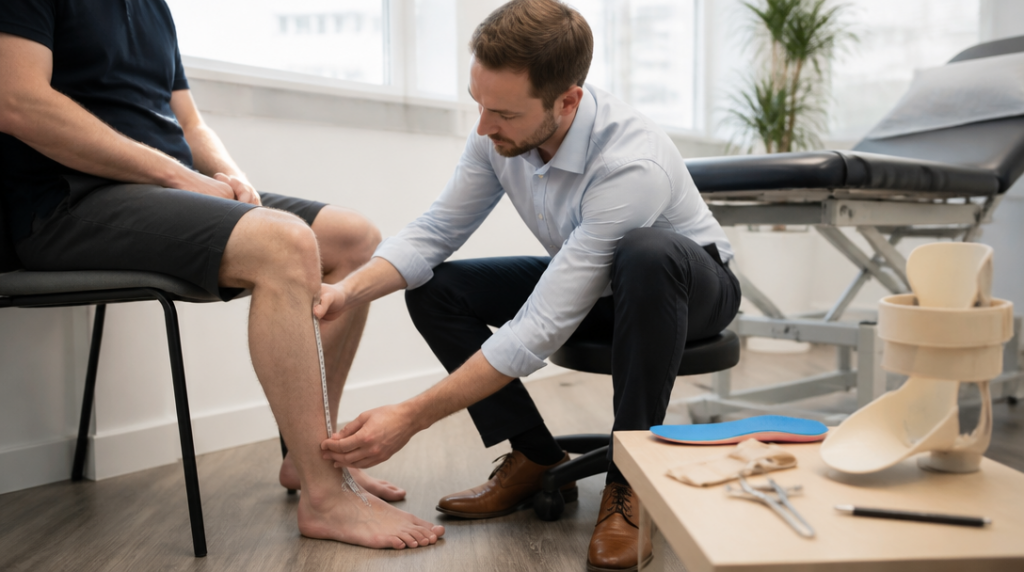
One person may walk into a clinic with a clear referral, a familiar hospital department and a team already expecting them. Someone else may be searching online late at night, comparing private practices and wondering whether a confident-looking website is enough. I have always thought the second situation deserves more caution. Orthotic treatment can involve a small device, but the decisions behind it can affect walking, balance, pain, posture and everyday independence.
In the UK, “orthotist” is a legally protected title. That gives patients a useful starting point: the practitioner must be registered with the Health and Care Professions Council, commonly known as the HCPC. A polished website, years of experience or a list of impressive-sounding services cannot replace that registration.
I would begin by using the HCPC Register rather than relying only on a general internet search. The relevant profession appears under “Prosthetists & orthotists” and uses the profession code PO. That wording can seem slightly awkward if you are looking specifically for an orthotist, but it is the correct section to search.
The register is not merely a directory of names. It is the place to check whether an individual is legally registered to practise under the protected title. Search for the practitioner’s name carefully, especially if they have a common name. A clinic may employ several clinicians, and the person answering the phone is not necessarily the person who will assess you. I would match the full name on the clinic’s website or appointment correspondence with the name shown on the register.
The profile should be marked “Registered”. I would not treat an entry with a different status as a minor technical detail. A “Registered” result indicates that the profile has no listed restrictions, cautions or conditions of practice. The register also displays the current registration period, and HCPC registration runs on a two-year cycle, so I would check that the period shown is valid when I am making the appointment. Registration is not something I would verify once and then forget if several months pass before treatment begins.
That check takes only a few minutes, yet it cuts through much of the uncertainty created by online marketing. The words “specialist”, “expert” and “advanced” may be useful descriptions, but they are not substitutes for professional registration. I would also be wary of assuming that every person working in an orthotics clinic is an orthotist. Clinics can include administrative staff, technicians, assistants and other healthcare professionals. Ask who will carry out the assessment, who will prescribe or recommend the device, and whose name will appear on the clinical paperwork.
The route to care depends partly on how you are paying for it. Through the NHS, you may be referred to an orthotics service by a GP, consultant, physiotherapist or another healthcare professional, depending on local arrangements and your clinical circumstances. The first contact may be a hospital department or community service rather than an individual practitioner you have chosen yourself. In that setting, I would still feel comfortable asking for the orthotist’s name and checking their HCPC registration.
Private care gives you more choice, but choice brings a little more homework. The British Association of Prosthetists and Orthotists maintains a Locum and Private Practice Register that lists HCPC-registered orthotists and prosthetists. It can help identify practitioners who offer private work, especially if you are looking outside a hospital service or need a particular type of appointment.
I would use that register as a starting point, not as a guarantee. Patients are expected to verify current HCPC registration and appropriate insurance independently, and inclusion on the register is not an endorsement of any listed practitioner. That distinction matters. A professional directory can make the search shorter; it does not remove your responsibility to check the details that protect you as a patient.
When I contact a private practice, I would ask direct questions before booking. Is the practitioner currently registered with the HCPC? Will that specific person assess me? Do they have appropriate professional insurance? What happens if the device needs adjustment? Which costs are included in the quoted fee, and which might be charged separately?
The last question is more practical than it sounds. An orthosis may need refinement after you have worn it at home, walked on different surfaces or used it for longer periods. A device that feels fine for five minutes in a clinic can behave differently during a full day. I once found that a supposedly small equipment issue became much easier to deal with after someone explained exactly who handled follow-up appointments. That kind of clarity is worth more than a page of glossy photographs.
A good consultation should feel like a conversation about your body and your routine, not a rushed transaction. The orthotist may ask about pain, movement, previous devices, footwear, falls, work, sport and the activities you want to resume. Be as specific as possible. “Walking is difficult” tells the practitioner less than “I manage ten minutes on level ground, but my ankle feels unstable on stairs and I stop because of pain.”
Bring relevant information if you have it, including referral letters, previous orthoses, scan or imaging details provided to you, medication information and the shoes you normally wear with the device. Footwear can change the way an orthosis works, so the pair you actually use may be more useful than a pristine pair kept for special occasions. If you use several pairs for different activities, say so.
I would also ask what the proposed orthosis is intended to do and how success will be judged. The answer should be understandable without specialist knowledge. You might discuss improved stability, reduced pressure, support for a joint or help with a particular movement, but the exact goal will depend on your assessment. Ask how long the device is expected to last, how to put it on, what discomfort is normal during adjustment and which symptoms mean you should stop using it and seek advice.
A registered orthotist should be able to explain the options without making you feel foolish for asking basic questions. You do not need to understand every material, hinge or technical measurement. You do need enough information to make a sensible decision about your care and to know what to do if the device does not work as expected.
There are also warning signs that would make me pause. I would be uncomfortable if a practice refused to identify the treating orthotist, avoided questions about HCPC registration, promised a guaranteed result or pushed me to pay before explaining the assessment and follow-up process. Pressure to buy immediately is particularly unhelpful when the correct solution may involve adjustments, a different design or no device at all.
Price deserves a careful look too. A lower fee does not automatically mean poor care, and a high fee does not prove superior treatment. Compare what the fee covers: assessment, design, fitting, adjustments, reviews, repairs and replacement advice. Ask for the details in writing. If you are using private medical insurance, check whether you need approval before the appointment and whether the practitioner or clinic meets your insurer’s requirements.
For me, the search becomes much less confusing once the order is clear. First identify the practitioner, then check the HCPC Register under “Prosthetists & orthotists”, confirm the PO profession code and look for the “Registered” status with a current registration period. For private care, the BAPO Locum and Private Practice Register can provide another route to suitable names, but I would still verify registration and insurance myself.
The process may feel slightly formal compared with choosing an ordinary retail service. That is appropriate. An orthosis is not just something to collect from a shop; it is part of a clinical decision about how you move through the world. The right questions at the beginning can make the fitting, adjustment and follow-up stages far more straightforward.