
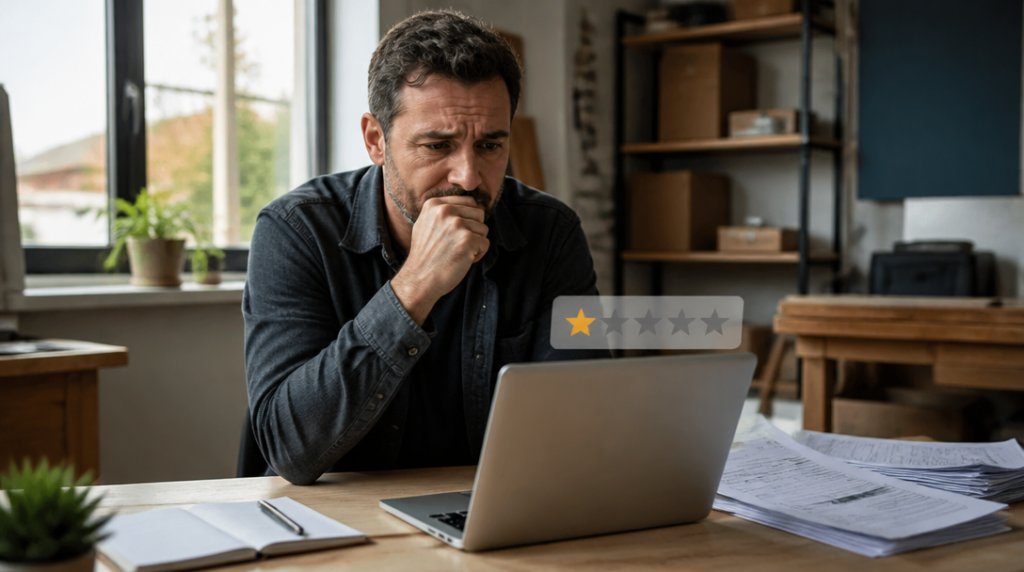
A customer leaves a one-star review complaining about a meal your restaurant does not serve, on a day your doors were closed. The reviewer has a different name each time, apparently owns several accounts, and seems to have developed a passionate dislike of your business without ever setting foot inside it. Meanwhile, the review sits beneath your carefully photographed menu, glowing with the authority of a public accusation.
This is the awkward territory of fake and malicious reviews. Some are deliberate attacks from competitors or disgruntled individuals. Others come from people who confuse businesses, exaggerate a genuine problem, or simply discover that a public review is an excellent place to release emotions that would look rather dramatic in an email.
The first move is not to reply in all caps, even if your fingers are already hovering over the keyboard like two tiny lawyers. Take a screenshot, record the reviewer’s name, note the date, and preserve any details that may help establish what happened. Keep evidence of bookings, orders, customer-service conversations, delivery records, or opening hours. You may never need it. If you do, vague memories will be much less useful than a tidy timeline.
Then decide what kind of problem you are looking at. A review can be unfair without being fake. A customer may have had a genuinely poor experience and described it in an exaggerated way. That is unpleasant, but a negative opinion is not automatically a policy violation. Platforms generally do not remove a review merely because a business disputes it or dislikes the rating. Removal depends on whether the content breaks the platform’s rules.
That distinction matters because it changes your strategy. If the review describes a real transaction, however harshly, the strongest response is usually calm, specific, and short. Thank the person for raising the concern, say you cannot identify the interaction from the information provided, and invite them to contact the business privately so the matter can be checked. Do not publish personal details in an attempt to prove your innocence. Broadcasting an order number, phone number, or medical complaint may win a small argument while creating a much larger privacy problem.
A public response is not only for the reviewer. Potential customers are reading it too. They are watching to see whether the business behaves like a grown-up when handed an unpleasant sentence. A measured reply can quietly communicate that you take complaints seriously, keep records, and do not collapse into theatrical outrage at the first sign of criticism. That is a useful signal, even if the original review remains online.
If the review appears fabricated or malicious, report it through the platform’s official process. Explain the specific rule you believe it violates and provide factual details rather than a general declaration that the reviewer is a terrible person. A report saying “This is fake and malicious” gives a moderator very little to work with. A report explaining that the business was closed on the stated date, that no matching customer record exists, and that the same text appears across several unrelated profiles is more useful.
Google generally reviews a reported review within several days. It removes the review only if it violates its policies, not simply because it is negative, inaccurate, or embarrassing to the business. The platform treats fake engagement as a policy issue, including reviews from people without a genuine experience, paid reviews, and reviews posted through multiple accounts at one person’s request. Those details are worth addressing directly in your report, provided you can support them.
If the decision does not change, Google allows a one-time appeal covering up to ten reviews at once. Use that opportunity carefully. Group related cases, explain the pattern, and avoid submitting the same emotional complaint in a slightly different outfit. Moderation systems are not known for being charmed by repetition.
Do not ask friends, employees, relatives, or loyal customers to bury a suspicious review with a sudden wave of glowing five-star ratings. That can create a second problem, and sometimes a more convincing one. Genuine customers can be invited to leave honest feedback, but the request should not depend on a particular rating or positive wording. You want a record of real experiences, not a suspiciously synchronized choir.
The legal risk is becoming more serious in some markets. In the United States, a rule against fake reviews took full effect on October 21, 2024. It prohibits buying or selling fake reviews and bans incentives that are conditional on a positive or negative rating. In practical terms, a business cannot offer a discount in exchange for five stars, nor pay someone to post a damaging review about a rival. The rule was approved unanimously, 5–0, and allows civil penalties for knowing violations.
That does not mean every unpleasant review becomes a federal case. It does mean that review management should not be treated as a mischievous marketing shortcut. Paying for praise, pressuring staff to post reviews, or organizing coordinated attacks can create legal exposure as well as platform penalties. If your business operates across countries, local rules may differ, so serious disputes deserve advice from a qualified lawyer rather than an enthusiastic search through comment sections.
Platforms can also penalize businesses that manipulate reviews. Google may temporarily block new reviews, hide existing ratings, or display a warning to customers when it finds a policy violation. In other words, trying to manufacture a perfect reputation can result in the platform placing a large digital sign above your business saying that something has gone rather wrong.
The best defense is a review process that makes suspicious activity easier to spot and genuine complaints easier to resolve. Assign one person to monitor reviews, check them on a regular schedule, and keep an internal record of serious incidents. Make sure staff know where customer complaints should go before they spill into public comments. If a reviewer raises a real issue, respond promptly and investigate it. A business that never answers legitimate criticism looks less trustworthy than one that occasionally receives it.
There is also a useful discipline in writing replies as though the reviewer were standing beside you in a quiet room. No insults. No speculation about their mental state. No threats to “expose” them. No claim that you know their employer, address, or family. A sentence such as “We cannot find a record matching this account, but we would like to investigate the issue” is much safer and more persuasive than “You are a liar hiding behind a fake profile,” even if the second sentence has a certain immediate emotional sparkle.
Some attacks are part of a broader pattern: repeated posts from new accounts, identical wording, threats demanding money, or messages promising to remove reviews in exchange for payment. Preserve every message and avoid negotiating casually. Report the conduct to the platform, and consider legal advice or law-enforcement assistance if there are threats, extortion, impersonation, or serious reputational harm. A review dispute is one thing. A campaign designed to force payment or intimidate staff is another.
For ordinary fake reviews, patience and documentation tend to outperform public combat. Report the content, appeal when the platform offers that route, answer visible criticism with restraint, and encourage genuine customers to share honest experiences without steering their ratings. Reputation is not a glass ornament that shatters because of one star. It is more like a busy shop floor: one spill attracts attention, but the way staff deal with it tells people far more.