
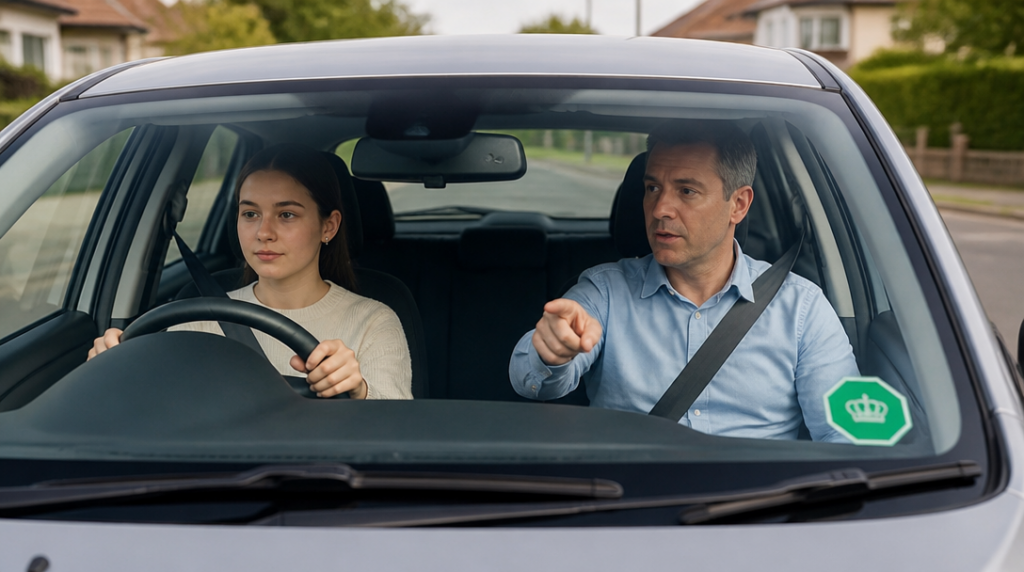
Which driving instructor would you trust with your confidence, your money and your safety before you have even met them?
That question is harder than it sounds. A polished website, a cheap introductory lesson or a car with a professional-looking sign can all create a good first impression. None of them proves that the instructor is properly registered, teaches well or understands the kind of learner you are.
Choosing an Approved Driving Instructor, usually called an ADI, takes a few checks and one important shift in thinking: you are not simply buying time behind the wheel. You are choosing a coach whose habits, explanations and attitude will shape the way you drive long after the test.
The rules covered here apply to England, Scotland and Wales. Northern Ireland has a different system, so learners there need to check the local requirements separately.
Start with the badge, not the advert
A fully qualified ADI must display a green badge in the front windscreen. That is the quickest visual check when you meet an instructor or see the car outside a test centre. A pink badge belongs to a trainee driving instructor who has permission to teach under a trainee licence but has not yet qualified as a full ADI.
The distinction matters. Paid driving lessons may only be given by a registered ADI or by someone holding a valid trainee licence. If a person charges for lessons without either status, the arrangement is unlawful.
Do not feel awkward asking to see the badge before booking. A legitimate instructor should be used to the question and should answer it directly. If the badge is missing, hidden or difficult to identify, pause before handing over money or scheduling a block of lessons.
You can also use the official instructor-checking service to verify an instructor and see the grade they have declared. The service is useful, but it is not a complete national directory. Instructors join the listing voluntarily, so an instructor may be legitimate even if their name does not appear there. Treat the result as one part of the check rather than the whole decision.
A declared grade can offer a useful clue, but it is not a substitute for a conversation. Someone can have a strong assessment result and still explain things in a way that leaves you cold. Driving lessons are personal. The instructor has to make sense to you from the passenger seat, not just look impressive on a database.
Find out how they teach before you book
Ask how the first few lessons usually work. A thoughtful instructor will be able to describe how they assess your starting point, introduce vehicle controls, build your observation skills and decide when to move into busier traffic. They should not promise a fixed number of lessons for every learner because people arrive with very different experience, confidence and learning needs.
Listen for practical language. “We will work out what you can already do, then build from there” tells you more than “I get everyone through quickly.” A good instructor should be interested in how you learn, not only in how many hours you can buy.
Some learners need calm repetition. Others want a detailed explanation before trying a manoeuvre. A few understand a problem only after seeing it demonstrated. Ask whether the instructor adapts their teaching and how they give feedback. You are looking for clear corrections, not a stream of vague comments such as “be better prepared” or “just use your mirrors more.”
It is perfectly reasonable to ask how they handle mistakes. The answer should involve identifying what happened, explaining why it mattered and giving you a way to improve next time. Constant criticism will make many learners tense, while excessive praise can hide problems that need attention. The useful middle ground is honest, specific feedback delivered without drama.
I would pay close attention to the instructor’s tone during this first conversation. The person who sounds patient and focused on the phone will probably be easier to learn from than someone who rushes you into booking ten lessons before asking whether you have ever sat in the driver’s seat.
A trainee instructor can be suitable, with clear boundaries
A trainee instructor is not automatically a poor choice. They may be enthusiastic, well prepared and very committed to developing their teaching. Their lessons can also cost less, although there is no legal minimum or maximum price for driving lessons. Each instructor sets their own rates.
There are safeguards you should check. The instructor must be clearly identified as a “trainee driving instructor” and should work under the driving school named on the licence. They must not present themselves as a fully qualified ADI. If the advert, booking message or conversation leaves you unsure about their status, ask directly before paying.
A trainee’s experience and supervision arrangements are worth discussing too. Ask how long they have been teaching, what support they receive and whether the lessons will be reviewed as part of their training. You are not being difficult by asking. You are establishing what service you are actually buying.
The pink badge should be visible in the front windscreen. If someone claims to be a trainee but does not display the correct badge, or describes themselves as fully qualified despite having trainee status, choose another instructor.
You should also know whether you are comfortable being taught by someone still gaining experience. Some learners like the energy and attention a trainee brings. Others feel more secure with an established instructor. Neither preference is wrong; confidence affects how well you absorb new skills.
Compare prices without chasing the cheapest hour
Since instructors set their own prices, lesson fees can vary significantly between schools and areas. Price matters, particularly if you need many hours, but the lowest rate is not always the best value.
Ask what the quoted price includes. Is the lesson a full sixty minutes, or does it include collection and drop-off time? Is the same car used for lessons and the practical test? Can you book weekly sessions reliably? What happens if the instructor is ill or the vehicle needs repairs? These details can affect your progress more than a small difference in the hourly rate.
Be cautious about paying a large amount upfront before you have taken a lesson. A block booking may offer a discount, but you should understand the cancellation terms and know what happens if the arrangement does not suit you. A reputable instructor should be able to explain the policy clearly rather than treating questions about refunds as an inconvenience.
Ask whether the instructor charges extra for test-day use of the car. Also clarify whether motorway lessons, intensive sessions or evening and weekend appointments have different rates. Surprises are easier to avoid before the first payment.
A well-organised instructor should keep track of what you have practised and what needs more work. That does not require a complicated app or glossy progress chart. A short conversation at the end of a lesson can be enough: what went well, what caused difficulty and what you should focus on next time.
Use the first lesson as a real test
The first lesson is not only an introduction to the car. It is your chance to judge the instructor.
Notice whether the car is clean, roadworthy and properly equipped for teaching. Notice whether the instructor explains the controls before expecting you to use them. Pay attention to the balance between safety and independence. You should be guided carefully, but you should also be given room to think and make controlled attempts rather than being treated as a passenger who occasionally touches the steering wheel.
A strong instructor makes the reason behind an instruction clear. Instead of barking “mirror,” they explain what you need to check, why the timing matters and what could happen if you miss it. That sort of teaching builds judgment rather than encouraging you to memorise commands.
The lesson should leave you with a clearer sense of what to practise next. You do not need to feel flawless. Early driving is supposed to feel demanding. But you should feel that mistakes were handled constructively and that the instructor was paying attention to your particular difficulties.
If the fit is wrong, you can change instructors. Money already spent is frustrating, but continuing for weeks with someone who makes you anxious or confused is usually more costly. Before switching, ask yourself whether the problem is normal beginner discomfort or a consistent failure to explain, listen and teach safely.
The right ADI will not make every junction effortless. They will make the junction understandable, then give you enough practice to handle it without them.