
The first carpet-cleaning company you find online may be a paid advertisement, and the phone number beside it may even belong to another business. That is why choosing a reliable service starts before you pick up the phone.
Search results are useful, but they are not a quality ranking. Paid listings can appear above unpaid results, so take a moment to check whether the business name, phone number, and website all match. Open the company’s own site rather than relying only on the number displayed in a search result. If anything looks inconsistent, search for the business again using its exact name and location.
A polished website is not proof of careful work. It can show attractive photographs, cheerful promises, and a list of services that says very little about how the company treats a real home. The useful questions are more specific: How long has the company been operating? Does it explain its cleaning process? Does it identify the type of equipment used? Can it describe what happens to delicate fibers, stubborn stains, or furniture that cannot be moved?
The best companies usually sound comfortable answering practical questions. They do not need to hide behind vague claims such as “the best clean in town.” They can explain what they will inspect, what the quoted service includes, how long the carpet may take to dry, and what limitations apply to old stains or damaged fibers.
Before booking, ask for proof that the company holds any license required by your state or county. Requirements vary, so a legitimate cleaner should be able to tell you which rules apply locally and provide current documentation when asked. You should also request proof of liability insurance. This matters if a technician damages flooring, furniture, trim, or another part of your home while working. A business that reacts defensively to a simple request for insurance details is giving you useful information, just not the kind it intended.
Price deserves the same level of attention. A low figure in an advertisement may cover only a small room, a basic pass, or a promotional service that changes once the technician arrives. Ask for the total price in writing before the appointment, along with the exact scope of work and every possible surcharge. That should include charges for stairs, heavily soiled areas, moving furniture, deodorizing, stain treatment, or returning to deal with a problem.
A written quote does not have to be complicated. It should make clear which rooms are included, whether the price is based on room count or square footage, and whether taxes or extra treatments are separate. If the company refuses to provide those details until someone is standing in your hallway with a machine, look elsewhere. Carpet cleaning should not feel like a negotiation staged in your living room.
Be especially cautious if a representative pushes you to decide immediately, demands full payment before the work begins, or insists on cash only. Pressure is not a sign of efficiency. It is a warning sign. A trustworthy company can explain its schedule and payment terms without making you feel that a limited-time offer is disappearing by the minute.
The cleaning method itself deserves a closer look. Different carpets respond to different processes, and a serious technician should want to know what kind of flooring you have before promising a result. Wool, natural fibers, plush carpet, delicate rugs, and older installations may require different handling from durable synthetic carpet. Ask whether the company will inspect the material and test an inconspicuous area before applying cleaning solutions.
You can also ask what products the company uses and whether the ingredients are disclosed. For households with children, pets, asthma concerns, or sensitivities to fragrances, this is not a minor detail. Products carrying the Safer Choice label are evaluated ingredient by ingredient, must meet safety criteria, must work effectively, and must disclose all ingredients. The program currently includes nearly 2,000 certified products, including carpet cleaners. That does not mean every certified product is right for every carpet, but it gives you a more meaningful starting point than a vague promise about “natural” or “green” chemicals.
Those words deserve skepticism. “Eco-friendly,” “non-toxic,” and “pet-safe” can be used loosely in marketing, while a product’s actual ingredients and instructions tell you much more. Ask whether the technician can provide the product name, explain its intended use, and tell you how long people and pets should stay off the carpet after treatment. If the company treats basic safety questions as an annoyance, it may not be the right fit for your home.
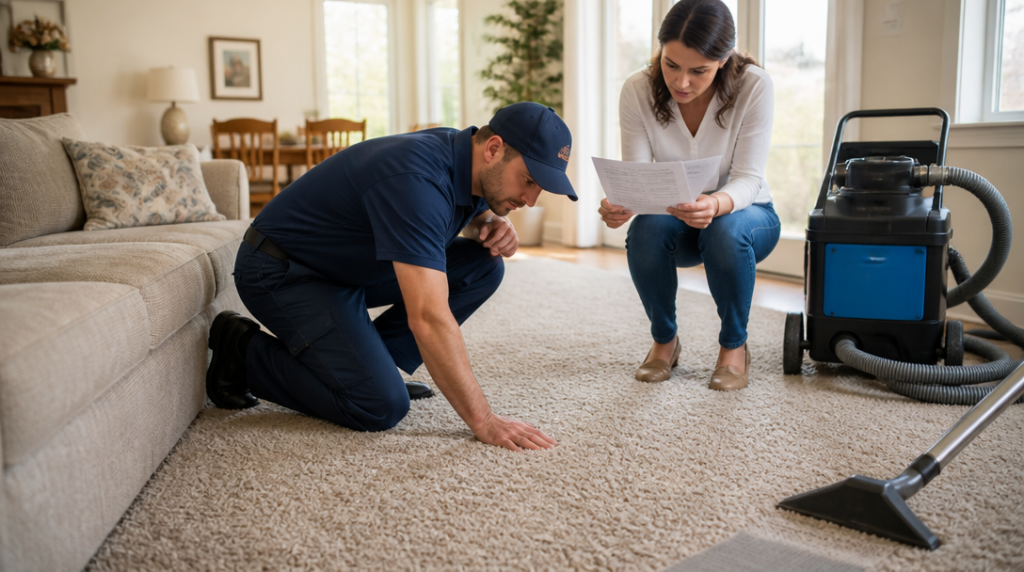
The technician’s behavior on arrival can tell you plenty. Someone who begins by examining the carpet, asking about stains, and checking for existing damage is more reassuring than someone who immediately unloads equipment and starts spraying. Point out stains caused by wine, grease, ink, pets, or unknown substances. Mention previous treatments too. A cleaner cannot make an honest promise about a mark they have not properly assessed, and some stains may lighten rather than disappear completely.
Pay attention to how the company handles expectations. Permanent discoloration, fiber damage, sun fading, and wear patterns are not the same thing as surface dirt. A credible technician will explain the difference instead of guaranteeing that every carpet will look new. That kind of honesty may sound less exciting than a miracle claim, but it is far more valuable when the job is finished.
Reviews can help, although they work best as a pattern rather than a verdict. One furious review may describe an unusual disagreement; one glowing review may have been written before a problem appeared. Read several recent comments and look for repeated details about punctuality, unexpected charges, drying times, communication, and how complaints were handled. A company does not need a perfect record. It should show a consistent habit of responding professionally when something goes wrong.
Ask people you trust for recommendations, especially neighbors who have carpets similar to yours. A cleaner who does excellent work on short-pile synthetic carpet may not have much experience with an expensive wool rug. The most useful recommendation includes context: what was cleaned, how the price was calculated, whether stains returned, and how the carpet looked after drying.
There is one more practical test that I find revealing: call the company with a small, ordinary question and listen to the answer. Can the person explain the process clearly, or do they rush toward a booking? Do they ask about your carpet, or do they quote a suspiciously precise price without knowing the size of the rooms? That brief conversation often feels like a better preview of the service than a gallery of spotless carpets online.
Before the technician arrives, clear fragile objects and small items from the area, but do not assume you must move heavy furniture unless that is part of the agreement. Confirm the appointment window, the expected drying time, and the payment method. Keep the written estimate available so both sides are working from the same terms.
A dependable carpet cleaning service does not need to create confusion around a straightforward job. It should make the price visible, the method understandable, the safety information available, and the limits of the result clear before the machines ever cross your threshold.