
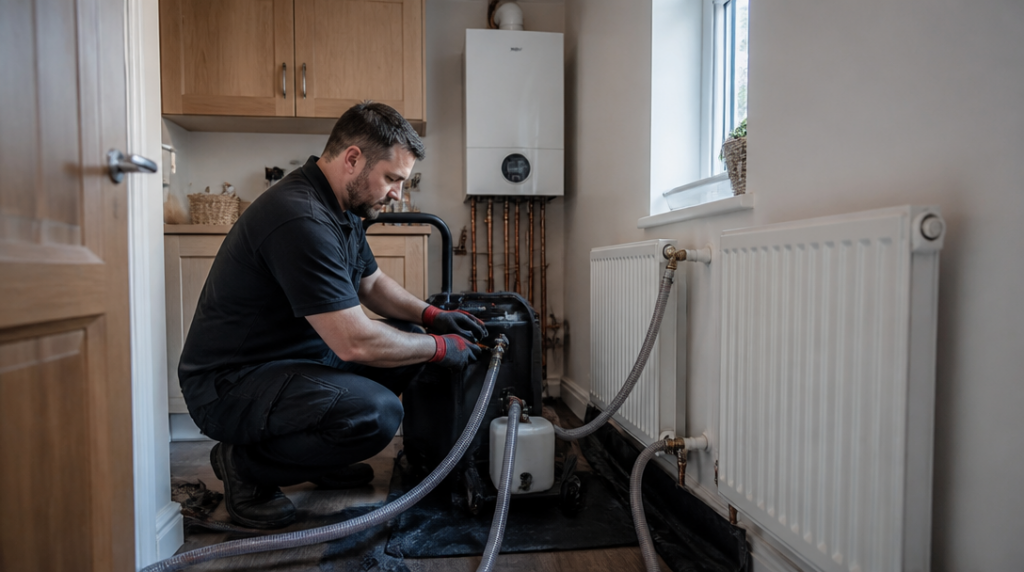
A power flush can cost as much as £800 in the UK, which is a sizeable sum to spend persuading a collection of pipes and radiators to behave themselves.
For most homes, though, the typical price in 2026 sits between £350 and £800, with an average cost of roughly £450. Smaller or simpler systems may start at around £250, while larger, older or particularly troublesome installations can reach £700 or more. In London and the south-east of England, prices commonly rise to about £400–£900, reflecting higher labour and operating costs in those areas.
That range is wide because a power flush is not priced like a standard boiler service. A technician is not simply arriving with a hose, pressing a button and leaving before the kettle boils. The job involves connecting specialist equipment, circulating cleaning chemicals through the heating system, loosening sludge and debris, flushing contaminated water away and checking that the system is working properly afterwards. The number of radiators and the condition of the pipework both affect the time involved.
Typical power flushing prices by house size
The most useful way to estimate the cost is to look at the size of the property and the number of radiators. A two-bedroom house with around six radiators costs approximately £450 to power flush. A three-bedroom home with about ten radiators tends to cost around £550. For a four-bedroom property with 15 radiators, the price can rise to approximately £800.
These figures are not fixed tariffs. They are sensible planning figures, rather than a promise engraved on a particularly optimistic plumber’s clipboard. A small house with heavily contaminated pipework may cost more than expected, while a larger system in reasonable condition may be quicker to clean.
The number of radiators matters because each one forms part of the circuit being cleaned. The technician may need to work through the system methodically, checking flow and return temperatures, changing the direction of circulation and dealing with individual radiators that are especially restricted. More radiators usually mean more connections, more water to process and more time on site.
Older systems can bring additional complications. Sludge may have built up over many years, especially if the system has not been properly maintained or protected with suitable chemicals. Corrosion inside radiators and pipework can also make the flushing process less straightforward. A power flush can remove a significant amount of debris, but it cannot turn every ageing component into a brand-new one. If a radiator valve is already failing, the cleaning process may reveal that fact rather than cause it.
How long does a power flush take?
A smaller house will often require about one day of work. A larger property may take one to two days, depending on the size and condition of the heating system. The technician’s labour rate is typically around £50 per hour, although the total price also reflects equipment, cleaning products, travel and the complexity of the job.
The process usually begins with an assessment of the boiler, radiators and pipework. The technician then connects a powerful flushing machine to the heating system. Cleaning chemicals are circulated to break down deposits, followed by repeated flushing with clean water until the water leaving the system is sufficiently clear. The system is then refilled and treated with an inhibitor intended to reduce future corrosion and sludge formation.
That description makes the work sound almost therapeutic. In reality, it is closer to giving an old plumbing network a vigorous internal wash while hoping nobody has hidden a leaking joint behind the skirting board.
A quote that looks suspiciously cheap may not include every part of the process. Some businesses advertise a low starting price and then charge extra for chemicals, inhibitor, additional radiators, difficult access or replacement valves. Others may quote a single all-inclusive figure after inspecting the system. Neither approach is automatically wrong, but the difference should be clear before work begins.
What makes the price go up?
The biggest cost factor is the condition of the heating system. A system with mild contamination may be completed relatively quickly. One filled with thick sludge can require more chemical treatment, longer circulation and repeated flushing. If radiators need to be removed or isolated individually, the technician may spend considerably longer on the job.
The size of the property is another obvious factor, although bedroom count is only a rough guide. Two houses with the same number of bedrooms may have very different heating layouts. One may have six radiators; another may have ten, a heated towel rail and a long run of pipework stretching into an extension. The second system will generally need more time and equipment.
Access can affect the quote too. A boiler in a cramped cupboard is not necessarily a problem, but awkward connections, restricted parking or pipework that is difficult to reach can add labour. Regional pricing also plays a role. In London and the south-east, a power flush may cost around 15–25% more than the UK average, with typical prices reaching approximately £400–£900.
The boiler itself may influence the assessment, particularly if it is already showing signs of poor circulation. Cold patches at the bottom of radiators, radiators that take a long time to heat, noisy pipes and frequent pressure or heating problems can all point to circulation issues. They can also have other causes, so a power flush should not be treated as a universal cure for every heating complaint. Pipes are many things, but they are not known for their diagnostic honesty.
Is power flushing worth the money?
For a system suffering from sludge or restricted circulation, a power flush may improve heating performance and help radiators warm more evenly. It can also reduce some of the strain caused by poor circulation. The value depends on whether contamination is actually the problem and whether the rest of the system is in reasonable condition.
A flush will not repair a broken pump, replace a failed thermostat or fix a boiler with a serious internal fault. Nor will it make badly corroded radiators immortal. If several components are already near the end of their service life, spending hundreds of pounds on cleaning may not produce the result a homeowner expects.
That is why a proper inspection matters. A reputable heating engineer should be able to explain what signs indicate sludge, what the proposed process includes and whether any parts are likely to need replacement. If the only explanation is that the system “probably needs a flush” delivered with the confidence of a weather forecast made in a cupboard, ask for more detail.
What should a power flush quote include?
A written quote should make clear whether the price covers the full flushing process, cleaning chemicals, fresh water, inhibitor and testing after the work. It should also state how many radiators are included and whether the boiler, hot-water cylinder or other parts of the system are covered.
Ask whether the quoted price includes VAT, particularly if the estimate comes from a larger company. It is also sensible to check what happens if the technician discovers a seized valve, a leaking radiator or a component that needs replacement. Those repairs may be legitimate extras, but they should not arrive as a surprise at the end of an already expensive day.
The cheapest quote is not always the best value. A rushed flush that leaves contaminated water in the system may offer little benefit, while a detailed quote from an experienced engineer may look expensive because it includes the equipment, chemicals and time needed to do the job properly. The useful comparison is between like-for-like quotes, not between one full service and one enticing number that leaves half the work in the fog.
For budgeting purposes, around £450 is a reasonable figure for an average UK home, while £550–£800 is more realistic for larger properties with more radiators. If the property is in London or the south-east, allowing £400–£900 gives a less surprising starting point. The final price should reflect the system in front of the technician, not just the number of bedrooms printed on the estate agent’s brochure.