
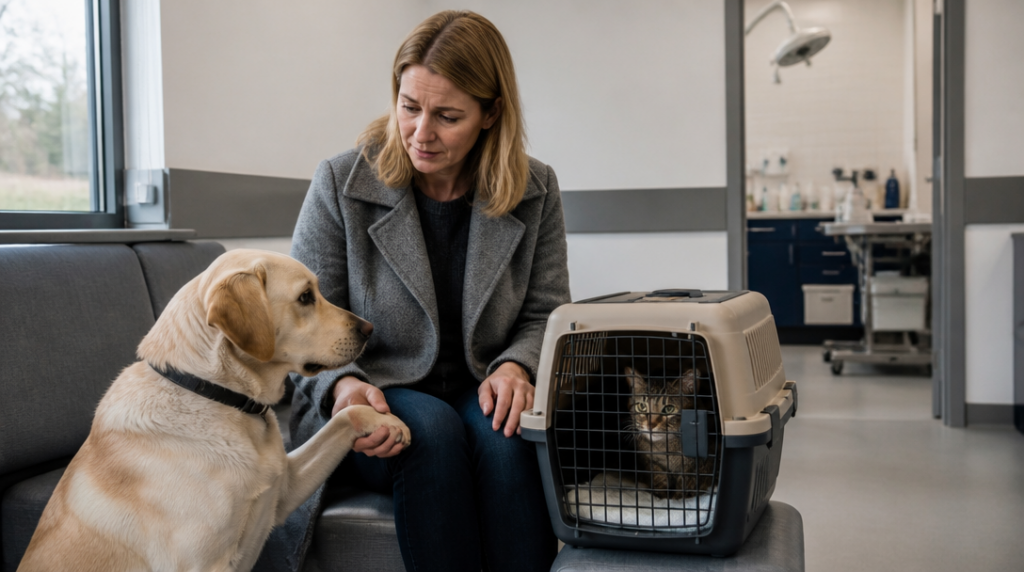
The Labrador had been running across the park one minute and limping the next. His owner crouched beside him, checking the paw for a thorn while mentally counting the cost of an emergency vet appointment. The dog was fine in the end, but the episode captured the worry behind a question many UK pet owners eventually ask: how much would pet insurance actually cost?
The answer varies sharply. A basic policy can cost only a few pounds a month, while cover for an older dog or a breed prone to health problems can be considerably more expensive. The average UK pet insurance policy costs £23.63 a month, although the cheapest available offers start at around £3.95 a month.
Those figures are useful as a starting point, but they do not tell the whole story. The type of cover, your pet's age, its breed, your location and the excess you choose can all change the final premium.
A dog, a cat and a very different monthly bill
Dogs generally cost more to insure than cats. Average cover for a dog is £12.84 a month, compared with £7.39 for a cat. Puppies average £9.42 a month, while kitten cover averages £5.88.
That may seem counterintuitive at first. Young animals are usually healthier, so why insure them at all? The reason is that insurance is not only about treating an animal that is already ill. It protects against accidents, sudden injuries and conditions that may emerge early in life. A puppy that swallows something it should not, or a kitten that suffers an injury outdoors, can create a substantial veterinary bill before its first birthday.
The figures also show why a low introductory price needs careful examination. A policy costing £4 a month may offer only accident cover, have a high excess or impose strict limits on treatment. A more comprehensive policy will usually cost more, but it may provide wider protection if your pet develops a long-term condition.
Cats tend to be cheaper to insure partly because veterinary treatment is often less costly than treatment for dogs, although that is not a rule that applies to every animal. A large cat with a history of illness may still attract a higher premium than a healthy young dog of a low-risk breed.
Why an older dog can cost twice as much
Age is one of the clearest drivers of pet insurance pricing. Average cover for dogs aged over seven costs £22.74 a month, compared with £9.27 for dogs under one year old.
Insurers price older pets differently because the likelihood of illness, ongoing treatment and age-related conditions rises over time. The policy may also come with a larger excess or a percentage of each claim that the owner must pay. Some insurers restrict new cover for older animals, while others offer specialist policies with different terms.
This is why delaying insurance can create a difficult choice. A young dog may be cheap to cover, but waiting until problems appear can mean that those conditions are excluded from future policies. Changing insurers later can have a similar effect if an existing illness is treated as a pre-existing condition.
A monthly premium is easier to absorb than a large unexpected bill, but the real value of early cover lies in keeping protection in place before a medical history begins to follow the animal from one policy to the next. That is a less dramatic benefit than a claim after an accident, though often the more important one.
French Bulldogs cost more than Cockapoos for a reason
Breed can make a striking difference, particularly among dogs. Average monthly premiums are £10.70 for a Cockapoo, £13.95 for a Golden Retriever and £20.43 for a French Bulldog.
The gap reflects more than size or popularity. Insurers consider the conditions associated with particular breeds and the likely cost of treating them. French Bulldogs, for example, are widely recognised as a breed that can face significant health complications, which helps explain why their average premiums are higher than those for the other examples.
A Golden Retriever may cost more to insure than a Cockapoo even when both are young and healthy. The animal's pedigree, medical history and exact age can still move the quote up or down. Crossbreeds are not automatically cheap, either. An insurer may assess the risks associated with both sides of the breed mix.
For owners choosing a pet, insurance is one of the quieter costs to consider alongside food, vaccinations, grooming and routine veterinary care. A breed that looks affordable at the point of purchase may be more expensive to protect over the years.
Accident-only cover starts cheaply
The lowest premiums usually belong to accident-only policies. Average accident-only cover costs £3.96 a month for a dog and £3.02 for a cat. These policies can pay towards treatment after an injury, such as a broken bone or wound, but they generally do not cover illnesses.
That distinction matters. A pet may never be injured but could still develop diabetes, arthritis, skin disease or another condition requiring repeated treatment. Accident-only insurance may leave the owner responsible for those bills.
At the other end of the range, lifetime cover averages £13.76 a month for dogs and £8.17 for cats. Lifetime policies are designed to continue providing cover for ongoing conditions, provided the policy is renewed and the premiums are paid. They are usually more expensive than accident-only cover because they offer broader protection over a longer period.
There are other forms of cover between these two extremes. Time-limited policies may cover an illness or injury for a set period, while maximum-benefit policies can pay up to a stated amount for a condition. Once the time or financial limit is reached, further treatment may no longer be covered.
The policy wording can feel dry, but this is where the meaningful difference between a cheap policy and a useful one usually appears. Check whether the cover includes illnesses, how long claims remain open, whether dental treatment is included and what happens when the policy renews.
The quote is only the beginning of the calculation
Two owners with similar pets can receive different quotes because insurers weigh several details. The pet's age and breed are obvious factors, but location can matter too. Veterinary costs are not identical across the UK, and premiums may reflect local prices.
Your chosen excess also affects the monthly bill. A higher excess can reduce the premium, but it means paying more yourself when you make a claim. Some policies use a fixed excess, while others require the owner to pay a percentage of the remaining veterinary bill as well. That percentage can become significant when treatment costs run into thousands of pounds.
The annual claim limit deserves equal attention. A policy with a low premium might offer only modest financial protection, whereas a pricier policy could provide a larger allowance for treatment. The correct comparison is not simply the monthly direct debit. It is the combination of premium, excess, exclusions and the maximum amount the insurer will pay.
Routine care is often outside standard pet insurance. Vaccinations, flea treatment, worming, check-ups and most preventative care usually remain the owner's responsibility. Some insurers sell optional plans for routine treatment, but these are separate from protection against major illness or injury.
A practical way to judge a policy is to imagine the bill you would struggle to pay. If a £1,000 veterinary expense would be manageable but a £5,000 bill would not, a policy with a stronger annual limit may be more suitable than the cheapest available option. If paying a percentage of every claim would cause problems, look closely at whether the excess changes as the pet gets older.
Pet insurance is rarely exciting while the animal is healthy. It is a little like carrying an umbrella on a bright morning: easy to resent when the sky is clear, suddenly valuable when the weather changes. The monthly cost may begin at less than the price of a takeaway coffee, but the terms behind that price determine how much help arrives when your pet needs treatment.