
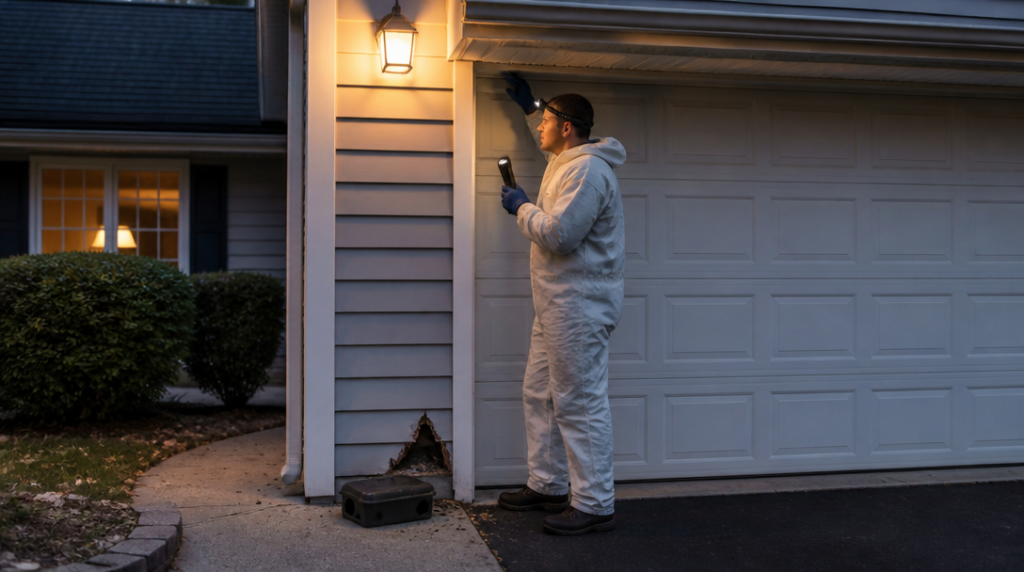
A homeowner in Illinois noticed wasps disappearing into a gap beneath the eaves. From the ground, the nest looked small enough to ignore. A technician arrived, inspected the roofline, and found a much larger nest hidden behind the siding. The final quote was far higher than the price of a routine indoor spray, not because the treatment itself was mysterious, but because reaching the nest safely required extra equipment and careful removal.
That distinction explains much of the confusion around pest-control prices. A wasp nest in an accessible shed is a different job from a nest inside a wall. A few rat droppings in a garage may lead to a simple trapping visit, while rats moving through several parts of a house can require repeated treatments and repairs to entry points.
Typical Costs for Wasp Removal
In the United States, professional wasp removal usually costs between $100 and $1,300, with an average price of about $375. The range is wide because the word “wasps” covers jobs of very different sizes and levels of difficulty.
Removing a single nest commonly costs around $290 to $600. A small nest attached to an exterior wall may be straightforward. A nest hidden in an attic, chimney, soffit, or cavity behind siding is more demanding. The technician may need to locate the colony before treatment, protect nearby occupants, and return later to remove the nest or confirm that activity has stopped.
The size of the nest matters, but it is not the only factor. Its location can have a greater effect on the bill. A nest hanging from a low branch is usually easier to handle than one tucked under a roof overhang several stories above the ground. Tight access, steep roofs, fragile surfaces, and electrical equipment can all make a routine-looking job more involved.
Chicago offers a useful illustration of that difference. Small wasp nests there cost about $260 to eliminate on average, while large nests average roughly $1,040. Those figures are not universal prices for every city, but they show how sharply the cost can rise when the colony is extensive or difficult to reach.
The species can influence the treatment as well. Some wasps build visible paper nests, while others nest underground or inside structural spaces. Treating a nest without finding the actual entry point may reduce activity temporarily but leave the colony intact. A careful inspection is therefore part of the service, not merely an optional extra.
Timing can affect the price, too. A daytime appointment during normal business hours may be less expensive than emergency service for an active nest near a doorway, play area, or bedroom window. Homeowners sometimes call after spotting only a few insects, yet repeated activity at the same gap or crack often signals a hidden nest nearby.
Chemical treatment is not always the entire job. After the insects are gone, the opening may need to be sealed so another colony cannot use it. Some companies include minor sealing in their service; others charge separately. Ask whether the quote covers nest removal, follow-up visits, cleanup, and repairs before approving the work.
Do not approach a hidden nest with a ladder and a household aerosol can. That combination has a way of turning a small maintenance problem into a fast retreat through the yard. Spraying a visible nest from a safe distance may seem simple, but disturbed wasps can become highly defensive, and a nest inside a wall presents a different risk altogether.
Typical Costs for Rat Removal
Professional rat removal in the U.S. costs an average of about $395, with common prices ranging from $189 to $655. The final amount depends largely on how many areas are affected, how long the rats have been present, and whether the property needs exclusion work after trapping or removal.
A basic visit may include an inspection, traps, bait stations, or other control measures. More persistent infestations usually require follow-up appointments. Rats are cautious around unfamiliar objects, and a property can contain several routes between walls, attics, basements, garages, and outdoor structures. Removing one animal does not necessarily solve the problem if others can still enter.
The inspection should identify more than droppings. Technicians may look for gnaw marks, grease trails, nesting material, damaged insulation, and openings around pipes, vents, doors, or foundations. They may also check whether food, rubbish, birdseed, or pet food is attracting rodents. A quote that covers only traps may be lower at first but leave the conditions that allowed the infestation to develop.
Exclusion is often the part homeowners underestimate. Rats can use surprisingly small gaps, and sealing those openings may involve mesh, metal flashing, mortar, or replacement materials rather than a quick application of foam. If the work involves damaged ducting, insulation, wiring, or structural materials, those repairs can sit outside the pest-control estimate.
Contamination cleanup is another possible cost. Rat urine, droppings, and nesting debris should be handled carefully, especially in enclosed spaces such as attics or crawl spaces. Some pest-control companies offer sanitation services, while others leave cleanup to a specialist. It is worth asking directly, because “removal” and “decontamination” are not always part of the same package.
For comparison, a one-time general pest-control visit for a 1,500-square-foot home costs about $108 to $261, with an average of $171. That service is aimed at broader household pest prevention and should not be confused with a specialized rat-removal job. Rats often need targeted monitoring, trapping, exclusion, and sometimes repeat visits.
Location also changes the price. A rat problem confined to a detached garage may be simpler than one involving the kitchen, attic, and wall cavities. Access matters as well: a technician can work more efficiently in a clear basement than in a cramped crawl space packed with stored belongings. Urban properties may also present more complicated routes through adjoining buildings, shared walls, alleys, or sewer connections.
The most useful quote is a written one that describes the work rather than offering only a single total. It should state whether inspection, traps, bait, follow-up visits, dead-animal removal, sealing entry points, and cleanup are included. Ask how long the company’s guarantee lasts and what would trigger an additional charge.
Homeowners should also be cautious with indoor poison placement. A rat that dies inside a wall can create an odor problem, while bait can be dangerous to pets and children if it is not secured properly. Professional treatment is not automatically expensive because it involves chemicals; the cost often reflects the time needed to locate movement, monitor results, and prevent the next animal from entering.
For both wasps and rats, the cheapest quote is rarely the most informative one. A low price may cover a single application, while a higher estimate may include inspection, removal, sealing, and follow-up. Compare the scope of the work line by line, especially when the pest is inside the building rather than simply visible outdoors.