
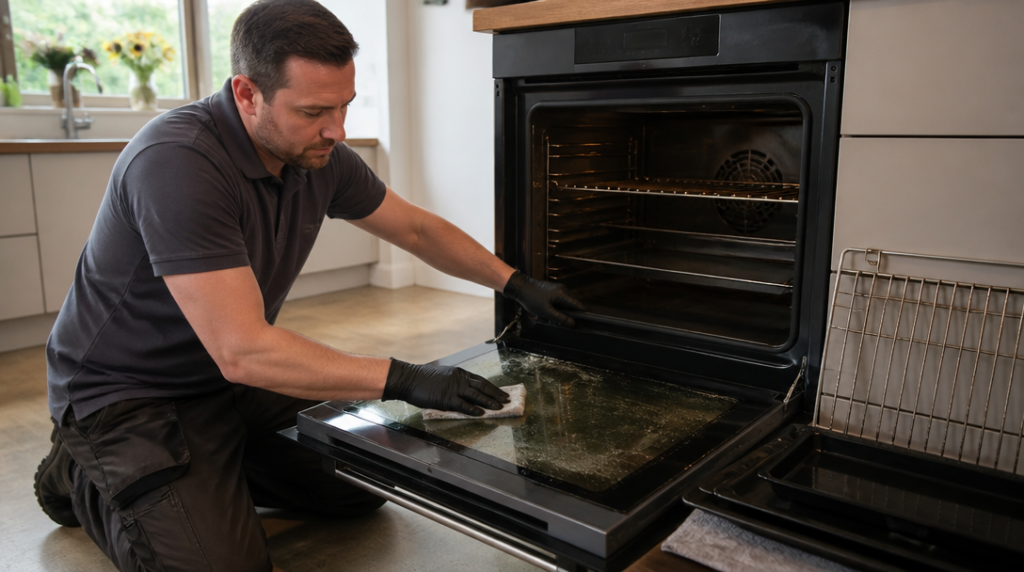
Picture the scene: Sunday lunch is nearly ready, the oven door is fogged with grease, and the inside looks as though it has been hosting small industrial experiments. You have two choices: spend the afternoon scrubbing it yourself or pay someone else to deal with the archaeological layer of burnt-on food.
In the UK, professional oven cleaning usually costs around £50–£70 for a standard single oven. Some cleaners advertise prices closer to £55–£70, depending on the service and the appliance. A double oven generally costs about £70–£90, with an average price of roughly £80.
Those figures cover the common household oven, not every large, multi-door cooking machine that happens to be installed in a kitchen. Larger appliances cost more. A range cooker typically falls somewhere between £80 and £150, while an AGA or Rayburn usually costs around £130–£160, depending on the number of doors or baking compartments.
A broader UK figure for a complete professional oven clean is about £90 including VAT, with typical prices ranging from £70 to £160. That wider average reflects the fact that “oven cleaning” can mean anything from one moderately grubby appliance to a full clean of a substantial range cooker with additional parts and compartments.
Typical oven cleaning prices in the UK
For a straightforward single oven, £50–£70 is a sensible working budget. This is usually the appliance found in an ordinary fitted kitchen: one oven cavity, a door, racks and the various surfaces that have quietly collected grease since a time when everyone still believed they would clean it next weekend.
A double oven needs more time because there is more than one cavity to clean. The usual price is approximately £70–£90, and around £80 is a reasonable expectation. The exact cost may change if both ovens are heavily soiled or if the cleaner is also dealing with trays, shelves and other removable parts.
Range cookers sit in a different category. Their size alone makes them more labour-intensive, and many have several ovens, a grill, multiple shelves and a larger hob area. Prices commonly range from £80 to £150. Current pricing examples put a 900mm range cooker at about £130 and a 1100mm model at around £150.
That difference is not simply a charge for owning an impressive-looking cooker. A wider appliance has more surfaces, more removable components and more corners where grease can settle with remarkable confidence. The bigger the cooker, the less useful it is to compare its price with a standard single oven.
AGA and Rayburn cookers are usually priced at around £130–£160. Their construction, number of compartments and cleaning requirements can make the job more involved than a conventional oven. The number of doors or baking areas affects the price, so a smaller model will not necessarily cost the same as a larger one.
A quoted price may include VAT, but this should be checked before booking. A price that looks unusually low can become less impressive once VAT, extra appliance parts or a call-out charge appear on the final invoice. Asking for the total price in advance is less glamorous than discussing roast potatoes, but it is considerably more useful.
The condition of the oven also matters. A cooker that has been cleaned regularly may be relatively quick to refresh. One coated in hardened grease and carbon may require more time and effort. Cleaners may charge more for particularly dirty appliances, especially if the job falls outside their standard service description.
The number and condition of removable parts can affect the work too. Racks, trays, shelves and interior panels often need separate attention. Some services include a set number of shelves or trays, while others may charge extra for additional pieces. It is worth confirming what the quoted price covers rather than assuming every loose object in the kitchen is included by divine intervention.
Why location and the type of service change the price
Location has a noticeable effect on oven cleaning costs. London is typically around 25% more expensive than the rest of the UK. The difference reflects higher operating costs and local pricing, so a quote for the same appliance may be higher in the capital than in a smaller town elsewhere.
Travel can matter in more remote areas as well. Some cleaners work within a defined service zone, while others may add a travel or call-out fee for longer journeys. This is not universal, so it should not be treated as an automatic extra, but the question is worth asking when requesting a quote.
The phrase “oven cleaning” can describe different services. A basic clean may focus on the main oven cavity, door and standard shelves. A more comprehensive service may include the hob, extractor, trays, glass panels and other parts of the cooker. These additions can push the price above the usual single-oven range.
Some professional cleaners remove the door or certain panels to reach areas that are difficult to access during an ordinary wipe-down. Others follow a more limited process. Neither approach should be assumed from the headline price. A low quote may be perfectly fair for a smaller service, while a higher quote may include considerably more work.
The cleaning method can also vary. Professional oven cleaners often use specialist equipment and products designed to break down baked-on grease, but the exact method depends on the appliance and the company. Delicate surfaces, self-cleaning functions and manufacturer restrictions may affect what can safely be done.
A professional clean is not the same as buying a new oven door or repairing a faulty appliance. Cleaners can remove grease, residue and burnt-on food, but they are not generally there to fix broken heating elements, damaged seals or electrical problems. If the oven has a mechanical fault, cleaning will not make it behave like a loyal member of the household.
For most households, the practical budgeting figure is simple: allow about £50–£70 for a single oven, around £70–£90 for a double oven and up to £150 for a larger range cooker. AGA and Rayburn owners should expect a higher bill, commonly between £130 and £160. A wider UK average of approximately £90 including VAT covers the broad range of appliance sizes and cleaning jobs rather than describing the price of every standard oven.
Before booking, ask whether VAT is included, how many shelves and trays are covered, whether the hob or extractor is part of the service, and whether especially heavy grease will incur an extra charge. These details take a minute to clarify and can prevent the familiar experience of discovering that “full clean” meant something rather more selective.
The best quote is not always the cheapest one. A clear price for a clearly defined job is far more useful than a bargain headline that leaves half the cooker outside the agreement. Once the cleaner has finished, the oven may look so bright and empty that you briefly consider protecting it from future use. That feeling normally lasts until the next roast dinner.