
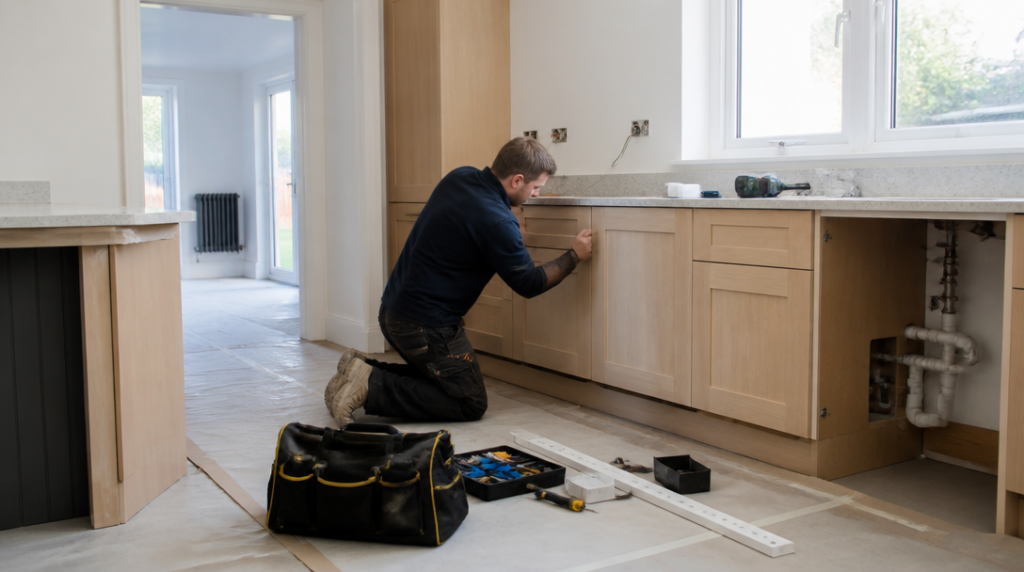
A small kitchen can look like a straightforward weekend-sized job. A full replacement with new services, appliances and custom worktops can become a five-figure project before the room is finished. That gap explains why kitchen fitting prices in the UK vary so sharply.
As of June 2026, labour for fitting a kitchen commonly falls between £1,700 and £3,000, although the average price is around £3,500. A complete new kitchen, including cabinets, worktops, appliances and installation, usually costs £6,000 to £15,000 or more. Luxury projects can pass £20,000.
The difference is not just about the size of the room. The design, materials, number of appliances, condition of the existing plumbing and the amount of preparation work can all move the quote substantially.
Labour costs by kitchen size
The simplest way to estimate fitting labour is to start with the size of the kitchen. A small kitchen costs roughly £2,000 to fit, while a medium-sized one averages about £3,500. For a large kitchen, labour can reach around £5,000.
Those figures describe the work of installing the kitchen rather than buying it. They may cover assembling and securing cabinets, fitting doors and drawers, installing worktops, connecting appliances and completing finishing work, depending on the contractor’s scope. Two quotes for the same room can therefore look very different if one includes only cabinet installation and the other includes several trades.
The average daily rate for a kitchen fitter in the UK is about £250 to £350. That works out at roughly £37 an hour. A project that needs several days of careful cabinet installation can therefore become expensive even before specialist work such as plumbing, electrical alterations or worktop cutting is added.
A low labour quote is not automatically a bargain. If the price excludes appliance connections, waste removal, plumbing changes or the installation of the worktops, the final bill may catch up with it later. The useful comparison is the total scope of each quote, not the first number at the bottom of the page.
What a complete kitchen costs
A complete replacement typically costs between £6,000 and £15,000 or more. This includes the visible parts of the kitchen as well as fitting: cabinets, worktops, appliances and installation.
At the lower end, the design is likely to be relatively simple, with standard-sized units and limited changes to the existing layout. Mid-range projects spend more on cabinet quality, worktops, appliances and additional installation time. Larger rooms and higher-specification finishes can push the cost well beyond £15,000, while luxury kitchens may exceed £20,000.
Cabinet prices alone do not tell you much about the eventual budget. A run of units may look affordable on paper, but the kitchen also needs a worktop, sink, tap, appliances, handles, lighting and the labour to put everything together. The less visible items are often the ones that make an initial estimate feel unrealistically optimistic.
That is why a showroom price and a contractor’s fitting quote should be read together. One may focus on the furniture, while the other covers the practical work needed to make the room function.
The installation details that raise the bill
Worktops are one of the clearest examples. Fitting them usually costs about £300 to £1,000, depending on the material, shape and precision required. A simple laminate worktop is a different installation job from a heavy surface that needs accurate cut-outs around a sink and hob.
Sink and tap installation adds approximately £150 to £300. Installing a built-in oven costs around £100 to £200. These individual figures may not seem dramatic, but several appliances and fittings can turn a modest labour allowance into a much larger one.
The most expensive changes are often hidden behind the cabinets. Moving a sink or altering the position of existing plumbing can add another £500 to £1,500 for plumbing work. A new layout may look better on the plan, but it can require pipework, waste connections and other services to be moved before the units can be installed.
This is where kitchen design becomes a cost decision rather than a purely visual one. Keeping the sink, cooker and major services close to their existing positions can reduce disruption. Moving them may still be worthwhile, particularly in an awkward room, but the quote needs to reflect the extra work from the start.
Why small kitchens are not always cheap
A compact kitchen uses fewer cabinets, but it still needs many of the same trades as a large one. There may still be a sink, tap, oven, hob, worktop joins, appliance connections and finishing work. In a very small room, access can also be awkward, leaving the fitter with less space to assemble and position units.
That makes the price per cabinet a poor way to judge value. A small kitchen may cost about £2,000 in labour, while a large one may cost around £5,000, but the smaller project does not necessarily take only a fraction of the time.
The shape of the room matters as well. A straightforward single-wall layout is usually less demanding than a compact space packed with corners, tall units and integrated appliances. Every corner can create another cut, adjustment or alignment problem. Kitchen fitting has a habit of making a centimetre feel expensive.
What to check in a fitting quote
A detailed quote should make clear whether it includes the removal of the old kitchen, disposal of waste, delivery handling and preparation of the walls or floor. It should also state which trades are covered and which will be arranged separately.
Appliance connections deserve particular attention. An oven, hob, extractor, dishwasher and washing machine may all need different types of installation. The quote should identify whether these are included, priced individually or left for another contractor.
The worktop specification should be equally clear. Some installers charge separately for cutting openings for sinks and hobs, joining sections and finishing exposed edges. Those details matter more with expensive or difficult-to-cut materials, where a mistake can be costly.
Plumbing changes should never be left as an assumption. If the sink is moving, allow for the additional £500 to £1,500 that plumbing alterations can add. A contractor who has inspected the room should be able to explain whether the existing water and waste connections can remain or need to be redesigned.
Electrical work may also sit outside the main fitting price. The supplied figures do not give a standard electrical cost, so it should be priced separately rather than guessed. The same applies to plastering, flooring, decorating and structural alterations.
How to keep the project under control
The strongest way to manage the budget is to decide which changes matter most before requesting quotes. Keeping the existing layout can limit plumbing costs. Choosing standard units and avoiding unnecessary worktop complexity can reduce installation time. Reusing suitable appliances may lower the total, although their dimensions and condition need to work with the new design.
It is also sensible to separate the budget into three parts: the kitchen itself, fitting labour and additional trades. That structure makes it easier to see whether a quote is high because of the cabinets, the installation or the condition of the room.
Ask for the fitting price to be broken down rather than presented as one unexplained total. Cabinet assembly, worktops, sink and tap, appliances, plumbing and removal work should be identifiable. A clear breakdown does not guarantee a fixed final cost, but it exposes gaps before work begins.
The cheapest quote may be appropriate for a simple replacement with no layout changes. A more detailed quote can be better value for a complicated project if it includes the preparation and specialist work that another installer has left out. Comparing like with like is more useful than chasing the lowest headline figure.
For a typical UK project, a realistic starting point is around £1,700 to £3,000 for fitting labour alone, with the average closer to £3,500 and larger kitchens reaching about £5,000. Once cabinets, worktops, appliances and installation are combined, the broader budget usually sits between £6,000 and £15,000 or more, with luxury specifications moving beyond £20,000.