
The number on the quote
How can the same plastering job cost £300 in one house and several thousand dollars in another?
The answer usually becomes clear within the first few minutes on site. A plasterer runs a hand across the wall, taps a loose patch, looks up at the ceiling and measures the room. Dust gathers along the skirting board. Somewhere beneath the paint, the real job reveals itself.
In the United States, plastering a standard room in 2026 costs roughly $1,200–$10,000, with many projects landing near $5,000. The broad range reflects a basic skim over sound walls at one end and extensive removal, repairs and replacement at the other.
American pricing for labor and materials commonly falls between $2 and $10 per square foot. Resurfacing alone can start at about $10 per square foot, particularly when the existing surface needs careful preparation rather than a quick cosmetic coat.
A 12-by-12-foot room gives a more concrete picture. That size typically costs around $1,200–$6,000 to plaster, although the condition of the walls and the finish requested can move the estimate sharply.
A skim coat is not a full re-plaster
In a British house, the first question is often whether the room needs skimming or a complete re-plaster. They may sound like interchangeable terms while a contractor is talking, but they describe very different amounts of work.
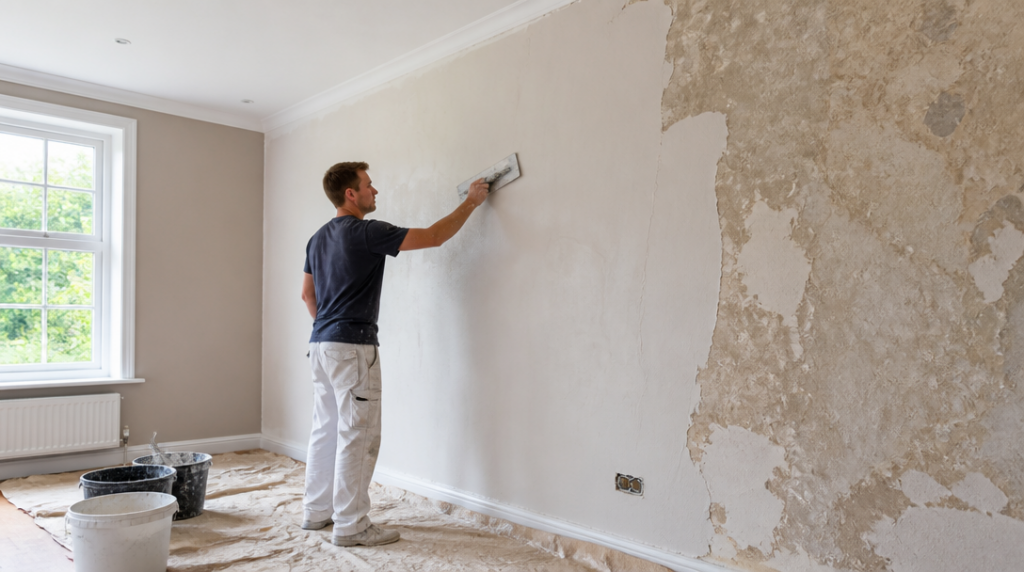
Skim plastering means applying a thin, smooth layer over an existing surface. The old wall remains underneath, provided it is stable enough to take the new coat. It is the job that leaves a room smelling faintly of damp mineral dust and looking transformed once the plaster dries to a pale, even finish.
A standard UK room costs approximately £300–£600 for a skim coat. The average price for skim plastering is about £24 per square metre, and a plasterer’s day rate is around £300.
Those figures describe a relatively controlled job. Furniture may need moving, walls may need sealing or patching, and the plasterer still has to protect floors and trim. But the old surface is not being stripped back across the entire room.
A full re-plaster is more disruptive. Old plaster is removed, damaged areas are dealt with, and the walls receive a new build-up of material. The sound changes as the hammer hits: a hollow knock can mark a loose section, while a firm wall gives back a dull, solid thud.
In the UK, removing old plaster and applying new plaster to a room generally costs about £400–£800. A full re-plaster is often charged at £25–£35 per square metre, so the size of the walls matters as much as the floor area.
Why the walls matter more than the floor
A room described as “12 by 12” sounds simple, but a plasterer does not price only the carpeted rectangle. The walls have height, doors and windows interrupt the surface, and the ceiling may be included in the quote or priced separately.
A small room with badly damaged walls can demand more time than a larger room with a clean, stable base. Cracks need opening and filling. Loose sections need removing. Uneven masonry may require additional coats before the final surface can be made smooth.
The plaster itself is only one part of the work. Preparation often determines whether the job runs neatly or turns into a slow battle with flaking paint, dusty edges and surfaces that refuse to bond.
Older properties can make the inspection especially revealing. A wall may look acceptable under patterned wallpaper and then shed layers as soon as the covering comes off. A room that seemed ready for a quick skim can become a repair project before the first fresh coat is mixed.
The ceiling can change the price
A ceiling is awkward work even before its condition enters the picture. The plasterer works overhead, shifts the platform or tower, and keeps wet material from falling across the room. Every movement is slower, and poor access makes the task harder again.
In the UK, plastering a ceiling on its own commonly costs around £200–£500. A ceiling with cracks, water damage or sections that have begun to sag may require more preparation than a plain wall and can sit toward the upper end of that range.
Ceilings also expose the difference between a tidy quote and a vague one. “Plaster the room” might mean four walls only, while another contractor may assume the ceiling is included. The written estimate should make that distinction unmistakable.
What the estimate should include
A useful quote describes the room before it describes the price. It should say whether the work covers skimming or complete removal, whether the ceiling is included, and whether old plaster will be taken away.
It should also account for preparation. Small repairs may be included as part of the plastering, while extensive patching, damp treatment or rebuilding damaged sections may be charged separately. If the plasterer finds a problem after stripping the wall, the final figure can change, but the reason should be clear rather than buried in a revised total.
Protection and cleanup deserve attention too. Fresh plastering is wet, messy work. Floors need covering, sockets and trim need protecting, and the room may need sweeping or vacuuming after the tools are packed away. Some contractors include this in their price; others leave the homeowner with the final cleanup.
The finish should be discussed in plain language. A wall intended for ordinary paint needs a different level of perfection from one being lit by strong downlights, where every ripple can become visible after dark.
Why labor often dominates
Plastering is not simply spreading material across a wall. The surface has to be prepared, the mix has to be handled at the right consistency, and each layer needs to be worked before it sets. Timing matters. A plasterer can lose an entire afternoon to a wall that dries unevenly or refuses to accept the finish.
That skill is reflected in the day rate. A UK plasterer typically charges around £300 per day, while US labor and material pricing together commonly falls within the $2–$10-per-square-foot range.
Room access can stretch the working time. Narrow staircases, occupied homes and rooms packed with furniture leave less space for tools and boards. A vacant ground-floor room with a clear path to the entrance is a very different workplace from a furnished bedroom at the back of a tall house.
The work also has a physical rhythm that is easy to underestimate from the doorway. Buckets scrape across the floor. A trowel clicks against the hawk. The plasterer keeps moving, checking the wall at different angles as the surface changes from wet and reflective to firm and matte.
How to keep the cost from drifting
The cheapest way to control a plastering budget is to establish the condition of the room before work begins. Remove wallpaper carefully if the contractor asks for it, clear furniture from the space and point out any known leaks, cracks or previous repairs.
Do not paint over loose areas to make the room look ready. That only hides the problem for a short time and can leave the plasterer charging for preparation once the surface begins to fail.
Get the room measured and ask for separate prices for walls, ceiling, removal and repairs. A single total may look cleaner, but a breakdown shows what you are paying for and makes changes easier to judge.
Timing can matter as well. If the room is already empty during renovation work, plastering may fit more easily into the schedule. Bringing a crew back later to protect new flooring, move furniture and work around finished joinery can make a straightforward job more cumbersome.
The difference between a fresh wall and a rebuilt one
A newly skimmed room can feel almost unnaturally quiet once the tools leave. The walls no longer catch the light in broken patches. Corners look sharper. The old surface, with its dents and paint ridges, has disappeared beneath a continuous skin of plaster.
That visual change is why a skim coat often makes sense when the walls are fundamentally sound. A complete re-plaster is justified by a different kind of problem: loose material, deep damage, serious unevenness or a surface that cannot reliably support a new finish.
The final cost rests on that distinction more than on the word “plastering” itself. A room needing a thin new surface belongs to one price category. A room that has to be stripped, repaired and built again belongs to another, even if both rooms have the same dimensions and the same tired paint on the walls.