
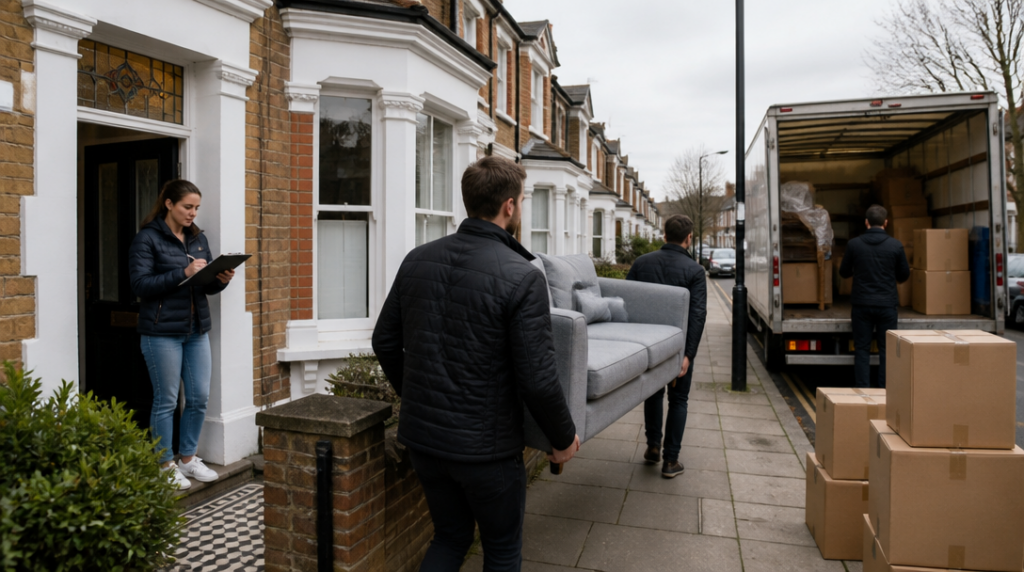
Picture a couple in a two-bedroom terrace, standing among half-packed boxes on a rainy Saturday morning. They have allowed £700 for the move. Then the removal company asks about the narrow staircase, the wardrobe that will not fit through the front door, the van’s parking distance and the extra packing help they had assumed was included. The estimate has already started climbing.
That is the awkward truth about house removal costs in the UK: the number of bedrooms gives you a useful starting point, but it does not tell the whole story. A short move with easy access may cost far less than a smaller move involving a long drive, difficult parking and a team packing everything from the kitchen cupboards to the loft.
For a local move of up to 30 miles in 2026, a one-bedroom flat typically costs around £350–700. A two-bedroom house often falls between £550 and £1,000, while a three-bedroom house generally comes in at £800–1,500. For a four-bedroom house, the expected range is roughly £1,200–2,500.
A three-bedroom house therefore sits near the middle of the market, with an average cost of approximately £900. That figure is useful for planning, but it should not be treated as a guaranteed quote. Removal firms price the job in detail, not by bedroom count alone.
The £900 move that looks simple on paper
A typical three-bedroom move might involve a van, two or three removal workers, several hours of loading and unloading, and a journey within the same region. If both properties have driveways or straightforward roadside access, the work may stay close to the average.
The trouble begins when the house contains more than its floor plan suggests. A spare bedroom used for storage can add dozens of boxes. A garage packed with tools, bicycles and old furniture may take longer to clear than an entire bedroom. Large sofas, American-style fridges, heavy wardrobes and garden sheds can all affect the labour required.
The distance between the van and the front door matters too. Carrying boxes across a long driveway is slow. Carrying them down several flights of stairs is slower still. A lift may help in a block of flats, although booking a service lift or arranging building access can introduce another layer of planning.
The average UK cost across 8,598 verified moves between 2022 and 2026 was £1,112. That higher figure reflects the mix of property sizes, distances and job types included in the data. It also shows why a budget based solely on a low local estimate can become unrealistic once the move is more complicated than a short trip between nearby streets.
Packing is where the budget starts to move
Many households focus on the van and labour, then underestimate the packing. Professional packing is an additional service, and the price varies according to the size of the home. For a two-bedroom property, it usually adds around £200–350. Packing a three-bedroom house costs approximately £300–500, while a four-bedroom house may add £450–800.
That service is not just someone putting plates into boxes. A professional team may supply packing materials, wrap fragile items, label rooms and prepare furniture for transport. The real appeal is time. Packing a whole home can swallow evenings and weekends, especially when the move date arrives before the old property is fully cleared.
There is also a practical reason to consider it for fragile belongings. A rushed household may put glassware in an unsuitable box or leave drawers full during the move. Trained packers tend to work systematically, which can reduce the frantic searching that follows arrival at the new house.
Still, packing is an easy cost to remove if money is tight. Start with books, decorations, spare bedding and anything that is not used daily. Keep a separate box for essentials such as medication, chargers, toiletries, basic cookware and a change of clothes. That box often becomes more valuable than the expensive coffee machine during the first night in the new home.
Long-distance removals can pass £5,000
Distance changes the calculation sharply. A two-bedroom house moved over a long route can start at about £1,500. At the larger end of the scale, moving a five-bedroom house over a substantial distance may cost more than £5,000.
Fuel is only part of the explanation. A long-distance move ties up the crew and vehicle for much of the day, sometimes requiring overnight arrangements or more than one day of work. The removal company also has to account for the return journey, scheduling and the possibility of delays on the road.
The contents of a larger home make the gap wider. A five-bedroom property may contain several living areas, office equipment, children’s furniture, outdoor items and years of accumulated storage. Even if the route is straightforward, loading and unloading can become a major operation.
A useful way to reduce the price is to be precise about what is actually travelling. Selling or donating unwanted furniture before requesting a quote can make the job smaller in a meaningful way. Removal teams charge for handling volume, not sentimental value, so the old exercise bike costs the same to carry whether anyone has used it in three years or not.
London prices are not always the highest
London has a reputation for expensive removals, and some jobs certainly are. Parking restrictions, controlled zones, traffic, limited access and upper-floor flats can all increase labour and time. Yet the average price for a two-bedroom move in London was £775 based on 200 offers made between January and June 2026.
That figure sits comfortably inside the wider UK range of £550–1,000 for a local two-bedroom house move. It does not mean every London move will cost £775. A property with a reserved bay and a lift is a very different job from a flat on a busy road where the van must stop several streets away.
The same applies outside the capital. Rural properties may have longer distances between homes, narrow lanes or limited vehicle access. City-centre moves may involve traffic and parking permits. A removal quote is really a price for time, distance, access and volume combined.
This is why two neighbours can receive noticeably different estimates despite moving into similar properties. One may have already dismantled furniture and packed every box. The other may need the company to dismantle beds, protect artwork, carry items down stairs and wait while a parking space becomes available.
What to check before accepting a quote
Ask whether the estimate is fixed or based on an hourly rate. A fixed quote can make budgeting easier, but only if the inventory and access details are accurate. If the company has not seen the property or received a detailed list of contents, unexpected additions may appear on moving day.
Describe both addresses honestly. Mention stairs, lifts, narrow entrances, long carries from the road, awkward parking and items that need special handling. Include sheds, lofts and garages rather than treating them as an afterthought. A video survey can help a company judge the work without sending someone to the property.
Check what the quote includes. Some companies provide boxes and protective materials; others charge separately. Dismantling and reassembling furniture may be included only for selected items. Packing, storage, delivery to a second address and the movement of heavy or unusually delicate objects can also sit outside the basic price.
Moving dates affect availability as well. A weekend or popular end-of-month date may be harder to book, while flexibility can give you more choice. If the completion date is uncertain, ask how the company handles delays and whether storage is available. A failed handover can leave furniture and boxes between two homes, which is precisely the sort of problem that turns a planned £900 move into a much more expensive day.
For a rough 2026 budget, a one-bedroom local move may need £350–700, a two-bedroom move £550–1,000 and a three-bedroom move £800–1,500. Larger homes and longer journeys quickly move beyond those bands, particularly once professional packing, storage or difficult access enters the picture. The most reliable quote is built from the actual contents and the two addresses, not just the number printed on the estate agent’s brochure.