
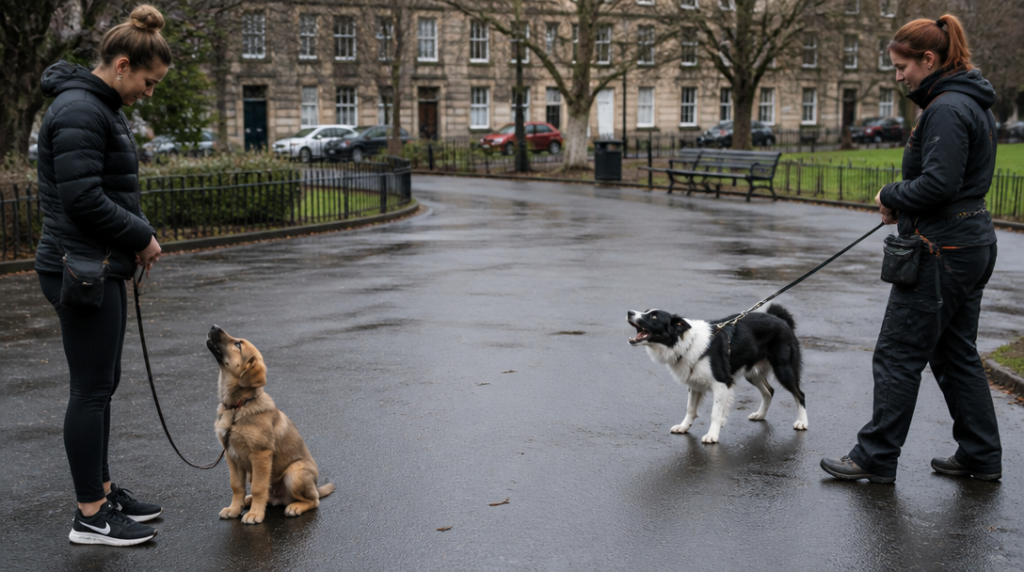
A puppy in a bright community-hall class spends the evening bouncing between treats, clickers and unfamiliar shoes. Across town, another dog is being held several feet from a stranger, body rigid, eyes fixed, every muscle ready to lunge. One owner may pay a few hundred dollars for a cheerful six-week course. The other could face a specialist bill that reaches four figures before the real work has even begun.
Dog training and behaviour support cover a wide stretch of ground, and the price changes sharply with the problem, the professional’s qualifications and the amount of individual attention involved. A basic obedience class is not the same service as a veterinary behaviour consultation, even if both involve a dog sitting on cue.
The six-week class at the affordable end
Group obedience courses are usually the least expensive way to get structured help. In the United States, a six- to eight-week class commonly costs about $100 to $400. The room may contain a dozen dogs, their owners and a steady soundtrack of jingling tags, squeaking toys and trainers repeating the same cue over the noise.
These classes tend to focus on practical foundations: sit, stay, recall, walking politely and paying attention around distractions. They can be particularly useful for puppies and young dogs that need a routine rather than a dramatic intervention. The social setting also gives owners a chance to practise while other dogs shuffle, bark or wander too close.
That last part matters. A dog that performs a perfect sit in the kitchen may forget the entire concept when a terrier trots past with a neon ball in its mouth. Group classes expose the dog to the kind of movement and interruption that private practice often lacks.
The low price does come with limits. The trainer cannot spend half an hour examining one dog’s fear of the vacuum cleaner while the rest of the class waits. If the main issue is biting, severe separation anxiety or explosive reactivity, a general obedience course may be a useful starting point but rarely provides the whole answer.
Private lessons cost more because the dog gets the room
Individual training generally costs about $75 to $200 an hour. In large cities, prices often sit around $160 to $180 per hour, reflecting higher operating costs and strong demand for trainers who travel to clients’ homes.
A private lesson feels different from a class almost immediately. Instead of trying to hear instructions over a chorus of barking, the owner can describe exactly what happened that morning: the dog dragged them toward a cyclist, snapped when a harness was lifted or barked for twenty minutes after being left alone. The trainer can watch the sequence in the place where it actually happens.
That setting often reveals details owners miss. A dog may not be “stubborn” on walks; it may be overwhelmed by the narrow pavement outside the house. A dog that growls when touched may have learned that the growl makes an uncomfortable hand move away. A trainer can work with distance, timing, rewards and the owner’s handling technique rather than offering a generic exercise from a worksheet.
The hourly rate is only part of the bill. Some professionals charge separately for travel, an initial assessment or written follow-up plans. Several lessons may be needed, especially if the owner is changing a long-established habit. Training takes place between appointments, in the kitchen, on the pavement and beside the front door, where the dog’s ability to listen is usually tested most severely.
A useful private session should leave the owner with something specific to practise. “Be more consistent” is not much help at 7:15 a.m. when a spaniel is pulling toward a discarded sandwich. A clear plan might involve changing the walking route, rewarding check-ins before the dog reaches the trigger and reducing the intensity of the situation before the barking starts.
Problem behaviour pushes the price toward $300 a visit
Behaviour cases are more demanding because the professional is not simply teaching a new cue. They are trying to understand why the dog reacts and how to reduce the risk of the behaviour repeating. Sessions dealing with aggression, anxiety or reactivity generally cost about $100 to $300 each.
The appointment may take place in a quiet room, a garden or a carefully chosen outdoor space. There can be long pauses. The dog watches a person approach, ears angled forward, while the behaviourist waits for the first sign of tension. A few feet of distance can make the difference between a dog able to eat a treat and a dog too distressed to notice food at all.
This work is rarely cinematic. Progress may look like a dog turning its head away from another dog instead of staring, or settling on a mat for three minutes rather than immediately pacing. For an owner who has spent months bracing for the next outburst, those small changes can feel enormous.
The cost may rise if the case requires detailed history-taking, home visits, safety planning or coordination with a veterinarian. Behaviour professionals may also recommend management changes before training begins: gates, separate feeding areas, a different harness or a plan for preventing contact with visitors. These measures are not a substitute for behaviour work, but they can stop one frightening incident from becoming another rehearsal of the same pattern.
Owners should also be careful with the word “behaviourist.” It can refer to professionals with very different training and credentials. A certified behaviour consultant may charge roughly $100 to $300 per hour. A certified applied animal behaviourist may charge about $200 to $500 per hour.
Those figures are not interchangeable with ordinary dog-training rates. A basic lesson teaches a skill. A behaviour consultation may involve risk assessment, a detailed history and a plan for a dog whose reactions affect everyone in the household.
The veterinary specialist sits at the highest end
For the most complicated cases, an owner may be referred to a veterinary behaviourist with DACVB qualification. These appointments typically cost around $300 to $1,000 per hour.
The consultation can be intense. The specialist may ask about the dog’s early history, sleep, appetite, medical conditions, previous homes, daily routine and the exact moment a reaction begins. What looks like disobedience in a hallway might need to be considered alongside pain, illness or extreme anxiety. The room can feel less like a training class and more like a clinical interview, with a dog pacing softly across the floor while its owner searches for the right words.
The fee reflects specialist expertise and the depth of the assessment. Depending on the case, the plan may combine behaviour modification with veterinary care. Medication is not appropriate for every dog, and no prescription replaces training or management, but medical support can be considered when fear or anxiety is so intense that the dog cannot learn effectively.
A veterinary behaviour consultation may also be recommended after a serious bite, repeated attacks between household dogs or behaviour that has appeared suddenly. A sudden change deserves particular attention because the cause may not be purely behavioural. The longer an owner waits while a dog rehearses dangerous behaviour, the harder daily life can become.
Board-and-train can look convenient, but the price is only the beginning
Board-and-train programmes combine accommodation with intensive training. They usually cost about $1,000 to $3,000 per week, while highly specialised programmes can exceed $6,000.
The appeal is obvious. The dog leaves home, works with a professional every day and returns with new routines already established. For an owner facing a young dog that has turned the house into a minefield of chewed furniture and midnight barking, the idea can sound like pressing a reset button.
Dogs, unfortunately, do not return with a permanent software update. The home environment is part of the behaviour, and the owner still has to learn how to handle the dog. A dog that walks calmly beside a trainer may pull again when its owner clips on the lead. A dog that settles neatly in a kennel may struggle when left alone in a quiet living room.
Before paying for a board-and-train stay, an owner needs clear information about what happens during the programme, how the dog is housed, how often progress is communicated and what follow-up training is included. A return lesson can be as important as the stay itself because the family must be able to continue the work without relying on the trainer standing nearby.
The final price is shaped by more than the number printed on the invoice. A nervous rescue dog may need fewer, slower sessions than an energetic puppy with poor manners. A trainer who works at home may charge differently from one travelling across a major city. Weekend appointments, specialist qualifications, travel and the complexity of the case can all change the total.
The cheapest useful option is the one that matches the problem. A group class may be exactly right for loose-leash skills. A dog that freezes at the sight of strangers, guards food or snaps during handling needs a more careful assessment, and the cost of that expertise is part of keeping the dog and the people around it safe. On the pavement outside the house, with traffic hissing over wet asphalt and a trigger approaching at the end of the lead, the distinction becomes very clear.