
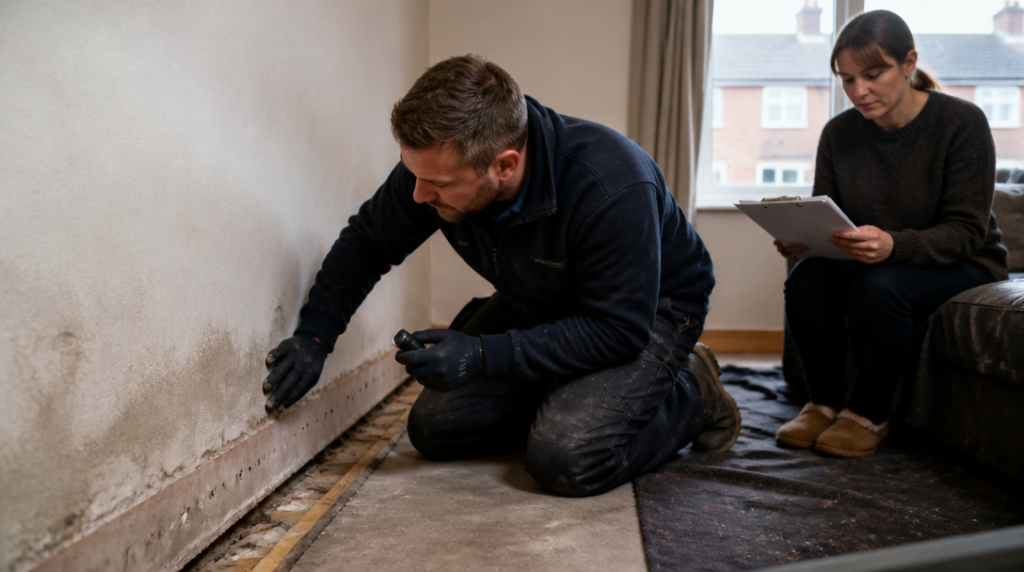
A contractor has inspected the lower walls, tapped a few patches of blown plaster and produced a quote for £2,400. The homeowner now faces a familiar question: is that a fair price for damp proofing, or the opening move in an expensive repair that may not solve the problem?
In the UK, the answer depends heavily on the type of damp, the size and construction of the house, the length of wall being treated and the amount of plaster or flooring that must be removed. A chemical damp-proof course, or DPC, is usually far cheaper than physically inserting a new barrier into the walls. Basement waterproofing sits in a different price bracket altogether.
The figures can look straightforward until the wording on the quote is examined. A price for injecting a DPC may not include replastering. A basement treatment may cover the walls but exclude drainage, pumps or decorative finishes. Even a survey can be too limited to explain why moisture is appearing in the first place.
That is why the cheapest number on the page is not always the cheapest route through the building.
The price of chemical damp proofing
Chemical injection is the method most homeowners are likely to encounter first. Small holes are drilled into the mortar course, and a water-repellent chemical is injected to create a barrier intended to stop moisture rising through the wall. In the UK in 2026, this typically costs about £70 to £120 per linear metre of wall.
That figure sounds precise, but it is only a starting point. A house with a simple, accessible external wall may be relatively easy to treat. Thick masonry, awkward corners, extensions, conservatories, internal partitions and changes in floor level can all make the work slower. The condition of the wall matters too. If the mortar course is inconsistent or the building has unusual construction, the contractor may need to adjust the proposed method.
For a whole family house, chemical damp proofing commonly falls between £1,000 and £3,000. A three-bedroom terraced or semi-detached house, including new plaster, more typically lands between £1,800 and £4,000. The plastering allowance is not a minor detail. Damp-affected plaster can retain salts and moisture, so simply painting over it may leave the walls discoloured or cause the finish to fail again.
The gap between those two ranges raises a useful question: what exactly is included? One quote may describe only the injection work. Another may include removing damaged plaster, applying a suitable replacement finish, clearing rubble and redecorating. Comparing the headline totals without comparing the scope is a reliable way to make unlike jobs appear identical.
There is also a more uncomfortable possibility. The damp may not be rising damp at all. Leaking gutters, defective pointing, a damaged drain, high external ground levels and condensation can all create moisture problems that look convincing at floor level. A new chemical barrier cannot repair a leaking pipe or make a poorly ventilated room dry. The language used in a sales visit can therefore matter as much as the price: a confident diagnosis is not the same thing as a demonstrated one.
An independent moisture survey usually costs around £150 to £600, with about £300 being common. That expense can feel irritating when a contractor offers a free inspection, but independence has a practical value. The person recommending treatment is not also deciding whether the treatment is needed. A useful survey should investigate the building rather than simply confirm the service being sold, including visible plumbing, external ground levels, ventilation and the pattern of dampness.
A homeowner should ask whether the proposed price includes the survey, preparation, plaster removal, replastering, skirting boards and making good. If the answer is vague, the quote is not yet a meaningful comparison. The phrase 'damp proofing' can conceal several separate jobs.
Physical insertion of a new DPC is the more disruptive alternative. It involves cutting into the masonry and inserting a barrier, usually in sections, rather than injecting a chemical cream or liquid. For an entire house, the cost is approximately £2,500 to £7,500. That range reflects the heavier labour and the complications of working around occupied rooms, structural details and different wall types.
Physical work may be proposed where chemical injection is considered unsuitable, but the presence of a larger price tag does not automatically prove that it is the better solution. The building needs to be assessed on its construction and condition. A homeowner who receives a recommendation for extensive structural intervention should be able to ask why a less invasive option has been rejected, and what evidence supports the diagnosis in the first place.
The best quotes are often less dramatic than the worst ones. They describe the wall sections involved, state how many metres are being treated, separate labour from materials and explain what happens to damaged plaster. A single rounded figure with no specification may be easy to accept and difficult to challenge later.
Why basement work changes the calculation
A damp basement is rarely just a wall-treatment problem. If water is pressing through the structure, contractors may recommend tanking, a waterproof barrier applied to the walls and sometimes the floor. Tanking typically costs about £100 to £200 per square metre. Treating an entire basement can cost roughly £4,000 to £14,000.
That total can rise because access is poor, surfaces need preparation and the room may require new flooring, plaster or drainage arrangements. A basement that is intended to become a living space may demand a higher standard of finish than one used only for storage. The same square-metre rate can therefore produce very different final bills.
Tanking also deserves more scrutiny than its tidy appearance suggests. It may form part of a wider waterproofing design rather than act as a standalone cure. The contractor should explain where water is expected to go, how joints and floor-wall junctions will be handled, and what happens if pressure builds behind the barrier. If a pump, cavity drain system or other equipment is proposed, maintenance and power requirements belong in the conversation before the floor is covered.
This is where estimates become particularly vulnerable to omissions. A quote for £6,000 may appear competitive beside one for £11,000, but the cheaper proposal may leave out floor preparation, a pump, plaster replacement or a warranty condition that requires regular maintenance. A lower figure is useful only if it describes the same finished result.
The age and design of the property can complicate matters further. Older houses may have solid walls, irregular foundations or materials that behave differently from those used in modern construction. Forcing a contemporary solution onto an older building without considering how moisture moves through it can create fresh problems elsewhere. That does not mean every old house needs specialist treatment, but it does make a generic package price especially unhelpful.
The most revealing part of a quote is often not the total but the exclusions. Does it cover access equipment? Will the contractor remove and refit skirting boards? Are kitchen units, fitted cupboards or floor coverings in the way? Is waste disposal included? How much redecoration is allowed for? If the work is in a basement, does the price include the floor as well as the walls?
Timing affects the household cost too. Rooms may need to be emptied, walls may remain unfinished during drying, and furniture may need to be stored. Those are not always contractor charges, but they are real costs. A technically correct estimate can still be financially incomplete if it ignores the disruption.
A sensible process begins with diagnosis, then a written specification, then comparable quotes. It also leaves room for the possibility that the right repair is smaller than the first recommendation. Repointing, repairing a gutter or improving ventilation may be less lucrative for a contractor than installing a new DPC, but it can be far more relevant to the building.
That £2,400 quote might be reasonable. It might also be an expensive answer to the wrong question. Until the cause of the moisture, the exact wall length and every included repair are written down, the number is little more than an invitation to guess.