
Picture this: you manage a small office building, the windows are visibly dusty, and you need a price before approving the work. A commercial window cleaning quote in the United States may land anywhere from a few hundred dollars to several thousand, depending on the size of the building and how difficult the glass is to reach.
In 2026, commercial window cleaning generally costs about $0.50 to $2.50 per square foot. That range sounds broad because commercial properties are rarely identical. A single-story storefront with easy access is a very different job from a multi-floor office building with glass walls, narrow ledges, and windows that require lifts or specialized equipment.
For larger commercial properties, pricing often falls closer to $0.50 to $1.25 per square foot. If the building has 2,000 square feet of glass, that works out to roughly $1,000 to $2,500 for a cleaning service priced by area. The actual quote may be lower or higher if the property is especially straightforward or unusually demanding.
The phrase “square foot” can cause confusion, too. Some cleaners measure the glass itself, while others use the number of windows, the building’s layout, or the estimated labor involved. Before comparing two quotes, ask what the company is measuring. A cheap-looking price may cover only exterior glass, while a higher one might include both sides, frames, sills, screens, and hard-to-reach windows.
Some companies price the job by the individual pane instead. A commercial pane typically costs around $6.70 to $22. That approach can make sense for a small shop, restaurant, medical office, or low-rise building where the number of windows is easy to count. A business with 100 panes, for example, could expect a rough pane-based price of $670 to $2,200 before extra services or access charges.
Pane pricing is easy to understand, but it does not always tell the whole story. Ten large panes may take more time than 30 small ones. Windows covered in fingerprints, grease, construction dust, or mineral deposits can need more work than glass that has been cleaned regularly. A restaurant near a busy road may collect grime quickly, while an office in a newer building might need less intensive cleaning.
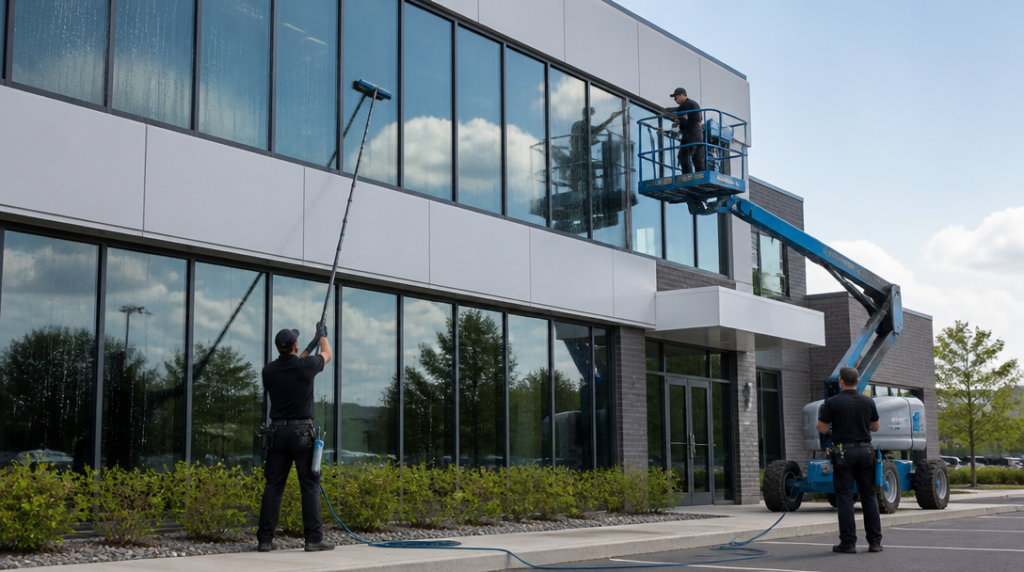
The location of the glass matters just as much as its size. Ground-floor windows are usually the simplest and least expensive because cleaners can reach them with basic tools, ladders, or water-fed poles. Exterior windows on upper floors cost more because the crew may need additional safety equipment, lifts, rope-access methods, or other specialized arrangements. The outdoor cleaning rate for higher floors still commonly sits within the broader $0.50 to $2.50 per-square-foot range, but difficult access pushes a job toward the upper end.
That is why two buildings with the same amount of glass can receive very different quotes. A two-story office with a clear parking area may be relatively quick to clean. A similar building surrounded by landscaping, power lines, awnings, or uneven ground can require more planning and equipment. Window cleaners are not charging only for the few seconds it takes to wipe each pane; they are pricing setup, movement around the property, safety, and the time needed to do the work without damaging the building.
Regular service can make the cost easier to manage. A monthly commercial window cleaning contract typically starts at about $200 to $400 per month. Small storefronts and offices may fit within that range, particularly when the glass is easy to access and the service is limited to routine cleaning. Larger properties, buildings with frequent foot traffic, and sites requiring interior and exterior work can cost considerably more.
A contract may also change the price of each visit. If a crew comes every month, the windows usually need less intensive cleaning than they would after being ignored for a year. The team may spend less time removing built-up dirt, and the business gets a predictable maintenance schedule instead of an occasional deep-cleaning bill. Some companies offer weekly, biweekly, monthly, or quarterly visits, with the frequency chosen according to the property’s appearance and use.
A busy retail entrance often benefits from more frequent cleaning because fingerprints and dust show up immediately. An office building with tinted windows and limited public traffic may look fine with a less frequent schedule. You know your customers and employees better than any contractor does, so think about what the glass looks like during a normal week rather than choosing a schedule based only on the lowest monthly quote.
The scope of the work should be written down before the contract begins. Does the price include interior glass? Are frames and sills wiped? Are screens removed and cleaned? Does the crew handle glass doors, skylights, partitions, or mirrors? These details can quietly change the final bill. A quote for exterior windows alone should not be compared directly with a quote for full interior and exterior service.
Hard-water stains and paint splatters may also be treated as separate work. Routine cleaning removes ordinary dirt and fingerprints, but mineral buildup, adhesive residue, bird droppings, and post-construction debris can require additional time and different tools. If the windows have not been cleaned since a renovation, show the contractor the worst areas before accepting a flat price. A few clear photos can help, although an in-person walkthrough is more reliable for a larger building.
The type of property affects the estimate in less obvious ways. A restaurant may have grease near the kitchen and entrance. A daycare or medical facility may need careful scheduling around customers and patients. A retail store may require cleaning outside business hours, while an office tower may restrict access to certain floors. Those scheduling and access requirements can add labor even when the windows themselves are ordinary.
You can get a more useful quote by preparing a few basic details: the property address, approximate number of floors, whether you need interior or exterior cleaning, how often you want service, and whether the windows have special problems such as hard-water stains or construction residue. Photos of the building’s front, rear, and upper levels can help a cleaner judge the access conditions before arriving.
Ask whether the estimate is fixed or subject to change after inspection. Also ask if equipment, travel, lift rental, or after-hours work is included. A company that explains its pricing clearly is easier to budget for than one that gives you a low figure and adds unexplained charges later.
For a small ground-floor storefront, a per-pane estimate may be the simplest way to plan. For a large office or retail complex, a square-foot rate often gives a clearer picture, especially when most of the glass is part of a continuous facade. Either way, the most useful quote is the one that connects the price to the actual work: how much glass will be cleaned, which surfaces are included, how the crew will reach them, and how often they will return.