
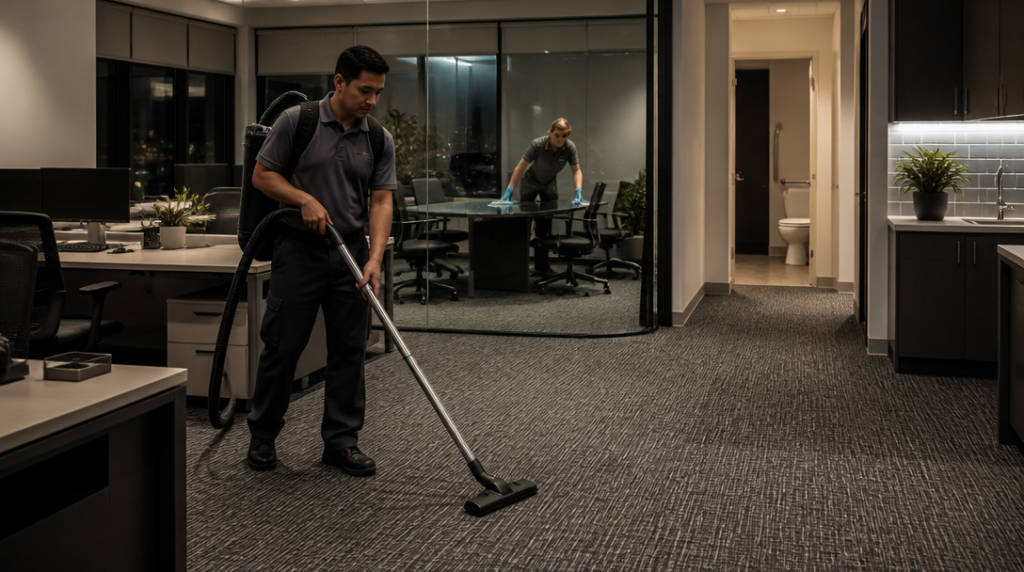
A cleaning crew arrives after everyone else has gone home. Desks are covered with monitors, the conference room still has coffee cups on the table, and the restrooms need far more attention than the quiet office floor suggests. The manager wants a price before morning, but the answer depends on much more than the size of the building.
In the United States, routine office cleaning in 2026 generally costs about $0.08 to $0.15 per square foot per visit. A broader market range runs from roughly $0.10 to $0.20 per square foot per visit, especially when the job includes more detailed work, difficult access, high-traffic areas, or unusual scheduling requirements.
That makes square footage a useful starting point, not a complete quote. A 5,000-square-foot office could cost approximately $400 to $750 for one visit at the lower routine-cleaning range. At the broader market range, the same visit might land between $500 and $1,000. The actual proposal could still move outside those figures if the space contains several kitchens, multiple restroom groups, large glass partitions, or surfaces that need special treatment.
The price range behind a cleaning quote
A single commercial cleaning visit may cost anywhere from about $70 to $1,500. That enormous spread exists because “office cleaning” covers very different jobs. A small suite with a few desks and one restroom is not comparable to a multi-floor workplace with reception areas, break rooms, conference rooms, and heavy daily foot traffic.
Size matters first because it determines how much flooring, furniture, and surface area the cleaners must handle. The condition of the office matters just as much. A workplace cleaned every evening usually needs maintenance cleaning: vacuuming, mopping, wiping surfaces, emptying bins, and sanitizing frequently touched areas. A space that has gone several weeks without professional service may require a reset before routine pricing makes sense.
The schedule changes the labor pattern too. Cleaning during business hours can be more complicated than working after employees leave. Staff, visitors, deliveries, and meetings interrupt the crew’s route. Evening or overnight work may be faster, but it can also involve access arrangements, security procedures, and a smaller window for completion.
Some companies quote by the square foot because it makes larger jobs easy to compare. Others use an hourly rate, particularly for small offices, irregular assignments, or services that are difficult to measure in advance. Hourly commercial cleaning commonly falls around $20 to $90 per hour. The lower end may apply to straightforward maintenance work, while more demanding tasks, specialized equipment, or labor-intensive conditions can push the rate higher.
Why restrooms change the math
Restrooms often occupy a modest portion of an office’s floor plan but consume a large share of the cleaning time. In standard offices, restroom cleaning accounts for approximately 30% to 50% of the total workload. Fixtures must be cleaned and disinfected, floors need attention, supplies may need replenishing, and the work has to meet a higher hygiene standard than ordinary desk areas.
That is why two offices with identical square footage can receive noticeably different quotes. One might have a single low-use restroom. Another might serve a busy workplace with several restrooms, frequent visitors, and a break room that needs daily attention. The second office requires more labor even though the floor area looks the same on paper.
Kitchenettes and employee lounges create a similar problem. Counters, sinks, refrigerator handles, cabinet fronts, tables, and microwaves collect residue quickly. If the contract includes cleaning the inside of appliances, wiping chairs, or dealing with spills and food waste, those details need to appear in the scope of work rather than being treated as invisible extras.
Weekly cleaning versus recurring service
Regular weekly cleaning for a standard office commonly costs about $150 to $600 per week. That range usually reflects a recurring maintenance arrangement rather than a major one-time deep clean. Frequency, office size, and the number of included tasks determine where a company falls within it.
A weekly visit may suit a small professional office with limited traffic. A larger workplace might need service several times per week, or daily cleaning in the busiest areas. More frequent visits can keep each appointment manageable because dirt and clutter have less time to build up. The price per visit may be lower than a sporadic deep-cleaning appointment, although the total weekly or monthly spend will naturally be higher when cleaners come more often.
A monthly contract is often discussed as a flat fee, but the underlying calculation still comes from labor, area, frequency, and scope. A provider may offer a fixed price for predictability, while another may charge separately for periodic tasks such as interior window cleaning, carpet extraction, high dusting, or detailed restroom work.
The contract should make clear what happens between regular visits. Emptying wastebaskets, vacuuming open floors, wiping desks, and cleaning restrooms may be included. Cleaning inside refrigerators, moving heavy furniture, washing exterior windows, or removing construction dust may not be.
What commercial cleaners usually include
Basic office cleaning often covers vacuuming carpets, sweeping and mopping hard floors, dusting accessible surfaces, emptying trash, cleaning restrooms, and wiping common touchpoints. Depending on the provider, it may also include break-room cleaning, spot cleaning of glass, and replenishing customer-supplied consumables.
The phrase “accessible surfaces” deserves attention. It may mean desks and counters that are clear of personal items, not every object sitting on them. A cleaner may wipe an empty conference table but avoid moving monitors, papers, personal electronics, or decorative items. That is not necessarily poor service; it is a boundary that protects both the client’s belongings and the agreed schedule.
Deep cleaning adds more time. Carpet extraction, floor polishing, grout work, detailed dusting, interior glass, upholstery cleaning, and high-touch disinfection may be priced separately. The same applies to post-construction cleanup or a first-time service in an office that has been neglected. A low recurring rate does not automatically include every task a business might want during a seasonal refresh.
A good quote should describe the work in plain language. “Clean office” is too vague to compare. “Vacuum carpeted areas, mop hard floors, clean two restrooms, wipe kitchen surfaces, empty bins, and sanitize door handles three times per week” gives the buyer something measurable.
One vague line in a proposal can hide a surprisingly large difference in labor.
How to compare two cleaning proposals
Start with the same information for every provider: approximate square footage, number of floors, restroom count, operating hours, flooring types, frequency, and the condition of the space. Mention high-traffic zones and any areas that require special access. If the office has a reception desk, shared workstations, a large kitchen, or glass-heavy meeting rooms, include those details before the quote is prepared.
Then compare the scope, not just the headline price. One company may include restroom supplies and routine interior glass cleaning, while another may charge for both. One proposal may send a team of several cleaners for a short appointment; another may assign fewer people for a longer visit. The total labor can be similar even when the staffing model looks different.
Ask how periodic tasks are handled. Floors may look fine during weekly service but eventually require machine scrubbing or carpet treatment. If those jobs are not included in the regular fee, find out how they are priced. It is easier to budget for them before the first contract is signed than after a visibly worn floor becomes an urgent problem.
Reliability also has a financial effect. Missed visits, inconsistent staffing, and rushed work create extra management time and may force employees to handle cleaning themselves. A slightly cheaper quote loses its appeal quickly if the office is repeatedly left with full bins or unclean restrooms.
For a small office, hourly billing can be practical because the work may not justify a detailed square-foot calculation. For a larger or consistently serviced workplace, per-square-foot pricing or a fixed recurring contract often makes the monthly budget easier to track. Neither method is automatically better; the useful question is whether the method matches the shape of the job.
A clear walkthrough before service begins can settle most disputes. The cleaner sees the rooms, the client explains priorities, and both sides can agree on what “clean” means before the first evening shift starts. That is where the final price becomes understandable: not as a mysterious number, but as a reflection of the people, surfaces, restrooms, schedule, and level of detail the office actually demands.