
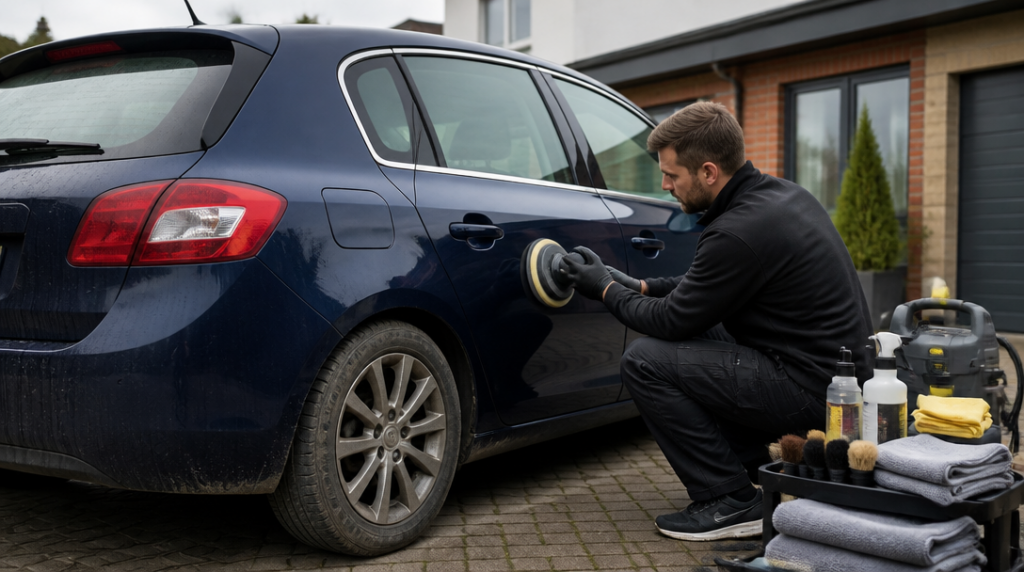
A colleague once booked what he thought would be a quick clean before selling his five-year-old hatchback. He expected to pay around £30. The final quote was closer to £280, because the service included deep interior cleaning, machine polishing and paint protection. Nothing had gone wrong; he had simply asked for “detailing” without knowing how much work that word can cover.
In the UK, car detailing prices range from roughly £15 for a basic exterior wash to more than £800 for a premium protection package. The difference comes down to the size and condition of the vehicle, the service being carried out, the detailer’s equipment and experience, and whether the work takes place at a fixed studio or at your home.
A routine car wash is the cheapest option. A basic wash usually costs around £15–£30, covering the exterior, wheels and a simple dry. It is designed to remove everyday road dirt rather than restore the finish. Some operators include a quick vacuum or tyre dressing, but the scope can vary considerably, so it is worth checking what the price includes before booking.
A mini valet generally costs about £20–£45. This is a useful middle ground for a car that needs more than a wash but does not require intensive cleaning. It may include an exterior wash, interior vacuuming, dashboard cleaning and glass cleaning. The work is often completed fairly quickly, making it suitable for regular maintenance between more thorough appointments.
An interior valet costs approximately £40–£90. Prices rise when the seats and carpets need shampooing, when there are ingrained stains, or when the vehicle has carried children, pets or muddy sports equipment. Leather cleaning and conditioning may be charged separately. A car can look dramatically better after a proper interior valet, even if the paintwork receives little attention.
What a full valet usually includes
A full valet typically costs £75–£150 for an ordinary car. It usually combines a detailed exterior wash with a more comprehensive interior clean. Depending on the business, the package may include wheel cleaning, tar removal, a light polish, tyre dressing, vacuuming, carpet cleaning and treatment of the dashboard, plastics and glass.
The phrase “full valet” is not a fixed technical standard, however. One company’s full valet may involve several hours of careful work, while another’s may be a faster package with fewer stages. Read the service description rather than relying on the label. If machine polishing, stain extraction or paint decontamination is not mentioned, it may not be included.
Large SUVs and vans can cost up to about £200 for a full valet. They have more seats, more carpet, larger panels and often more difficult access around the rear cargo area. A compact city car may be finished in a couple of hours; a heavily soiled van can occupy a detailer for much longer.
A complete detail for a standard car generally costs around £150–£400 or more. This sits above a full valet because the work tends to focus more closely on the paint and the finer details of the vehicle. The process may include safe hand washing, wheel and arch cleaning, chemical decontamination, clay treatment, paint cleansing, polishing and the application of a wax or sealant.
Condition matters as much as the car’s size. A lightly used saloon that is washed carefully may need only a modest package. A black car covered in swirl marks, tree sap and old bird droppings will take considerably longer. Detailers may also charge more for neglected interiors, pet hair, smoke odour, mould or spilled liquids.
Paint correction is a separate service in many studios. It costs about £150–£500, depending on the amount of correction required and the vehicle’s size. A single-stage machine polish can improve gloss and reduce the appearance of light wash marks. More serious defects may require several stages of compounding and polishing, with a greater risk of removing too much clear coat if the work is rushed.
Paint correction is not the same as applying a quick polish by hand. The detailer normally assesses the paint, cleans and decontaminates the surface, measures or evaluates the clear coat where appropriate, and works panel by panel. Deep scratches may not disappear completely, particularly if they have cut through the paint layer. A responsible detailer should explain what can realistically be improved before starting.
Ceramic coating is another major step up in price. UK prices are commonly around £300–£800 or more. The coating itself is only one part of the cost. The preparation is crucial, since any dirt, bonded contamination or visible defects left beneath the coating will remain sealed under the new surface. Many ceramic packages therefore include at least some polishing before application.
Ceramic protection can make a vehicle easier to wash and may provide stronger resistance to chemicals, contamination and minor surface wear than a basic wax. It does not make the paint scratch-proof, remove existing damage or eliminate the need for maintenance. A bargain coating applied over poorly prepared paint can produce a disappointing result, while careful preparation often explains why reputable studios charge much more.
Why mobile detailing prices vary
Mobile detailing is popular because the vehicle can be cleaned on a driveway or outside a workplace. The average price for mobile services is around £76.69. Small cars average about £68.98, medium cars around £75.86 and large cars approximately £93.43.
Those figures are useful as a guide, but mobile work has practical limits. The detailer may need access to water, electricity and enough space to work safely. Some mobile operators bring their own water and power, while others rely on the customer’s facilities. A full paint correction or ceramic coating may be better suited to a controlled studio, where lighting, temperature and dust levels are easier to manage.
Travel distance can affect the quote, particularly in rural areas. The condition of the vehicle may also be assessed only when the detailer arrives. Excessive mud, pet hair, sand, stains or embedded road film can lead to an additional charge because the job takes longer than a standard booking. This is not necessarily unreasonable, but it should be explained before extra work begins.
The cheapest quote is rarely the best comparison. Ask whether the price includes VAT, travel, wheel cleaning, interior extraction, paint decontamination and the protection product being used. “Wax protection” might mean a spray product that lasts a few weeks, or a more durable sealant applied after careful preparation. Those are very different services despite similar wording.
Photographs can help a detailer estimate the job, especially if the car has unusual staining or visible damage. Include the make, model, body style and approximate condition, then describe what you want the car to look like afterwards. “Clean and presentable” calls for a different service from “remove as many wash marks as possible before a sale.”
For routine upkeep, a basic wash or mini valet is usually enough. An interior valet makes sense when the cabin has accumulated stains, odours or dirt that regular vacuuming cannot shift. A full valet suits a car that needs a thorough reset, while complete detailing, paint correction and ceramic coating are aimed at owners who want the exterior finish improved and protected.
One small detail can reveal the quality of a service: ask how the wheels are cleaned. A careful operator will use suitable products and separate tools rather than dragging dirty equipment across the bodywork. The same principle applies throughout the job. Clean tools, sensible wash methods and enough time matter more than a glossy package name.
For most UK drivers, a realistic budget is £20–£90 for basic cleaning, £75–£200 for a full valet, and £150–£400 or more for a complete detail. Once correction or long-term protection is added, the bill rises because the work becomes closer to paint restoration than cleaning. That distinction is what turned my colleague’s expected £30 appointment into a £280 job, and it is the reason a detailed quote is more useful than a single headline price.