
A couple in Ohio recently priced a burglar alarm after finding their back door slightly open one evening. The system they first saw advertised for a few hundred dollars looked affordable—until installation, activation, and monitoring appeared as separate line items. By the time they compared the complete package, the price had changed considerably.
That is the trap with alarm installation: the equipment may be the most visible part of the offer, but it is rarely the whole bill. In the United States, the average cost to install a home security system is about $746 in 2026. Most complete installations fall somewhere between $300 and $1,238, including the system itself. That is a wide range, but the variation reflects real differences in the size of the home, the type of equipment, the amount of wiring, and whether a professional handles the setup.
A small wireless system for an apartment or modest house can sit near the lower end. A larger property with several entry points, multiple sensors, cameras, alarms, and a more involved installation can move quickly toward the upper end. The price is not determined by the alarm panel alone. Every additional device adds equipment, setup time, or both.
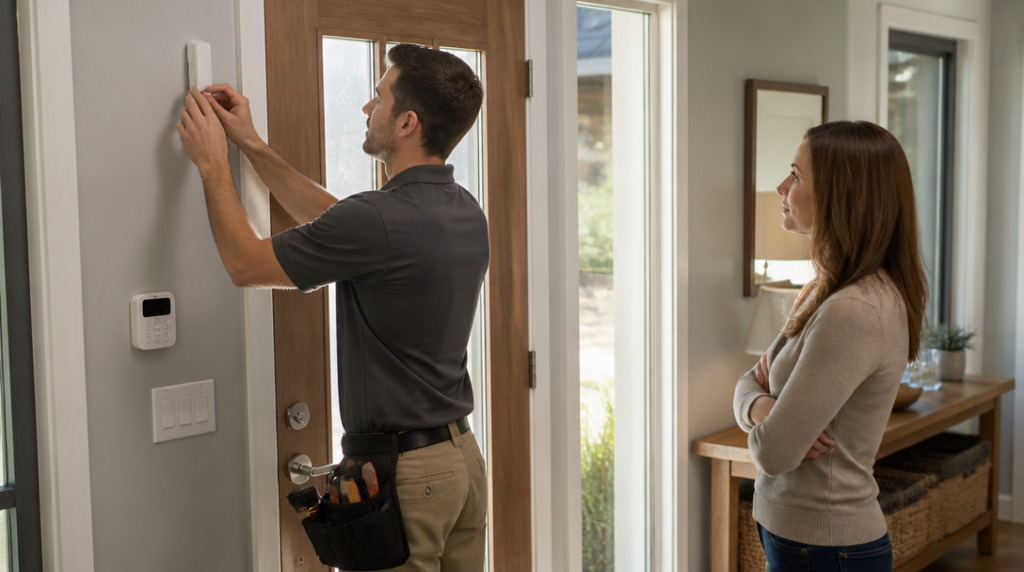
The simplest way to understand the bill is to separate the hardware from the labor. Professional installation work usually costs between $120 and $600. That fee may cover mounting components, connecting sensors, configuring the control panel, testing alarms, and explaining how the system works. A basic setup can be relatively quick. A home with several doors, windows, floors, and existing security equipment takes more planning.
Wireless systems generally offer the gentler starting price, with some beginning at roughly $200. They use radio signals rather than cables hidden inside walls, so installation tends to involve less disruption. That can make a major difference in an older house where opening walls or ceilings would be unpleasant, expensive, or simply impossible. Wireless equipment is also easier to relocate if you move.
Wired systems are a different proposition. They typically cost about $800 to $1,600 to install, largely because the work can involve routing cable through walls, ceilings, crawl spaces, or attics. The result can look tidy once finished, but the installation itself is more demanding. Think of it as the difference between hanging a picture and fitting a light fixture: both improve the room, but one requires much more work behind the surface.
A wired system may make sense for a larger property or a new construction project where cables can be installed before walls are closed. For many existing homes, however, wireless equipment avoids construction work and keeps the project moving. Neither option automatically makes a home safer. The useful choice is the one that covers the places an intruder could realistically enter without leaving important gaps.
Professional security companies may charge fees that do not appear in the headline installation price. An installation fee can range from $0 to $225, while an activation fee may range from $0 to $99. Some providers waive one or both charges as part of a promotion or service agreement. Others list them separately, which is why two offers with similar equipment can produce different totals at checkout.
Ask for the complete first-year cost rather than focusing on the advertised starting price. That figure should include the equipment, installation, activation, taxes or other mandatory charges, and any monthly service. A low upfront price can look attractive while shifting more of the expense into a contract or recurring subscription.
Monitoring is the cost that continues after the installer leaves. Professional monitoring usually runs from about $10 to $65 per month. The service may connect the alarm system to a monitoring center that can respond to alerts, depending on the plan and the type of emergency involved. Some homeowners prefer that extra layer because an alarm can be useful even when nobody is home. Others choose self-monitoring and accept the responsibility of checking notifications and contacting emergency services themselves.
At $10 per month, monitoring adds $120 over a year. At $65 per month, it adds $780. That difference can matter more than a modest change in the installation charge, especially if you expect to keep the system for several years. A system that costs less to install may not remain the cheaper choice after recurring fees are included.
The property itself often determines how much work is needed. A compact single-story home with one main entrance may require fewer sensors than a larger house with a garage, basement door, patio doors, detached structures, or several accessible windows. A professional installer can also identify blind spots that are easy to miss when you are shopping from a product page. The goal is not to cover every square inch with equipment. It is to secure the routes someone would most likely use.
Cameras, smoke detectors, carbon monoxide sensors, glass-break detectors, smart locks, and outdoor equipment can all expand the project beyond a basic burglar alarm. These additions may be worthwhile, but they should be priced separately in your head. A package advertised as a complete security system may contain only the central panel and a few sensors, while the features you actually want sit behind upgrades.
The condition of the home matters, too. Existing wiring, poor cellular reception, difficult access to walls, and an outdated alarm panel can complicate the installation. If an older system is already in place, ask whether the provider will reuse any components or remove the old equipment. Removal may not be included automatically. A system that appears easy to replace can become a more involved job once the installer starts examining what is behind the keypad.
For a first estimate, compare three versions of the same setup: a basic wireless system, a professionally installed wireless system with monitoring, and a wired installation if your home is suited to it. Keep the equipment list identical as far as possible. Otherwise, you are not comparing prices; you are comparing different products wearing similar marketing language.
A useful quote should spell out the number of sensors, the type of control panel, installation labor, activation, monitoring, contract terms, and what happens if equipment fails. It should also make clear whether you own the hardware or lease it. If a technician mentions a fee that was absent from the original advertisement, pause before signing. The right question is simple: “What will I pay today, and what will I pay every month?”
For many homeowners, a wireless setup with professional installation lands in the most manageable middle ground. It avoids the disruption of running cable while providing more help than a do-it-yourself kit. Someone comfortable mounting sensors and following app instructions may prefer the lower upfront commitment of self-installation, but the convenience of professional setup has a value of its own—especially when the alarm has to work correctly at 2 a.m., not merely look impressive in the box.
The final price should match the home rather than the sales pitch. A small property may need only a focused set of entry sensors and a loud alarm. A sprawling house may justify a more extensive system and higher installation cost. The number that matters is not the cheapest advertised package; it is the complete cost of protecting the doors, windows, and spaces that need attention.