
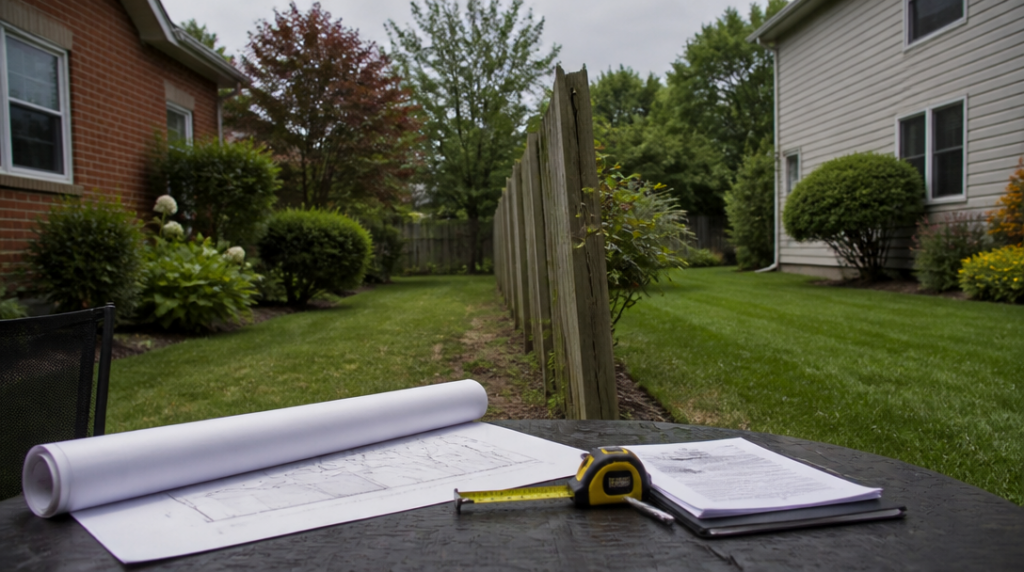
A fence has stood at the back of a garden for years. Then one owner checks an old plan, measures the line and decides the fence is in the wrong place. A short letter between neighbours can turn into a request for title documents, a survey, a solicitor’s opinion and, eventually, a threatened court claim.
The cost of legal advice in that situation is rarely a single fixed amount. Lawyers usually charge for their time, while the amount of time required depends on the evidence and the behaviour of both sides. A dispute based on clear title plans may need only a focused review. A disagreement involving old conveyances, inconsistent plans and disputed occupation can consume many hours before anyone reaches the central question.
Typical hourly rates
In the United States, the average lawyer’s hourly rate in 2025 was $349, while the average blended law-firm rate was $311 per hour. Real-estate lawyers commonly charge between about $250 and $510 per hour, with a median rate of $300.
Those figures are useful for setting expectations, but they do not predict the bill from one particular firm. A junior lawyer may review documents at a lower rate, while a partner or senior real-estate litigator may charge more for strategy, negotiations and court work. Some firms also use different rates for paralegals, survey-related work or administrative tasks.
At $300 an hour, a five-hour initial review would amount to $1,500 before taxes and any additional expenses. At $510 an hour, the same amount of time would cost $2,550. Five hours can disappear quickly if the lawyer reads several deeds, compares plans, studies photographs and prepares a detailed letter.
In England and Wales, solicitor rates for boundary disputes commonly fall between £150 and £400 per hour. Official court-service rates in force from 1 January 2026 range from £142 to £579 per hour, depending on seniority and location. The upper end is not a standard private-client quote, but it shows how widely legal time can be valued within the legal system.
A specialist firm may charge around £300 to £600 plus VAT for an initial consultation and document review. That kind of fixed starting fee can be more useful than a vague promise that a lawyer will “have a quick look” at the papers. Before instructing anyone, ask exactly what the review includes and whether a written opinion or follow-up call is covered.
What the first stage usually involves
Early advice is often the cheapest meaningful stage of the dispute because it can identify a weakness before both parties spend money defending it. The lawyer may examine the registered title, conveyances, plans, historic deeds, photographs, fencing arrangements and any previous correspondence.
The physical position of a boundary is only part of the problem. A plan may be drawn at a scale that cannot show a precise line. A deed may use words that do not match the modern fence. Long occupation of a strip of land may also become relevant, depending on the facts and the law that applies.
That is why a lawyer may ask for documents that seem unrelated to the fence itself. A conveyance from decades ago can matter more than a recent estate-agent plan. I have seen boundary arguments become needlessly expensive because the parties focused on the visible fence while ignoring the paperwork that created the legal description.
A careful first review should produce more than a general opinion. It should identify the strongest evidence, the gaps that need investigation and the realistic options for resolving the dispute. It may also reveal that a surveyor or another specialist is needed before the lawyer can give a firm view.
Why costs rise so quickly
The biggest cost driver is usually not the boundary line itself. It is the volume of material and the number of disagreements surrounding it.
A lawyer may need to review multiple versions of plans, search for historical documents, explain technical evidence, speak with a surveyor and respond to letters from the other side. Each email takes only a few minutes, but dozens of emails can create a substantial bill. Calls, attendance notes and internal discussions are often charged as legal time too.
The dispute becomes more expensive when each side takes an absolute position. A solicitor may draft a letter, receive a detailed response, prepare a further reply and then revise the advice as new documents appear. If negotiations continue without a clear settlement plan, the legal spend can grow while the physical boundary remains unchanged.
Court proceedings add another layer. The lawyer must deal with formal pleadings, evidence, procedural deadlines and the preparation of witnesses or experts. The work is no longer limited to answering “Where is the boundary?” It may involve proving how the line was established, challenging the other side’s interpretation and presenting the evidence in a legally acceptable form.
An expert survey can be a separate expense from legal fees. So can land registry or title-document charges, travel, mediation, barrister’s fees and the cost of preparing plans or photographs. A quote that covers only solicitor time should not be mistaken for the total cost of resolving the dispute.
The role of a surveyor
A boundary lawyer does not usually determine the physical line by measuring it personally. Where the documents are unclear or the ground features are contested, a specialist surveyor may be asked to interpret the plans and inspect the site.
The surveyor’s report can help narrow the legal question, but it does not automatically settle ownership. A technically accurate measurement may still leave a dispute about the wording of a deed, historic use of the land or the legal effect of a previous agreement.
This is one reason to avoid commissioning expensive work in the wrong order. A lawyer may first review the title documents and then explain what the surveyor needs to investigate. Paying for a survey before understanding the legal issue can produce a polished report that does not answer the question that matters.
Mediation as a cost-control option
Mediation can be useful where both owners want a practical settlement and neither needs a formal ruling on every point. It gives the parties a structured opportunity to discuss the line, access, fencing, maintenance and any payment that might resolve the disagreement.
RICS mediation for a boundary dispute costs £2,100 per party, including VAT, for an eight-hour mediation session. Additional hours are charged separately. Each party may also have its own solicitor’s preparation costs, and the fee does not cover every possible expert or document expense.
That price can look high beside an informal conversation, but it is a different kind of spending. One full mediation day may bring the dispute to a decision, while an exchange of letters can continue for months without changing either owner’s position. Mediation is not suitable for every case, especially where one party refuses to engage or a binding court decision is essential.
Questions to ask before instructing a lawyer
Ask whether the firm handles boundary disputes regularly rather than only general property work. The distinction matters because these cases often turn on old deeds, plans, physical features and evidence of occupation rather than on a simple contractual disagreement.
Request the hourly rates for everyone who may work on the file. Find out whether the firm can offer a fixed fee for the initial review, what documents must be supplied and what written advice you will receive. A clear scope is more valuable than an artificially low opening figure that excludes the work you actually need.
Ask for a staged approach. The first stage might cover document review and an initial opinion. A second stage could involve a surveyor or a letter to the neighbour. Negotiation, mediation and court proceedings should be treated as separate decisions, each requiring a fresh estimate.
It is also sensible to agree how updates will be handled. You can ask for regular invoices, advance warnings when a budget is close to being exceeded and approval before substantial extra work begins. If the lawyer needs to contact the other side, confirm whether that communication is included in the initial fee or charged separately.
A sensible way to begin
Collect the title documents, purchase paperwork, old plans, photographs and correspondence before the first appointment. Mark the disputed section on a current photograph or simple sketch, but do not alter the fence or remove evidence while the issue is being examined.
Keep a dated record of important events. Note when a fence was moved, when discussions took place and what each person said. Memory becomes less reliable as the argument grows, while a clear timeline can help a lawyer separate relevant facts from later assumptions.
The cheapest legal advice is not necessarily the advice with the lowest hourly rate. It is advice that identifies the real issue early, prevents unnecessary work and gives both sides a realistic choice between negotiation, mediation and litigation. A narrow question answered promptly can cost hundreds; an uncontrolled boundary fight can keep billing by the hour long after the original fence has faded from view.