
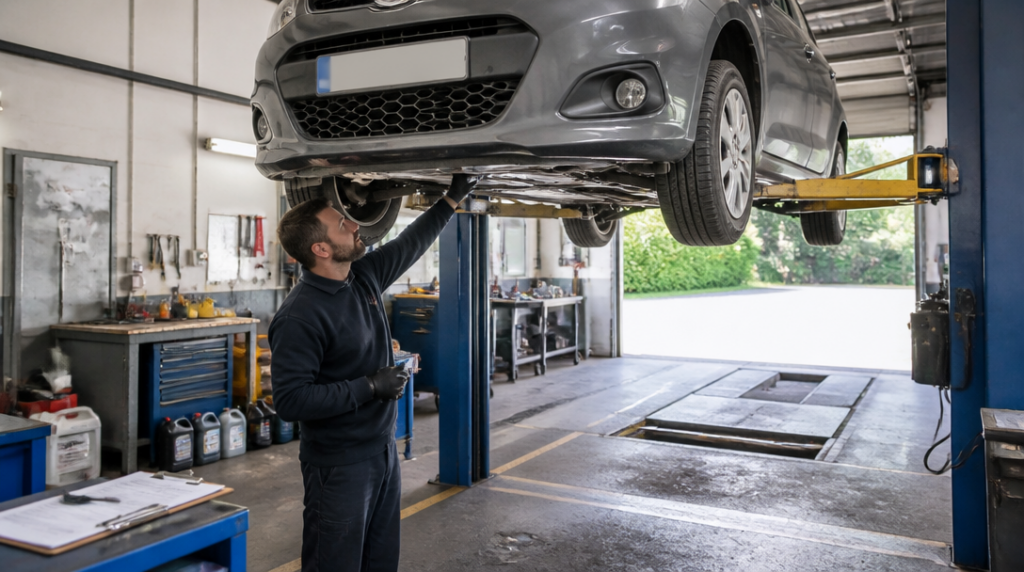
You arrive at the garage expecting a quick MOT, a polite nod from the mechanic and perhaps a bill small enough to ignore. Then someone asks whether you would like to add a service. Suddenly, the car feels less like transport and more like a subscription you forgot to cancel.
For a standard car in the UK, the maximum MOT price in 2026 is £54.85 before VAT. Many garages charge less than the maximum, particularly when the MOT is booked alongside other work. The service is usually the more expensive part, and the final amount depends on the type of service, the car itself and any repairs uncovered along the way.
The cost of the MOT itself
An MOT checks whether a vehicle meets the minimum legal and safety standards for road use. It is not a full mechanical health check, and it does not promise that your car will behave sensibly for the next twelve months. Cars, like certain relatives, can pass one inspection and still cause trouble shortly afterwards.
The maximum charge for an MOT on a standard car in 2026 is £54.85, excluding VAT. Garages are allowed to set their own prices below that limit, so it is common to see different offers depending on where you book and whether the test is combined with servicing or repairs.
The test covers areas such as lights, tyres, brakes, steering, suspension, seat belts and emissions. If the vehicle fails, the cost of putting it right is separate. A failed MOT does not automatically mean the car is on the verge of collapse, but it does mean the bill can move rapidly beyond the price of the test itself.
Some failures are relatively minor. Others involve worn brakes, damaged suspension components, tyres or emissions problems, all of which can turn a routine appointment into an afternoon spent staring at a coffee machine in the reception area.
What a service adds
A service is broader than an MOT. It is designed to maintain the car and identify developing problems, rather than simply decide whether the vehicle meets the legal test on the day.
The work carried out varies according to the service level and the garage. It may include replacing the engine oil and oil filter, checking fluid levels, inspecting key components and looking for signs of wear. A full or major service can involve additional checks and replacement items specified by the vehicle manufacturer.
That distinction matters when comparing prices. A garage offering a cheap MOT is not necessarily offering a cheap service, and a service price that looks higher may include more parts, checks or labour. Comparing the names alone is a little like comparing “snack” with “three-course meal” and complaining that the crisps are cheaper.
An interim service normally costs between £80 and £150. Add the maximum MOT charge of £54.85 and the combined cost comes to roughly £134.85 to £204.85, before allowing for any repairs or additional work.
This type of service is generally aimed at cars that are serviced more frequently or cover relatively high mileage. It is usually less extensive than a full service, so the garage may carry out fewer checks and replace fewer items.
Full service prices
For a small or medium-sized car, a full service typically costs £150 to £300. With the MOT added at the maximum price, that produces a total of about £204.85 to £354.85.
A full service is often the figure drivers have in mind when they ask for “an MOT and service”, although that phrase can mean different things at different garages. Before booking, ask what the service includes and which parts are covered by the quoted price.
For a typical family car, the current average price for a full service is around £200 to £280. Combined with the maximum MOT fee, the total is approximately £254.85 to £334.85. That narrower range is a useful guide for ordinary hatchbacks, saloons and family SUVs, though the exact bill can still shift according to the model and garage.
The word “average” should not be treated as a promise. A compact petrol hatchback and a large diesel SUV may both be described as family cars, but they do not necessarily require the same oil, filters, labour time or replacement parts. The car may have the same number of wheels, but that is where the financial similarity can end.
Major service costs
A major service is the most comprehensive of the three common service levels and usually costs £250 to £450. Including the maximum MOT price brings the estimated total to around £304.85 to £504.85.
The higher price reflects the additional work and replacement items involved. Exactly what is included depends on the car’s service schedule and the garage’s description of the package, so the phrase “major service” deserves a little interrogation before you hand over the keys.
Some manufacturers specify particular parts or checks at certain mileage or time intervals. A major service may therefore cost more when it coincides with scheduled replacement work. If a timing belt, spark plugs, filters or other maintenance items are due, they may be priced separately or included only in a clearly defined package.
Ask whether the quote includes parts, labour and VAT, and whether the MOT is charged at the same time or listed separately. A clean-looking headline price can become rather less attractive once the small print starts breeding.
Why prices vary so much
Location plays a part. Labour rates can differ between areas, and independent garages, national chains and manufacturer dealerships may use different pricing structures. The same car can receive three very different quotes without anyone necessarily making a mistake.
The vehicle’s engine, size and age also affect the cost. Some models take longer to service, use more expensive fluids or require specialist parts. Older cars may need more attention because worn components are more likely to be found during inspection.
The service history matters too. A vehicle that has been maintained regularly is less likely to need a long list of remedial work than one that has spent years receiving little more than fuel and optimistic encouragement.
The MOT itself may reveal a fault that a service also identifies. That does not mean you are being charged twice for the same inspection, but it is sensible to ask what the mechanic has found, why it needs attention and whether the repair is urgent.
How to avoid a larger-than-expected bill
When booking, specify the exact service you want: interim, full or major. Do not rely on a vague “service” label, because the contents can differ from one garage to another.
Request a written quote before work begins. It should show the MOT charge, the service price and any obvious extras. If the garage discovers additional work, ask it to contact you before carrying out repairs, particularly when the cost is significant.
It is also worth checking whether the quoted MOT price is the legal test only or part of a combined offer. A discount can be useful, but the cheapest booking is not automatically the best value if it excludes work you expected to be included.
Look at the service schedule for the car before you book. It will tell you what type of maintenance is due and may prevent you from paying for the wrong level of service. The owner’s handbook is not thrilling reading, but neither is an invoice for work that was not yet necessary.
A sensible budget for 2026 is therefore about £135 to £205 for an MOT with an interim service, £205 to £355 with a full service, or £305 to £505 with a major service. For a typical family car receiving a full service, the more likely combined figure is roughly £255 to £335, assuming no repairs are added.
The final bill is decided less by the word “MOT” than by what the service uncovers once the car is on the ramp. That is where a modest appointment can acquire brakes, tyres or suspension work, each waiting patiently to introduce itself to your bank balance.