
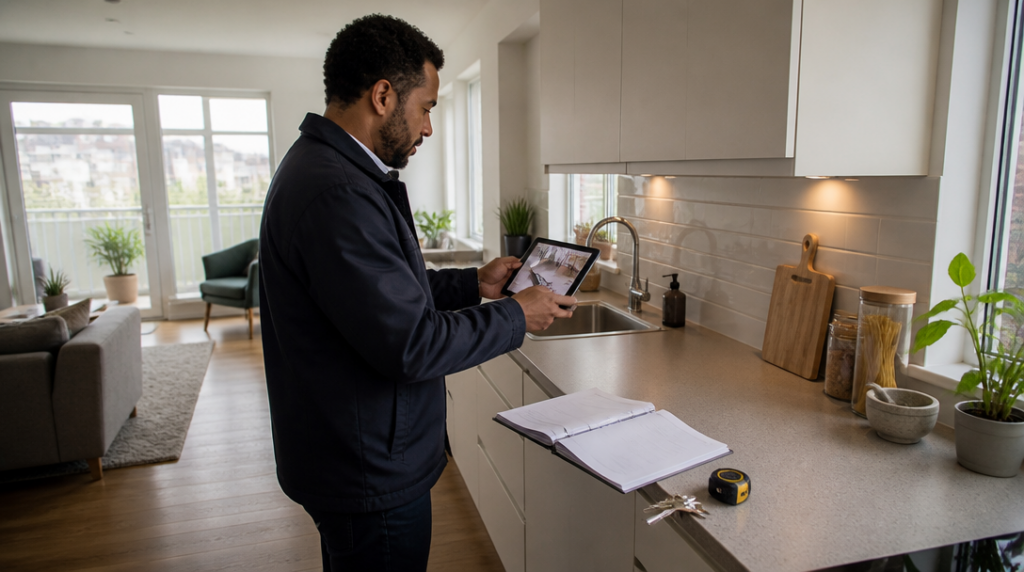
A landlord in London once arranged a quick inventory inspection before handing over a one-bedroom flat. The report was inexpensive, arrived promptly and looked tidy. Months later, the tenant disputed a charge for a damaged kitchen worktop. The report had photographed the room, but not the worktop closely enough to show its condition. The saving suddenly looked rather small.
That is the trouble with pricing an inventory clerk inspection. The fee is easy to compare. The value is harder to judge until something goes wrong.
For a standard property, an inventory-only inspection in London costs roughly £90–£170, covering homes from studios to four-bedroom properties. An inventory combined with check-in is usually around £100–£185 for one- to four-bedroom homes. A check-out inspection generally falls between £70 and £120, while a mid-term or interim inspection costs about £50–£110, depending on the size of the property.
Those figures give landlords and agents a useful starting point, but they do not tell the whole story. A small flat with clean, modern furnishings may be straightforward. A furnished house packed with personal belongings, appliances and decorative features can take far longer to document properly, even if both properties have the same number of bedrooms.
The price of an inventory inspection depends on what is being recorded
An inventory clerk is not simply counting chairs. A proper report records the condition of the property, its fixtures, fittings, furniture and contents, usually with dated photographs. The more there is to inspect, the more time the job takes.
A basic unfurnished studio sits near the lower end of the price range. A four-bedroom furnished house with several bathrooms, outdoor areas, storage spaces and a garage will move towards the upper end. Additional rooms are commonly charged at about £10–£25 per space. That may apply to a study, utility room, conservatory, garage or other area not included in the standard property rate.
The word “room” can also conceal a difference in workload. A bare box room is not comparable with a home office filled with shelving, electronics and furniture. Nor is an empty garden comparable with a landscaped outdoor space containing sheds, paving, lighting and garden equipment. A serious inspection should reflect those details rather than treating every doorway as identical.
Location affects the bill as well. London prices are often higher than those in other parts of the country, partly because of operating costs and travel. In the Midlands, a standalone inventory can cost approximately £35–£130, depending on the property’s size and contents. Those prices are quoted before VAT, so the final invoice may be higher where VAT applies.
That regional spread is wide enough to make a single national “average” misleading. A £35 inspection may be perfectly reasonable for a small, empty property. It may also signal a very limited service if the same fee is being offered for a heavily furnished house.
The type of appointment matters just as much as the property itself. An inventory-only inspection documents the condition before the tenancy begins. An inventory and check-in service adds the handover process, which can include meeting the tenant, recording meter readings, checking keys and confirming that the property is ready for occupation. The extra cost is relatively modest in many cases, with the combined service commonly priced at £100–£185 in London.
A check-out inspection serves a different purpose. The clerk compares the property with the original inventory and records changes at the end of the tenancy. At around £70–£120 for a one- to four-bedroom property in London, it may appear cheaper because the clerk is working from an existing report. That comparison only works if the original report was detailed enough to make a meaningful comparison possible.
Mid-term inspections are usually less expensive, at roughly £50–£110. They can identify maintenance problems, unauthorised alterations or signs that the property is not being looked after. They are not a substitute for a detailed check-in or check-out report. A mid-term visit is a snapshot, not a complete record of the tenancy’s opening and closing conditions.
Houses in multiple occupation, or HMOs, are a different proposition. Shared kitchens, corridors, bathrooms and communal furniture create more areas to assess, while individual bedrooms may need separate records. A full HMO check-out inspection can cost approximately £180–£350. That price is not excessive merely because it is higher than a flat inspection; the clerk may be documenting many more spaces and a far greater number of items.
Is the cheapest report a false economy?
This is the uncomfortable question: are landlords buying genuine evidence, or are some buying a document that only looks official?
A report can contain dozens of pages and still be weak. Blurry photographs, vague descriptions and missing details do not become useful simply because they are presented in a professional-looking template. “Good condition” tells a future reader very little. “Small chip to the front-left edge of the white ceramic basin, visible in photograph 18” is much more useful when the check-out inspection takes place.
The difference becomes especially important in disputes over cleaning, damage and deposit deductions. A tenant may be charged for a stained carpet, a marked wall or a damaged appliance, but the evidence needs to show the condition at the start and end of the tenancy. Normal wear and tear also has to be considered. A minor mark that develops after years of ordinary use is not automatically the same as careless damage caused during a short tenancy.
That does not mean the most expensive clerk produces the best report. High pricing can reflect location, travel, company overheads or a larger service package rather than better inspection work. Landlords should ask what the fee actually includes: the number of photographs, meter readings, key records, outdoor areas, appliances, communal spaces, tenant attendance and the process for correcting errors.
The timing of the inspection matters too. An inventory completed after furniture has been moved in, cleaners have left or repairs are still underway may not provide a clean baseline. The clerk can only record what is visible at the appointment. If a cupboard is full of boxes or a room is poorly lit, important details may disappear from the report.
A landlord who chooses a very cheap service may still get a useful inspection, particularly for a simple property. The danger lies in assuming that low price and low scope are the same thing. Sometimes the fee is low because the home is easy to inspect. Sometimes it is low because the inspection is rushed.
Agents also need to be clear about what they are selling. Calling a short visual check a full inventory can create unrealistic expectations for landlords and tenants alike. A check-in appointment that records keys and meter readings but says little about condition is not equivalent to a detailed inventory with photographic evidence. The labels may sound similar while the work behind them is very different.
For a modest rental, paying around £90–£170 for an inventory-only inspection in London may feel like an avoidable expense, especially when the property is empty and familiar to the owner. Yet the cost is small beside the potential value of a clear record. The more sensible criticism is not that every landlord should buy the most expensive package, but that they should know exactly what the chosen fee covers.
The same logic applies to check-out inspections. A £70–£120 appointment may be adequate for a conventional flat with a strong original inventory. For an HMO, a larger furnished home or a property with extensive communal areas, a £180–£350 check-out fee may be closer to the actual workload. Cutting that price without cutting the scope on paper is how gaps appear.
There is a slightly absurd ritual in property management: everyone treats the inventory as paperwork until the paperwork becomes the only thing capable of settling an argument. Then a missing photograph of a skirting board can matter more than pages of confident prose.
The sensible budget is therefore not the lowest number on a price list. It is the fee that buys a sufficiently precise record of the property, completed at the right time, with enough detail to compare like with like. A cheap report that cannot establish what changed is not cheap protection; it is an expensive formality wearing a discount price tag.