
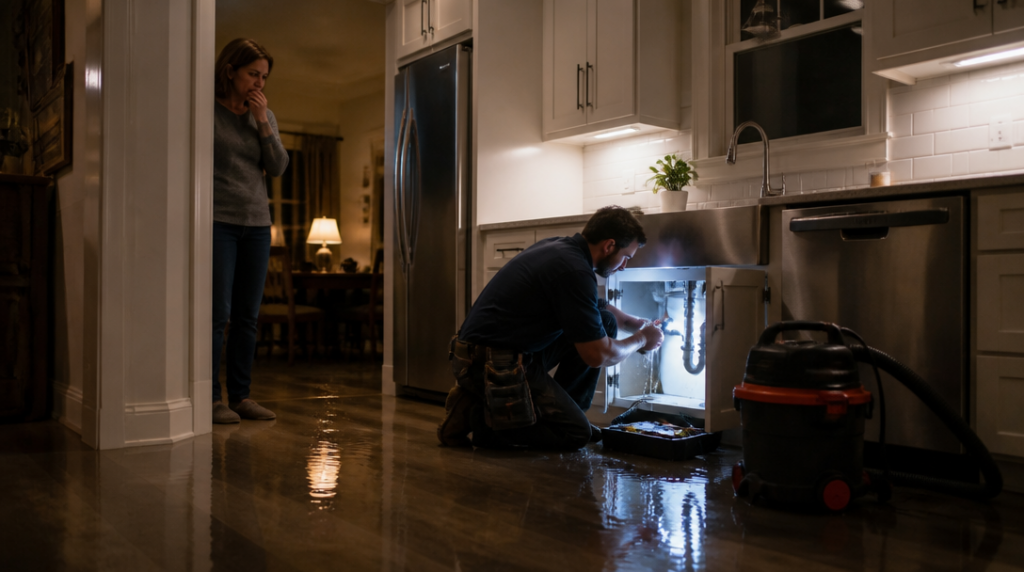
A midnight plumbing emergency can cost $100 to $500 an hour before the plumber even starts the repair. The 2026 average is about $170 per hour in the U.S., and that is only one line on the bill.
You may also pay an emergency service-call fee of $150 to $300. Some companies use a broader trip fee, usually between $50 and $300, to cover travel and the initial visit. So a leaking pipe that looks like a quick fix can become an expensive appointment before the wrench comes out.
The basic cost of an emergency plumbing visit
Most emergency plumbing bills combine three parts: the call-out fee, the hourly labor rate, and the cost of parts. The first two are often the biggest surprise because they apply even when the repair turns out to be fairly simple.
A regular weekday appointment during business hours is usually less expensive than a late-night visit. Emergency rates commonly run from $60 to $300 per hour on weekday evenings, $80 to $400 on weekends, and $120 to $600 on holidays. A holiday call can hurt almost as much as the leak itself.
The clock matters, but so does the plumber’s pricing structure. One company may quote a flat rate for clearing a drain, while another charges by the hour. A third may charge a diagnostic fee and then provide a separate repair estimate. Ask which system you are dealing with before approving the work.
You should also ask whether the quoted price includes the emergency service fee, materials, cleanup, and any minimum labor charge. “Starting at” prices can sound reassuring on the phone and feel very different once the invoice arrives.
What common emergency repairs cost
A straightforward burst-pipe repair averages about $400, although complicated jobs can range from $150 to $5,000. That wide spread is not a typo. A visible pipe in an accessible basement is a very different job from a hidden line behind a wall, beneath a floor, or under a concrete slab.
For a rough idea of other emergency repairs, a clogged drain may cost around $450, a burst pipe about $850, and a toilet backup roughly $1,050. These figures describe common emergency examples, not guaranteed flat rates. The exact price can shift with the location, severity, access, time of day, and amount of replacement material required.
A blocked kitchen sink is irritating. A blocked main sewer line is a different animal entirely. The plumber may need specialized equipment, more time, or additional workers, especially if wastewater has already spread through the house.
Toilet backups can become expensive for the same reason. Clearing the blockage may be only the first step. If contaminated water reaches flooring, drywall, cabinets, or furniture, you may need professional cleanup and restoration as well.
Why a small leak can create a large bill
Plumbing repairs are often priced by what the plumber has to reach, not just by the part that needs replacing. A damaged valve beneath a sink may take minutes. The same valve inside a finished wall could require opening the wall, drying the area, replacing materials, and arranging additional repairs.
Water damage restoration after a plumbing failure can add approximately $1,360 to $6,300, separate from the plumbing repair itself. That cost may cover water extraction, drying, damaged-material removal, and restoration work, depending on the situation.
This is where the original plumbing problem can become secondary. A $200 repair is unpleasant; a soaked floor and damp wall cavity can turn it into a much larger household project. If water is actively flowing, shutting off the nearest fixture valve or the home’s main water supply can limit the damage while you wait for help.
Of course, do not touch electrical equipment or wiring near standing water. If the area is unsafe, leave it alone and make the call from a dry spot. No emergency repair is worth a trip to the hospital.
The details that push the price higher
Location is one of the biggest cost drivers. Pipes in a crawl space, attic, ceiling, or packed utility closet take more time to reach. A plumber may need to remove panels, cut into drywall, move appliances, or work in a cramped space where every task takes longer.
The type of pipe matters too. Replacing a short section of accessible piping is relatively contained. A corroded system with several failing connections may require a broader repair, particularly if the first leak is a sign of a larger problem.
Water shutoff problems can complicate the visit. If the main shutoff valve is stuck or damaged, the plumber may need to address that before stopping the leak. In an apartment or multi-unit building, access to a shared shutoff may involve a landlord, building manager, or utility representative.
Materials are another variable. A basic fitting will not cost the same as a specialty valve, a long replacement section, or equipment designed for a particular plumbing system. In an emergency, the plumber may use what is available immediately rather than what would be cheapest during a planned repair.
Night, weekend, or holiday: timing changes the bill
An emergency that happens on a Tuesday afternoon may be cheaper to handle than the same emergency at 2 a.m. on New Year’s Day. That is not just because plumbers charge more at odd hours. Fewer technicians may be available, and the company may need to rearrange other jobs.
Weekday evening emergency rates commonly fall between $60 and $300 per hour. Weekend rates often range from $80 to $400, while holiday rates can reach $120 to $600 per hour. The service-call fee may still be added on top.
If the water is contained and no property is at immediate risk, waiting for normal business hours can reduce the labor charge. That choice is not sensible for an active burst pipe, sewage backup, flooding water heater, or leak near electrical systems. A few hours of delay can create a restoration bill far larger than the after-hours premium.
This is one of those situations where the cheapest hourly rate is not automatically the cheapest option. A fast response may prevent damaged flooring, soaked insulation, or mold-related work later.
How to get a fair emergency quote
Call two or three plumbers if the situation allows it. Tell each one exactly what is happening, where the water or blockage is located, whether you can shut off the supply, and whether sewage is involved. Clear information helps the plumber decide whether the job is genuinely urgent and what equipment may be needed.
Ask for the full price structure in plain language. You want to know the emergency call-out fee, hourly or flat-rate labor price, minimum charge, estimated parts cost, and any additional fee for nights, weekends, or holidays.
Ask whether the plumber will provide an estimate before beginning work. If the first technician cannot determine the full cost until opening a wall or exposing a pipe, ask for a price range and a spending limit that requires your approval before the job expands.
Be cautious if someone refuses to explain the charges or pressures you to authorize extensive work immediately. A real emergency does not cancel the need for a clear agreement. Take photos of the leak, damaged areas, and any visible equipment before work begins; those images can help you remember what happened and may be useful for an insurance claim.
Does homeowners insurance pay?
Insurance coverage depends on the policy and the cause of the damage. Sudden water damage may be treated differently from damage caused by neglect, long-term seepage, or an unresolved maintenance problem. The plumbing repair itself may also be handled differently from damage to floors, walls, or personal belongings.
Contact your insurer promptly if the failure has caused substantial damage. Keep the plumber’s invoice, photographs, written estimates, and records of emergency work. Do not throw away damaged items before checking whether the insurer wants to inspect them, unless leaving them in place creates a health or safety risk.
A plumber can stop the water, but the insurance company decides what the policy covers. Those are separate conversations.
What you can do before the plumber arrives
Find the home’s main water shutoff now, not while water is running across the hallway. If the leak is limited to one fixture, its individual shutoff may be enough. Turn off the water heater if the tank is leaking and follow the manufacturer’s safety instructions, but avoid entering a flooded area near electrical equipment.
Move rugs, boxes, electronics, and furniture away from the water if you can do so safely. Put a container under a small leak and take a few pictures. Do not start cutting into walls or dismantling pipes unless you know exactly what you are doing; a rushed attempt can make the eventual repair harder and more expensive.
Keep the plumber’s arrival instructions simple. A clear path to the shutoff valve, basement, crawl space, or affected bathroom saves time, and emergency labor is often billed in increments that make every delay feel surprisingly expensive.
The bill may still be painful, especially after midnight, but knowing the fee structure gives you something useful in the middle of the chaos: a way to tell a necessary emergency repair from a price nobody bothered to explain.