
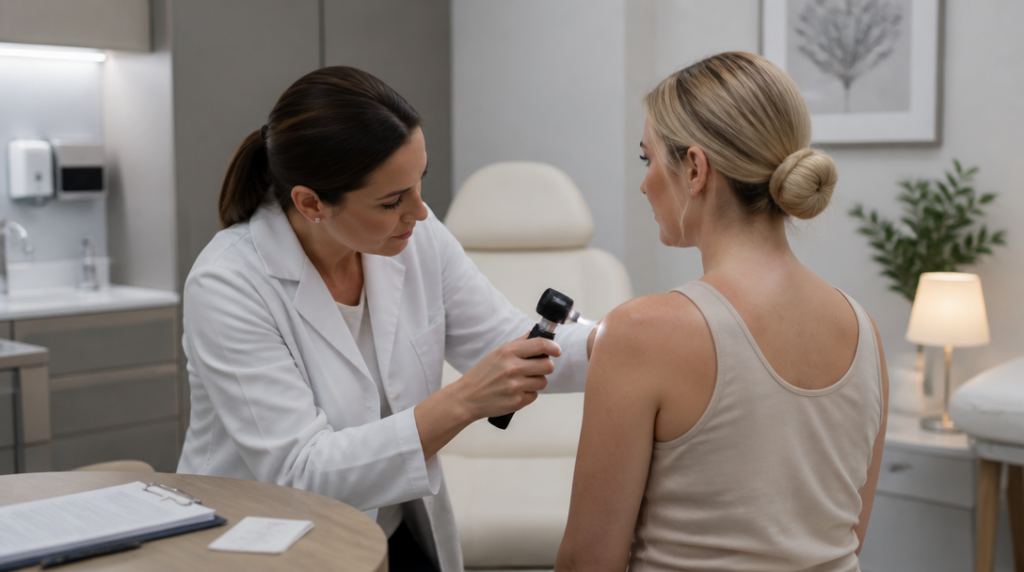
The reception area is quiet except for the soft beep of a card machine. A patient has just spent half an hour with a dermatologist, discussing a changing mole, recurring irritation and a patch of dry skin that refused to disappear. Before leaving, they are handed a bill for £250.
That figure sits close to the typical price of a first private dermatology consultation in the UK. The usual range is about £150 to £350, with £250 appearing frequently on clinic price lists. For some patients, that is the entire cost of the visit. For others, it is only the first line on the invoice.
The usual price for a first appointment
A first private consultation generally costs around £150 to £350. The middle of that range, roughly £250, is a useful working figure for anyone trying to plan the expense before booking.
The appointment may involve a discussion of symptoms, an examination of the affected skin and a plan for what happens next. The price can vary with the dermatologist’s experience, the clinic’s location, the appointment length and the type of problem being assessed.
A straightforward consultation and an appointment involving several concerns may not feel very different at the booking stage, but they can require different amounts of time. A patient seeking advice about one persistent rash is not necessarily booking the same service as someone asking for a detailed examination of multiple moles.
Private clinics often present their prices in a clean, simple format: consultation, follow-up, screening. The reality in the room is more personal. One person may arrive with a single photograph on their phone; another may bring a list of symptoms, old prescriptions and a family history they have been worrying about for months.
What specific clinics charge
Prices from individual clinics show how wide the market can be. Skin & Laser lists a 30-minute dermatology consultation at £250. No23 Skin charges between £245 and £350, depending on the specialist level selected.
Those figures are broadly in line with the typical UK range, but they also show why the clinic name alone does not tell the whole story. The exact consultant, the appointment duration and the service booked can all shift the price.
Dr Jonathan Bowling’s fees from 1 April 2026 provide another clear example. His first consultation is priced at £295. A full-body skin screening costs £320, while follow-up appointments range from £195 to £220.
A difference of £45 between two first appointments may look minor on a website. It becomes more noticeable when a patient needs a second visit, a screening appointment or additional treatment later. The consultation fee is often the beginning of the financial calculation rather than the end.
Follow-up appointments are cheaper, but still substantial
A private follow-up consultation usually costs about £100 to £200, with £150 a common figure. That is lower than the initial appointment, but it remains a meaningful expense for anyone paying personally.
Follow-ups may be used to review a diagnosis, assess whether treatment is working or discuss results and next steps. The appointment can be brief, yet the fee may still reflect the dermatologist’s time, expertise and access to the clinic.
The difference between the first visit and the review is easy to underestimate. A patient who budgets £250 for an initial appointment might need to allow another £150 if the dermatologist wants to see them again. The total for two consultations could therefore land around £400, before any procedure, product or medication costs are considered.
That is why it is sensible to ask about the likely follow-up price before the first appointment. A clinic can usually explain whether the quoted fee applies only to the initial consultation or also covers any review within a certain period.
Online dermatology consultations cost less
Online dermatology appointments are usually cheaper than in-person visits. The typical price is around £29 to £75.
For a patient who needs an initial opinion about a visible skin concern, the lower cost can make online advice appealing. A phone or video appointment may also be more convenient than travelling to a clinic, particularly for someone who lives far from a specialist.
There are limits, of course. A dermatologist working remotely must rely on the information available through the consultation and any images provided. Some concerns are easier to assess in person, especially if the clinician needs to examine a wider area of skin or inspect a mole closely.
The price difference is striking. An online consultation at £50 costs roughly one-fifth of a £250 in-person appointment. That makes it an option worth asking about, though the clinic should explain what happens if an examination cannot be completed remotely.
Full-body screening and mole mapping
Patients looking for reassurance about several moles or a larger number of skin marks may need a more detailed service than a standard consultation. A full-body skin screening generally costs about £200 to £400.
Dermoscopy mole mapping is more expensive, usually around £250 to £500. The service involves a more systematic review of moles and other marks, rather than concentrating only on one area mentioned during an ordinary consultation.
The names can sound similar on a price list, but they are not automatically interchangeable. A full-body screening and dermoscopic mapping may involve different levels of examination and documentation. Anyone booking for a particular concern should ask the clinic exactly what is included.
A patient standing in front of a changing-room mirror may notice one dark spot on the shoulder and assume that a standard consultation is all they need. The dermatologist may recommend a wider assessment, or the patient may simply want every mole checked in one appointment. That choice can move the price from the lower consultation range into the £300, £400 or £500 bracket.
Why the quoted price can vary
Location plays a role, but it is only one part of the picture. A central private clinic, a highly experienced consultant and a longer appointment may all command a higher fee than a shorter visit with a different specialist.
The reason for the appointment matters too. Acne, eczema, psoriasis, suspicious moles, hair loss and cosmetic concerns may be handled through different services, even if they all appear under the broad heading of dermatology.
The wording on the booking page deserves close attention. “Consultation” may refer to a set appointment length, while “screening” or “mole mapping” may describe a more extensive examination. The fee may cover the assessment but not procedures or other items arranged afterward.
A clear question before booking can prevent an awkward pause at the desk: does the price include the full examination, any imaging, a written report or a follow-up discussion? The answer will vary between clinics, so it should not be assumed from the headline figure.
Building a realistic budget
For a single first appointment, setting aside around £250 is a practical starting point. A budget of £350 leaves more room for clinics and specialists at the upper end of the usual range.
Anyone expecting a follow-up should add approximately £150, while a full-body screening may require another £200 to £400 depending on the service. Dermoscopic mole mapping can push the cost higher, with prices reaching about £500.
Online consultation prices offer a cheaper entry point, from roughly £29 to £75, but they may not replace an in-person appointment if the dermatologist needs to examine the skin directly.
The smartest approach is to treat the first price as a guide, not a guaranteed final bill. Ask what the appointment includes, whether a follow-up is likely to be charged separately and how much the recommended screening service costs. A few minutes spent clarifying those details can matter almost as much as the consultation itself.