
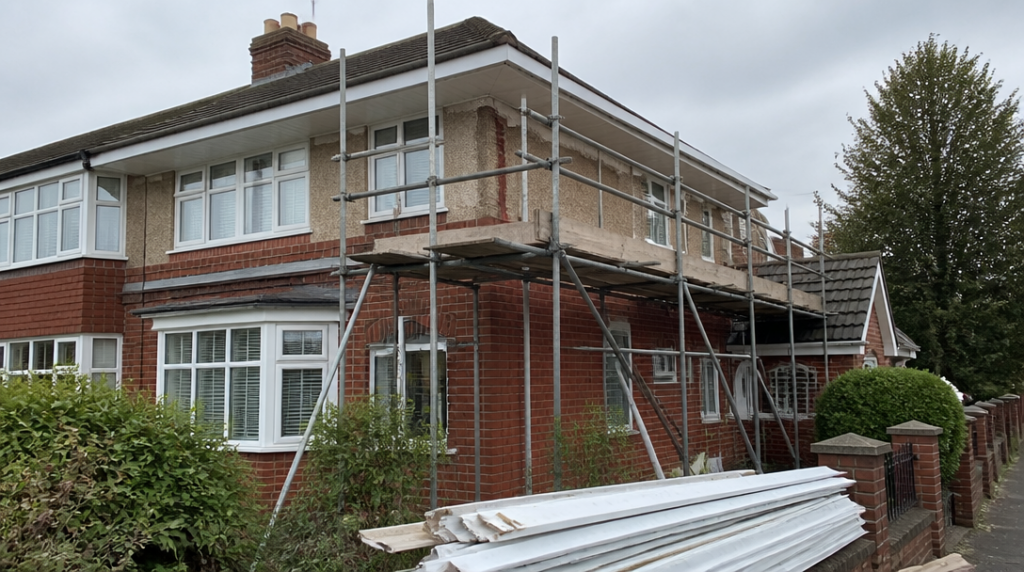
A complete fascia and soffit replacement in the UK can cost as much as £185 per linear metre, which is a surprising amount of money to spend on the bits of a house most people only notice when they are already falling off.
For 2026, the typical price sits around £115–£185 per linear metre, with an average of roughly £150 per metre. That figure usually covers a complete replacement rather than a quick patch-up, so it may include removing the old roofline materials, fitting the new fascias and soffits, labour and disposing of the waste. The exact quote still depends heavily on the property, the materials and how easy it is for the installer to reach the roofline.
A small semi-detached house costs about £2,750 on average for a full replacement, including labour and waste removal but excluding scaffolding. That last detail matters. Scaffolding has a talent for appearing at the bottom of an otherwise reasonable-looking quote and quietly adding several hundred pounds.
For a rough guide, a new uPVC fascia and soffit installation may cost between £1,400 and £4,500. A terraced house often starts at around £1,400, while a semi-detached property may come in at approximately £2,800. A detached house commonly falls between £3,200 and £4,500 or more, particularly if it has a large roofline, several elevations or awkward architectural details.
These are not fixed house-price labels. A compact detached bungalow may need less work than a tall semi-detached house with multiple gables, while a terraced property can still become expensive if access is poor or the existing roofline has been neglected for years. Linear metres are useful for estimating, but they do not tell the whole story. A metre at ground-floor level is not the same job as a metre above a conservatory, extension or narrow side passage.
The material itself is only one part of the bill. Approximate material prices are £10.45 per metre for uPVC soffit, £9.60 per metre for uPVC fascia, £6 per metre for timber fascia and £17 per metre for aluminium fascia. Those figures can make the raw materials look almost suspiciously affordable. The invoice becomes less mysterious once labour, removal, access equipment, trims, fixings, ventilation details and any necessary repairs are included.
uPVC remains popular because it is relatively low-maintenance and available in several finishes, including wood-effect styles. It does not need regular painting in the way timber does, although it can still become brittle, stained or damaged over time. Timber has a lower material cost in the figures above, but that does not automatically make it the cheaper long-term choice. It needs proper preparation, painting and ongoing attention, particularly on exposed elevations. A fascia that looks charmingly traditional can also become a small annual appointment with a paintbrush.
Aluminium costs more per metre, but it offers a different balance of durability, appearance and maintenance. It is often chosen for projects where a clean finish and resistance to moisture matter more than the lowest initial price. The best material is the one suited to the building and the owner’s willingness to maintain it, rather than the one with the most persuasive sample in a showroom.
The condition of the roofline beneath the visible boards can change the price quickly. Fascias and soffits sometimes hide damaged or rotten timber, damp insulation, failing roof edges or nesting pests. Removing the old boards may reveal problems that were not visible from the ground. A contractor who finds decayed backing timber may need to repair or replace it before installing the new materials. Ignoring that work would be rather like putting a new coat on a door whose frame has already given up.
Ventilation also deserves attention during replacement. Soffits are not merely decorative strips beneath the roof edge; they can form part of the roof’s ventilation arrangement. If the replacement is fitted without maintaining suitable airflow, condensation and moisture problems may follow. A quote should make clear whether ventilated soffits, over-fascia ventilation or other roofline details are included where required.
Access is another major variable. Scaffolding for one elevation commonly costs around £300–£600 for a week, while larger or more complicated arrangements can reach approximately £600–£1,500. A house may need access to one side, several sides or the entire perimeter, and the duration can increase if other repairs are being carried out at the same time. A contractor working from ladders may be able to handle limited repairs, but a full replacement usually requires a safer and more stable working platform.
The shape of the property matters too. Gables, dormer windows, bay roofs, extensions and conservatories all add measuring, cutting and fitting time. Narrow access can make moving materials and removing old boards slower. A tall building may require more extensive scaffolding, while a property with a simple rectangular roofline is generally less troublesome to price and install.
Waste removal is often included in a full replacement quote, but it should not be assumed. Old timber, broken uPVC, tiles and other roofline debris need to be taken away properly. If the contractor leaves disposal to the homeowner, the supposed saving can disappear into skip hire and several unpleasant trips to the tip. Ask for the quote to state clearly whether removal and disposal are included.
A good estimate should separate the main elements rather than present one mysterious total. It should show the cost of removing the old fascias and soffits, the new materials, installation, any timber repairs, ventilation components, waste removal and scaffolding. VAT may also affect the final figure, depending on the contractor and the work involved. A quote that is dramatically cheaper than the others may be missing something rather than revealing a secret bargain.
Getting several detailed quotes is sensible, especially for a project where access and hidden damage can make such a difference. The cheapest figure is not necessarily a problem, but it deserves questions. Find out what material is being used, how thick or robust it is, whether the quote covers every elevation, and what happens if rotten timber is discovered. It is much easier to discuss possible extra work before the old roofline is hanging in a skip.
Check how the contractor plans to deal with the junction between the roof covering and the new fascia. The roof edge, guttering and soffit need to work together, and gutters may need to be removed and refitted during the job. If the existing gutters are cracked or poorly aligned, replacing the fascias without addressing them may leave the new roofline partnered with an old drainage problem.
Timing can affect convenience more than cost. Roofline work is exposed to the weather, and delays may occur if conditions are poor. Scaffolding may remain in place while the work is rearranged, which is not usually anyone’s favourite feature of a front garden. For that reason, it is worth confirming the expected duration and whether scaffold hire is charged by the week or as a fixed project cost.
For a straightforward terraced house, a quote near the lower end of the range may be realistic. A semi-detached property with ordinary access and a full uPVC replacement could sit around the £2,750–£2,800 mark before scaffolding, while a larger detached home may move into the £3,200–£4,500-plus range. Those figures are useful starting points, not promises carved into a particularly expensive piece of plastic.
The best quote is usually the one that explains the job clearly enough for you to see where the money is going. Fascias and soffits may be visually modest, but they sit on the boundary between the roof, walls, gutters and weather. Once that boundary starts failing, the small strip of plastic or timber has a remarkable ability to turn into a full household project.