
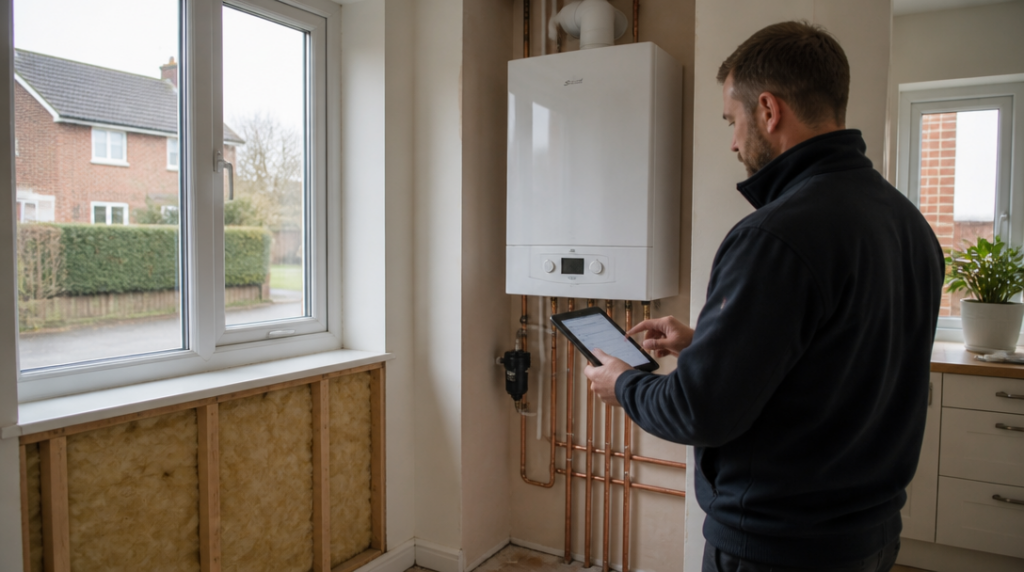
A homeowner preparing to sell may see an EPC as a small administrative bill: typically around £60, paid once and valid for a decade. A landlord can face the same inspection fee but carry a much larger financial risk, because a poor rating may restrict the property’s ability to be rented legally.
That difference explains why EPC costs deserve more attention than the invoice alone suggests. In the UK, an Energy Performance Certificate usually costs between £35 and £120 in 2026, with about £60 representing a common price. Larger or unusual properties can cost up to roughly £150. The certificate itself is not usually the expensive part of preparing a property for the market. Repairs, upgrades and delays are where the numbers can grow.
A seller needs an EPC before marketing a property for sale. A landlord must have one available before advertising a property to let. The certificate remains valid for 10 years, so a recent EPC may remove the need for a new inspection, provided it still relates to the property and has not been replaced by a newer assessment.
The practical question is therefore not simply, “How much does an EPC cost?” It is, “What could this certificate reveal, and what will happen if the rating is poor?”
What landlords and sellers are actually paying for
The price of an EPC reflects the assessor’s time, the size and layout of the property, and how straightforward it is to inspect. A compact flat with accessible rooms and clear information about its construction may sit near the lower end of the range. A large detached house, converted building or property with unusual features may require more work and command a higher fee.
That is why two properties in the same area can produce noticeably different quotes. Location also affects the market price, since assessors set their own fees and travel time may be built into the charge. A very low quote is not automatically a bargain, just as the highest quote is not proof of a better certificate. The assessor must be properly accredited, and the property details need to be recorded accurately.
For a seller, the EPC is usually one of the cheaper items in the launch budget. Estate-agent fees, legal work, removals and repairs can all outweigh it. Still, timing matters. Marketing a property without the required certificate can create an avoidable problem at the point when buyers expect the listing to be ready. Ordering the assessment shortly before launch gives the seller a chance to see the rating and consider whether a modest improvement could make the property more attractive.
The certificate does not turn an inefficient home into an efficient one. It records the property’s energy performance and includes recommendations for possible improvements. A seller does not generally need to carry out every recommendation before putting the property on the market, but a weak rating may influence buyer expectations. A buyer who sees an ageing boiler, limited insulation or inefficient windows may treat the EPC as a prompt to negotiate, even if the recommended work is not legally required for the sale itself.
Landlords face a sharper distinction. In England and Wales, a private landlord has not been allowed to let a property with an EPC rating of F or G since 1 April 2020 unless a registered exemption applies. The restriction concerns the property’s ability to be let, not the cost of obtaining the certificate. Paying £60 for an EPC does not solve the problem if the assessment produces an unlawful rating.
The current expenditure cap matters here. The mandatory limit for energy-efficiency improvements is £3,500 including VAT. If the property still cannot reach the required standard after eligible improvements costing that amount, a landlord may be able to register an exemption, subject to the applicable conditions. That is not a blanket permission to ignore a poor rating. The exemption has to be based on the relevant rules and properly registered.
A landlord should therefore treat the EPC assessment as an early diagnostic step rather than a final piece of paperwork. If the rating is E, the immediate legal position is different from a property rated F or G. If the rating is already close to a threshold, however, future regulation and tenant expectations may still affect the investment decision.
The proposed move toward a minimum EPC C rating for rental properties by 2030 is a good example of why forecasts should not be confused with current law. As of July 2026, that target is not a current obligation. The government is still considering the shape of the rules after its 2026 consultation. Landlords may reasonably plan for higher standards, but they should not describe the 2030 proposal as though it were already enforceable.
Why the cheapest EPC can become the most expensive option
The certificate fee is usually predictable. The consequences of ordering it too late are not. A seller who waits until the day a listing is due to appear may have to postpone the launch if no valid EPC is available. A landlord who commissions an assessment only after agreeing a tenancy could discover that the property cannot legally be let at its current rating.
The sensible timing is early enough to leave room for decisions. For a seller, that might mean arranging the EPC before photography and marketing copy are finalised. For a landlord, it means checking the existing certificate before advertising a vacancy or renewing a letting strategy. The inspection itself is generally a modest expense compared with a stalled sale or an empty property.
An EPC assessor will normally need access to the property and will examine features such as heating, insulation, windows, lighting and construction. Having information about improvements, boilers or insulation can help the assessment, although owners should not assume that every undocumented upgrade will automatically change the result. The certificate is based on the property and the evidence available to the assessor, not on an owner’s general impression that the home feels warm.
That detail can affect expectations. A house may have a recently decorated interior and still receive a disappointing rating because decoration has little bearing on the calculation. Conversely, an older property may perform better than its appearance suggests if it has effective insulation and an efficient heating system. EPCs can feel slightly counterintuitive in this respect; they judge energy features rather than the visual polish that dominates many property listings.
Improvement costs should be considered separately from the EPC fee. Replacing lighting or adding insulation may be relatively contained, while upgrading heating systems, windows or the building fabric can require a substantial budget. The certificate’s recommendations are not a guaranteed quotation for the work, and owners should obtain separate estimates before making financial commitments.
For landlords, the £3,500 cap is especially important because it includes VAT. A plan that appears to fit within the limit before tax may cross it once the full invoice is calculated. The cap also does not mean that every improvement costing less than £3,500 will produce a particular rating. Energy performance depends on the property’s starting condition and the measures installed.
For sellers, a low EPC rating is more often a market issue than a direct legal barrier to the sale. Some buyers will accept the rating and price future work into their offer. Others may prefer a property that needs less immediate spending. The financial effect depends on the local market, the condition of the property and how clearly the seller presents the likely work. A certificate that arrives before negotiations begin gives the owner time to decide whether to improve the property, adjust expectations or simply disclose the position accurately.
The cost comparison is therefore straightforward but easy to misread. At roughly £60 for a typical inspection, an EPC is a minor line in most property budgets. At up to £150 for a larger or non-standard home, it is still small beside renovation costs. Yet the certificate can determine whether a rental can proceed, shape a buyer’s offer and expose work that was invisible in the original marketing plan. For landlords and sellers alike, ordering it early is less about saving the assessment fee than buying time before the property reaches the market.