
How much would you pay to find out whether your roof is failing—and how much more would you pay after discovering that it is?
That uncomfortable question sits behind nearly every roofing estimate. Homeowners often focus on the repair bill, yet an inspection may determine whether they need a small fix, a larger intervention, or no work at all. The numbers are useful, but they are not the whole story. A roof with one missing shingle and a roof with hidden water damage may look surprisingly similar from the driveway.
In the United States, the average roof repair costs about $1,172. Most homeowners pay somewhere between $395 and $1,965, although the full range runs from roughly $150 for a very minor repair to about $8,000 for extensive damage. A professional roof inspection averages around $250, with common prices falling between $125 and $381. Broader market prices can reach from $75 to $1,100, depending on the inspection’s depth and the property itself.
That spread is not a pricing error. It reflects the difference between checking a roof from the ground and investigating a building that may be hiding moisture, structural damage, or several years of deferred maintenance.
The $1,172 repair bill hides several very different jobs
The average repair figure is best treated as a reference point, not a promise. Roofing work is priced according to the damaged area, the materials involved, the roof’s accessibility, and the labor required to reach the problem safely.
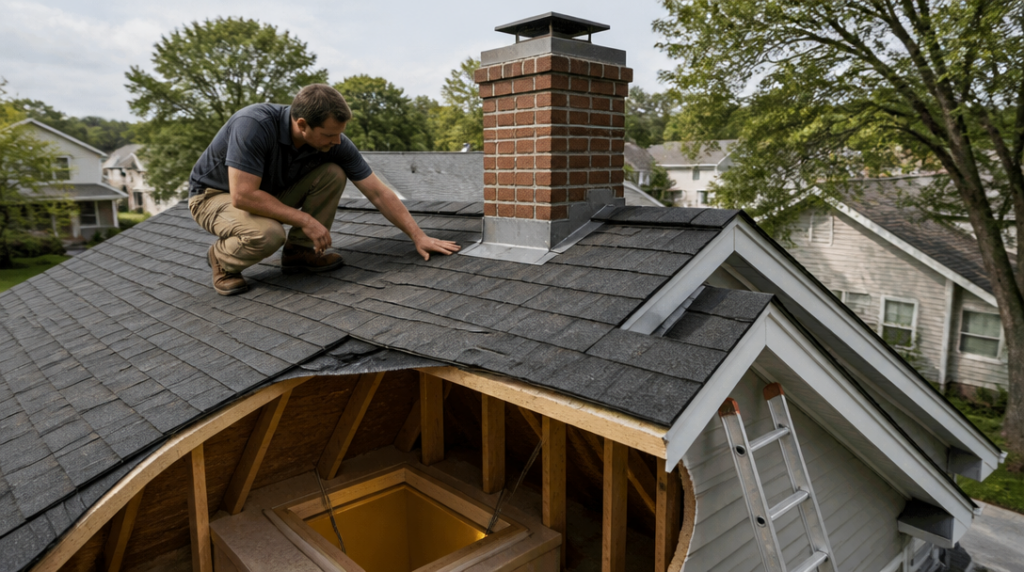
A few damaged shingles may produce a bill near the lower end of the range. Replacing flashing around a chimney, vent, or skylight can cost more because the roofer must locate the source of the leak and make the surrounding area watertight again. Repairs involving underlayment, decking, or structural components move quickly into more expensive territory.
The roof’s design matters, too. A simple, low-slope roof is generally easier to access than a steep roof crowded with dormers, valleys, skylights, and multiple rooflines. Two homes with the same visible leak can therefore receive very different estimates. One may need a straightforward patch. The other may require careful removal of several layers before the roofer can reach the failed section.
Material prices add another variable. Asphalt shingles are common and relatively easy to replace when matching products are available. Metal, tile, slate, and specialty roofing systems demand different skills and may involve harder-to-source replacement materials. An older roof can be especially awkward: even if the repair itself is small, finding a close match may take time or require replacing a larger section.
The most dangerous phrase in a roofing conversation is probably “It’s just a small leak.” Water does not always enter directly above the stain on the ceiling. It can travel along decking, insulation, rafters, or framing before appearing indoors. By the time a homeowner sees discoloration, the original failure may have been active for much longer than expected.
An inspection is cheap only if it answers the right question
A roof inspection costing $125 may be perfectly adequate for a limited visual check. It may also tell you little about what is happening beneath the surface. Price alone does not reveal the scope of the inspection.
A professional inspection averages about $250, while a typical range sits between $125 and $381. At the upper end of the broader market range, inspections can cost as much as $1,100. Those higher prices may reflect a larger or more complex property, difficult access, specialized reporting, or a more detailed investigation after suspected damage.
Before booking, a homeowner should ask what the inspection actually includes. Will the inspector walk the roof, or only examine it from the ground? Will they enter the attic? Will the report include photographs and descriptions of damaged areas? Are gutters, flashing, ventilation, penetrations, and signs of moisture part of the evaluation?
The cheapest inspection is not automatically a bad choice. A buyer seeking a basic condition report on a modest, accessible roof may not need a highly specialized assessment. But a low price becomes false economy when the inspection misses the issue that later causes the repair bill.
There is also a practical difference between an inspection and a sales visit. A roofing contractor may inspect a roof while preparing an estimate for recommended work. That can be useful, but the homeowner should understand whether the service is an independent assessment or the first step in a sales process. A report that explains what was examined, what was found, and what can safely wait is more valuable than a dramatic list of defects.
The attic may reveal what the shingles conceal
An attic inspection can change the picture completely. From outside, shingles may appear intact while the underside of the roof shows damp insulation, staining, mold-like growth, damaged wood, or poor ventilation.
A separate attic inspection typically costs about $200 to $500. That additional expense may feel excessive when the roof already has an inspection scheduled, but the two views answer different questions. The exterior shows the roof’s weather barrier. The attic shows how the roof is performing from inside the building.
This is where homeowners often make a costly mistake: they treat the roof covering as the entire roof. It is not. The system includes flashing, underlayment, decking, ventilation, insulation, and the connections around chimneys, vents, skylights, and walls. A roof can look tidy while one of those less visible components is failing.
I have always found ceiling stains more unnerving than dramatic roof damage. A missing shingle is obvious and therefore easier to act on. A faint brown mark above a hallway feels harmless until you realize it may be the only visible clue to a much larger problem.
An attic check is particularly sensible after a leak, severe weather, or a long period of unexplained indoor moisture. It can also help distinguish an active leak from an old stain. That distinction matters because paying to repair a problem that is no longer active is frustrating, while ignoring a current leak can damage insulation, framing, and interior finishes.
Certification costs less than the paperwork it protects
Some roof-related inspections are not primarily about finding damage. They are about documenting the roof’s condition for an insurer, lender, buyer, or property transaction.
A roof certification for an insurance company or lender usually costs about $150 to $200. The document may confirm that the roof appears serviceable or has an expected remaining life, but requirements vary. A certification is not the same as a guarantee that the roof will never leak, nor does it replace a full investigation when there are signs of active damage.
Timing can affect the value of this service. Ordering certification after a lender or insurer has already requested a specific form may prevent a second visit. The homeowner should find out what the receiving organization requires before paying for a report that does not meet its standards.
The certification may be inexpensive compared with the transaction it supports. A delayed closing, an insurance complication, or a dispute over the roof’s condition can cost far more than the inspection itself. Still, the document should be read carefully. “Certified” does not necessarily mean “new,” “perfect,” or “covered under all circumstances.”
The real cost is often decided before the roofer arrives
Roofing prices rise when damage is left to spread, but homeowners should not respond by authorizing every recommended repair on the spot. The sensible move is to separate urgent work from desirable work.
Active leaks, exposed decking, major storm damage, and structural concerns deserve prompt attention. Cosmetic issues and minor wear may be handled later, especially if the roof is otherwise dry and stable. A written estimate should identify the affected areas, materials, labor, access equipment, disposal, and any assumptions about hidden damage.
Photos are useful, but they do not settle every dispute. A roofer may need to remove materials before confirming the condition underneath. The estimate should explain how that possibility will be handled and whether additional work requires approval before it begins.
Homeowners can also reduce confusion by keeping inspection and repair decisions separate. First determine what is wrong. Then decide whether the proposed repair is appropriate, whether the roof’s age makes replacement more rational, and whether another professional opinion is justified. A $250 inspection can be a smart expense when it prevents an unnecessary $2,000 repair. It can be a waste when it produces a vague report and a sales pitch.
The numbers give homeowners a useful starting frame: roughly $1,172 for an average repair, about $250 for a professional inspection, $200 to $500 for an attic check, and $150 to $200 for certification. The harder question is what each service will actually reveal. A roof estimate is never just a price for nails, shingles, and labor; it is a price for reducing uncertainty before water gets another chance to move through the house.