
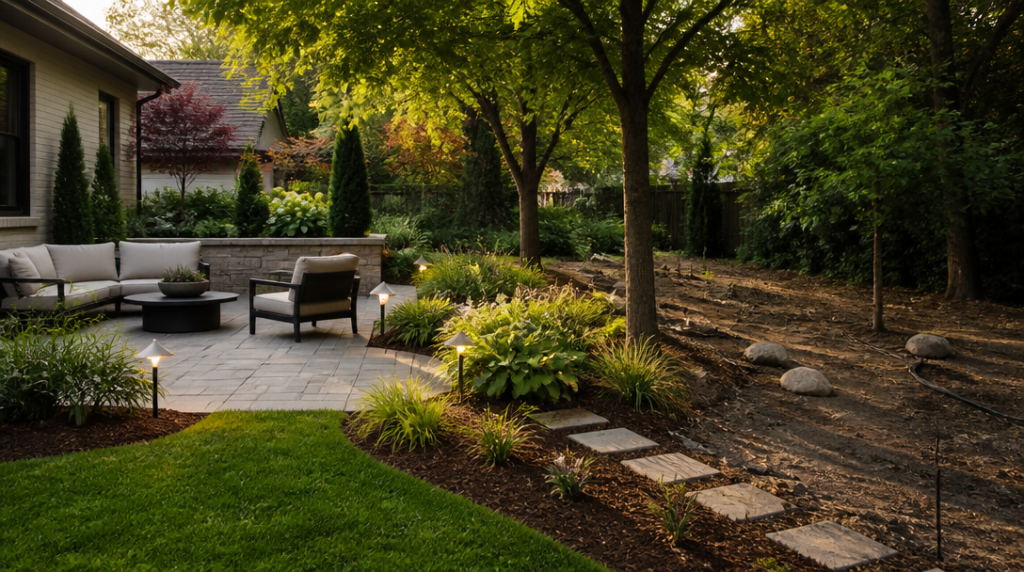
A professional landscaping project in the United States averages $3,516 in 2026, but real-world costs range from about $200 to $14,850. That gap is not a typo. It reflects the difference between refreshing a tired flower bed and rebuilding an entire outdoor space from the ground up.
A few hundred dollars might cover a modest planting job, fresh mulch, or a small patch of lawn. At the other end, a redesign may involve drainage, grading, retaining walls, irrigation, paving, lighting, fencing, and mature plants. The garden can look simple when it is finished, yet the work underneath may have been anything but simple.
Before you ask a landscaper for a quote, decide what kind of project you actually have. Are you trying to make the front of the house look more welcoming? Do you want a back garden where people can eat, play, and sit after dark? Or are you fighting a practical problem, such as standing water, a steep slope, or grass that never survives? Those are different jobs, even if they all fall under the broad label of “landscaping.”
A complete backyard renovation typically costs around $15,000 to $50,000. That kind of budget can cover a substantial transformation, particularly if the design includes a patio, planting areas, grading, lighting, and other built elements. A front-yard makeover is usually less involved, with typical costs around $1,500 to $5,000. Front gardens often need fewer recreational features, and their design is usually focused on planting, paths, edging, and curb appeal.
The smartest redesigns begin with how you use the space rather than with a list of fashionable features. If you rarely eat outdoors, a huge dining terrace may become an expensive shelf for garden furniture. If your children and dog need room to move, delicate planting beds placed in the middle of the lawn will create frustration. Spend a little time watching the garden at different hours. Notice where the sun lands, where water collects, and which parts you naturally walk through. That short exercise can save you from designing a beautiful space that feels awkward in daily life.
Professional design is a separate cost from installation, although it can be money well spent on a complicated property. A standalone garden design from a landscape designer averages about $4,588, with a usual range of roughly $1,933 to $7,270. The price may feel significant, especially if you are already paying for construction, but a proper plan can reveal conflicts before they become expensive changes on site. It can also help you phase the project, so the garden does not need to be completed in one dramatic hit.
That phased approach suits many homeowners. You might deal with drainage and create the main paths first, then add a patio, planting, and lighting later. Or you could establish the structure of the garden now and wait for trees and shrubs to fill out over time. A garden does not need to look mature on the day the contractors leave. In fact, trying to buy an instantly established landscape can push the budget sharply upward, while smaller plants often settle in more successfully.
Labor is one of the largest parts of the bill, making up approximately 40% to 65% of a landscaping project’s total budget. That covers more than digging holes. A crew may need to remove existing materials, prepare the soil, move heavy items, build edges, install irrigation, level surfaces, and clear the site afterward. Poor access can make all of those tasks slower. A backyard reached only through a narrow side passage is a very different proposition from one that can be reached by machinery.
Materials create another set of price differences. New turf sod costs about $0.35 to $0.85 per square foot, while artificial turf generally costs around $2 to $6 per square foot. Mulch is far less expensive at roughly $0.20 to $0.60 per square foot, but it needs periodic topping up and does not solve every lawn problem. If you are replacing grass, think beyond the initial installation price. Consider mowing, watering, shade, pets, foot traffic, and how the surface will feel in the hottest part of the year.
A lawn is often treated as the default choice, even when it is the least practical part of a garden. A smaller lawn framed by planting can be easier to maintain than a broad, struggling expanse. In a dry or heavily shaded area, ground cover, gravel, mulch, or planted beds may make more sense. I have always found that the best gardens leave a little breathing room; covering every spare patch with a different material can make even a generous yard feel fussy.
Hardscaping tends to move the budget quickly because it combines materials, preparation, and skilled installation. A new patio typically costs around $2,000 to $6,000. The final figure depends on its size, surface material, site preparation, and whether the area needs steps, walls, drainage, or a difficult excavation. A simple paved sitting area and a fully built outdoor kitchen may occupy the same corner of a garden, but they belong to entirely different budgets.
Pools sit in another category altogether. Installing pool materials commonly costs about $20,000 to $65,000, before you start adding surrounding paving, planting, fencing, lighting, or outdoor furniture. A pool can become the visual and practical center of the property, so it should be planned before nearby paths and planting beds are finalized. Otherwise, you may end up removing freshly installed work to make room for access, equipment, or safety requirements.
Water management deserves attention even if it is not the most glamorous part of the design. A garden that looks attractive in dry weather may reveal serious weaknesses after a storm. Slopes, downspouts, compacted soil, and impermeable paving all influence where water travels. If the property has recurring puddles or erosion, put that issue near the top of the budget rather than hiding it beneath new plants. Plants cannot disguise a drainage problem for long.
The same practical thinking applies to irrigation and lighting. Irrigation can make planting easier to maintain, but it should be designed around the plants you actually intend to grow. Lighting can make paths safer and extend the time you use the garden, yet a few well-placed fixtures are often more effective than turning the whole yard into a brightly lit stage. Ask for a clear explanation of what each system does, how it will be maintained, and what happens if one part fails.
Get detailed estimates rather than accepting one large figure labelled “garden renovation.” The proposal should make clear what will be removed, what will be built, which materials are included, and whether soil improvement, waste removal, delivery, planting, and cleanup are part of the price. Ask what could change the cost once work begins. Hidden conditions such as poor soil, buried debris, or an unstable slope can affect the final bill, but vague estimates make it much harder to tell a genuine surprise from an avoidable omission.
A useful budget has priorities, not just a maximum number. Protect the work that affects the garden’s structure first: drainage, grading, access, retaining walls, and durable surfaces. Planting can often be adjusted later. Decorative details can wait. If the budget tightens, it is usually better to finish a smaller area properly than to spread thin materials and unfinished edges across the whole property.
Garden redesign is less about buying more and more about choosing what deserves space. A shaded bench under a tree may give you more pleasure than an elaborate feature that demands constant cleaning. A clear path may matter more than another flower bed. Once those choices are made, the numbers become easier to understand, and the garden starts to feel like a place designed for your life rather than a collection of expensive ideas.